
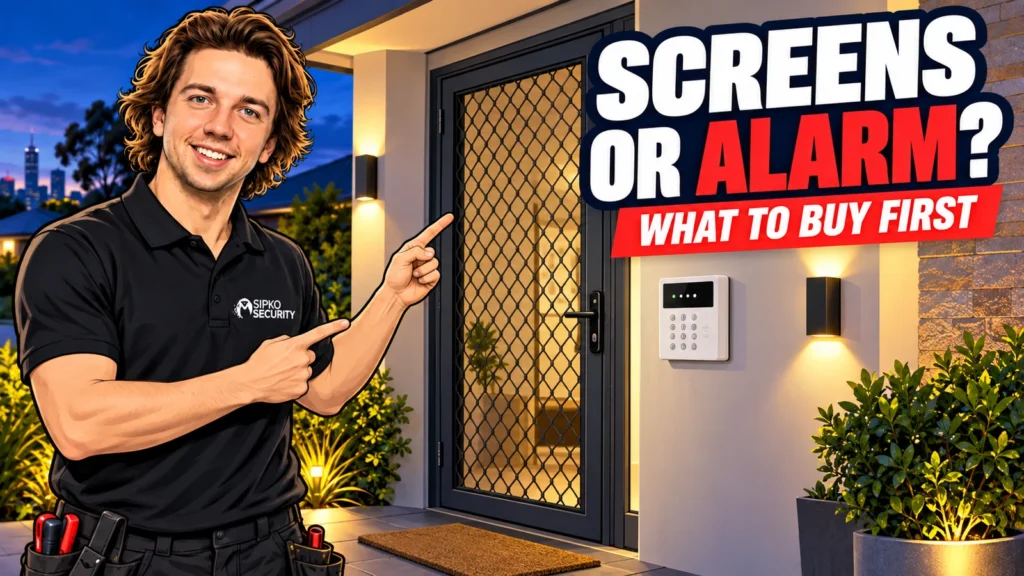
Choosing security screens or an alarm starts with the problem you want to solve. A suitable, correctly installed screen adds a physical barrier at an opening. An alarm detects selected events and starts the response you have arranged. If a door is poorly secured, fix that weakness first. If entry points are sound but nobody would know about an intrusion, detection may be the next useful investment.
You do not need to buy every layer at once. The better first purchase is the one that closes your home’s most important gap and fits the way your household lives. This guide helps Melbourne homeowners compare those gaps without treating either product as a guarantee against burglary.
Start with the opening, not the product catalogue
Walk around the home and name the concern in plain language. You may want airflow through a front entrance while keeping a barrier closed. Perhaps the back door is hidden from the street. Or the house is empty during the day and you want to know if someone enters. These are different jobs, even if each begins with the same wish to feel safer.
Inspect the existing doors, frames, locks and accessible windows before comparing packages. A new detector cannot repair a damaged frame. A strong front screen does not address an unsecured side entrance. Write down the opening or room that worries you and what should happen there. That small exercise makes a quote much easier to judge.
Keep ordinary use in the picture. A barrier people leave unlocked gives a different result from one they consistently latch. An alarm that is rarely armed may leave the exact period you wanted covered without detection. Choose something the whole household can operate comfortably, including visitors who need legitimate access.
Start with a barrier
Prioritise a weak opening or a need for a secure, ventilated entrance. Check the door, frame and installation together.
Start with detection
Prioritise knowing about entry when existing physical security is sound. Decide who receives and acts on an alert.
Plan both in stages
Address the urgent gap now and document how the second layer will fit later.
What a security screen can do
A security screen is intended to resist entry at the opening where it is fitted. Depending on its design, it can also let you keep the main door open for airflow while a separate barrier remains closed. That daily benefit can matter as much as the security comparison, especially where an entry faces a living space.
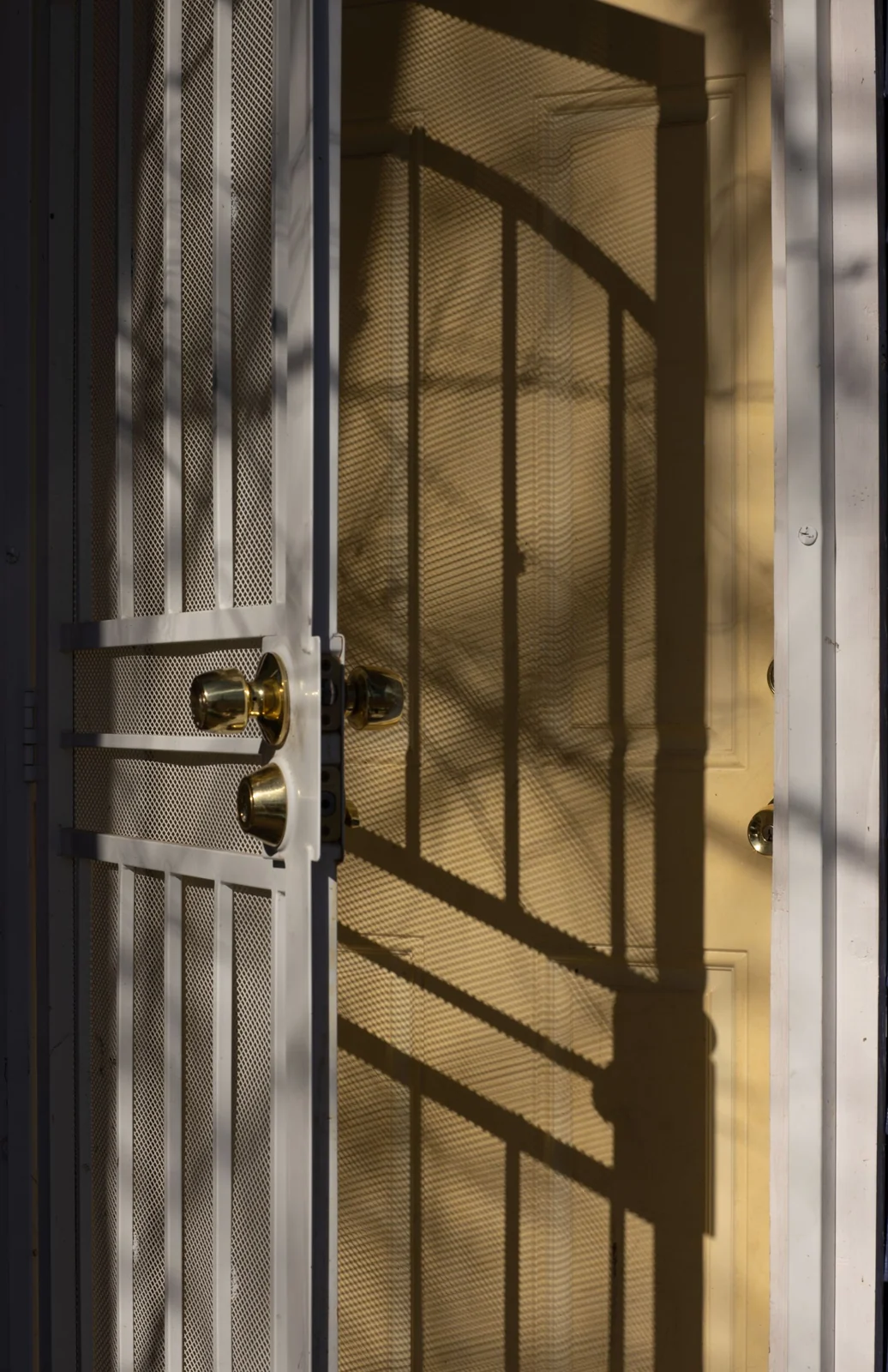
Do not assume every mesh or grille door is a tested security product. A flyscreen may keep insects out without offering comparable resistance to forced entry. Attractive mesh alone does not establish the performance of the completed assembly. The frame, locks, hinges, fixings and supporting doorway all need consideration.
The National Security Screen Association’s buying guide identifies AS 5039.1:2023 for product performance, AS 5039.3:2023 for testing and AS 5039.2:2024 for installation. Ask the supplier which current requirements the proposed assembly meets and what documentation supports the claim. A vague statement that the mesh is strong is not the same as evidence for the installed door.
A screen does not normally tell your phone that somebody approached or tried to enter. That needs a separate, compatible detection arrangement. It also protects only its own opening. Treat it as one physical layer rather than assuming a new front door product secures the whole property.
What an alarm adds
An alarm uses selected sensors to detect events such as a protected door opening or movement in an armed area. Depending on the equipment and configuration, it can sound a siren, send notifications or report to a monitoring service. Those functions need to be specified and tested; a keypad on the wall does not prove that all of them are active.
An alarm does not create a physical barrier. It may help draw attention to an event and support a response, but it cannot promise to prevent entry or make someone leave. Its value depends on coverage, arming habits, power, communications and what somebody does after the signal arrives.
For a household that wants protection while sleeping, ask about a suitable night arrangement. Door or window contacts and selected areas may be useful while occupants move elsewhere. The exact design depends on the home and system. A salesperson should explain which areas remain active instead of relying on a broad promise of full protection.
If the next step is detection, SIPKO’s wireless alarm installation service provides a relevant starting point for discussing coverage. Wireless describes part of the connection method, however; it does not mean every component needs no fixing, power source or maintenance.
When security screens should come first
Screens may deserve priority when the household wants an additional physical barrier at a frequently used opening. Examples include a front entrance regularly opened for ventilation or an accessible opening whose present protection is inadequate. First confirm that the supporting structure and escape arrangements are suitable.
Compare the specific openings rather than buying the same treatment everywhere by default. A strong, properly secured existing door may not need the same investment as a worn side entrance. If the budget covers only one improvement, ask the supplier to explain why the nominated location matters more than the others.
Consider usability before ordering. Can each resident close and unlock it without awkward reaching? Does it clash with the main door, a step or a narrow landing? Will the lock be convenient enough to use? If somebody uses a mobility aid, the opening and operation deserve particular attention during the measure-up.
Emergency exit must remain straightforward. Do not add a barrier that leaves occupants struggling to find a key or release at the moment they need to leave. Ask the supplier how the proposed door or window screen fits the home’s escape needs and any applicable building requirements. Product strength is only one part of a safe installation.
When an alarm should come first
Detection may be the stronger first step if the doors and windows are already in sound condition but the household has no useful way to know about entry. It can also suit a home where the main concern is an unattended area, such as a separate garage, provided the design covers that space and its communication path.
Start by describing a realistic event: a protected back door opens while everyone is out. Ask which sensor detects it, whether an entry delay applies, who receives the event and what they can do. Then repeat the discussion for night use. A system that matches these scenarios is more useful than a long list of features nobody understands.
Distinguish self-monitoring from a contracted monitoring service. A phone alert requires an available person, working communications and suitable phone settings. A monitoring service follows its agreed procedures; it is not a promise of an immediate police visit. Decide which response arrangement is practical before choosing the equipment.
If an alarm is already installed, an inspection may uncover a less expensive improvement than complete replacement. It could need servicing, clearer user access or revised coverage. SIPKO’s maintenance and support for homeowners is relevant when you want to understand what existing equipment can still do.
Compare the full cost of each option
For screens, request an itemised quote identifying the openings, product, finish, locking arrangement, installation and any repair needed to the supporting structure. Clarify what happens if the measured opening needs extra preparation. A lower headline price can conceal a different product or scope rather than a better value offer.
For an alarm, include the hub or panel, sensors, controls, sirens, installation, setup and demonstration. Ask separately about batteries, servicing, mobile connectivity and optional monitoring. Find out which app functions depend on a paid service and which remain available if that service ends. Use written answers rather than assumptions based on a demonstration.
You can stage the project without buying an incomplete first stage. One correctly fitted barrier at the priority opening may be useful now. So may an alarm covering the priority routes with a working response plan. Avoid spreading a small budget across many devices that leave each important task only partly addressed.
Plan the layers so they work together
If you expect to add an alarm after screens, tell both suppliers. Door contacts need suitable mounting positions and clear operation. A new frame or altered door swing may affect an existing sensor. The trades should agree how the physical installation and detection will coexist rather than discovering a clash after completion.
Similarly, ask how ventilation affects arming. Leaving a main door open behind a locked screen may not suit an alarm that expects that door contact to be closed. The answer is a deliberate design and a clearly explained operating routine, not routinely bypassing an unexplained warning.
Keep a simple handover record: what each layer protects, how to operate it, the service contact and the test performed. If there is an alarm, try the normal evening and leaving-home routines with the installer. If there is a screen, have every regular user practise locking and releasing it.
Your first-purchase checklist
- Name the specific opening or detection gap you want to address.
- Repair existing doors, locks and frames where needed.
- Ask for evidence covering the screen assembly and installation.
- For an alarm, identify the sensor, recipient and response for each priority event.
- Check daily operation, ventilation and emergency exit.
- Compare installation, maintenance and ongoing service costs.
- Agree a useful first stage and a clear reason for any later additions.
FAQ
Are security screens better than an alarm?
They perform different jobs. Screens add a physical barrier at selected openings; an alarm detects configured events and supports a response. Choose the first purchase according to the weakness you need to address, then consider whether a second layer adds useful coverage.
Does a mesh door count as a security screen?
Not automatically. Ask for the exact product’s performance documentation and installation requirements. A flyscreen or decorative mesh door should not be assumed to provide the same resistance as a tested security screen assembly.
Can I have fresh air while the alarm is armed?
Possibly, but the screen, door contact and armed areas must be designed for that routine. Ask the installer to demonstrate the intended configuration. Do not assume an open main door behind a locked screen will be accepted by every alarm setup.
Should I replace an existing alarm before buying screens?
Have the existing alarm assessed first. If it still works reliably, a service or coverage adjustment may be enough. Spend on replacement only when its condition, support or limitations justify it; the condition of the openings remains a separate decision.
Do I need both immediately?
No. You can address the most important gap first and plan the next step. The first stage should work on its own, with clear limits. Avoid taking on a larger package solely because it combines more products.
Choose the first improvement your home will actually use
A useful decision starts with an honest walk-through, not a contest between product categories. Identify the weak opening, the missing detection or the routine that is not working. Then ask for a specific improvement with a clear handover and realistic limits.
SIPKO can help assess the alarm and detection side of that plan. Bring your concerns, any existing equipment details and the screen supplier’s proposed changes so the security design supports the way you want to use your home.



