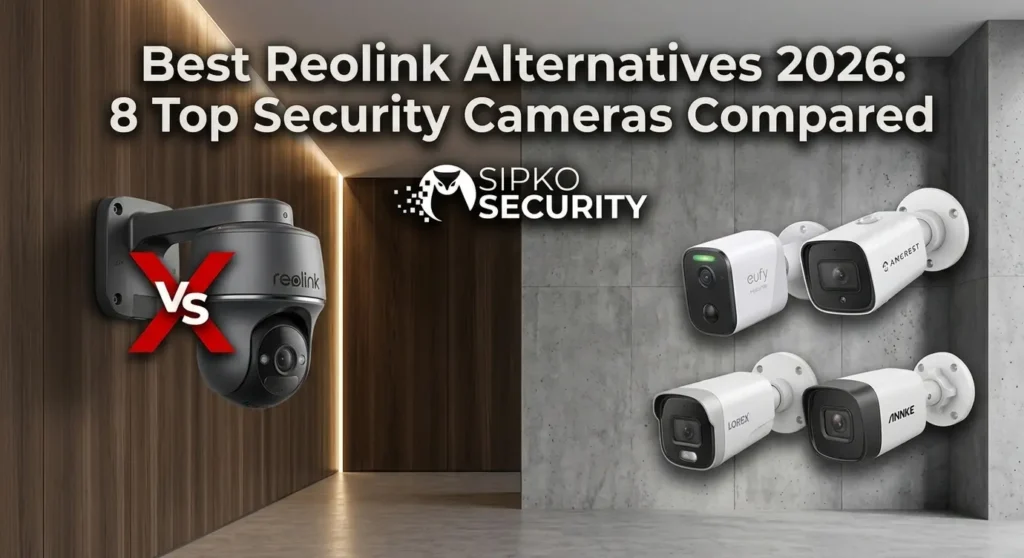
Best Reolink Alternatives 2026: Top Security Camera Systems Compared
Thinking about ditching Reolink? We get it. Don’t get us wrong, Reolink makes solid cameras that are easy to set up. But if you’re looking for something with better features, lower prices, stronger privacy, or more professional capabilities, there’s a whole world of options out there.
We’ve been installing security systems around Melbourne for years, and we’ve tested pretty much every major brand on the market. We’ve helped everyone from homeowners protecting their front doors to businesses securing their entire properties. The truth is, there’s no one-size-fits-all camera system. What works for your neighbor might be terrible for you. That’s why we put together this guide: to help you actually find what works for your situation, not just what’s popular.
Whether you’re on a tight budget, paranoid about privacy, want everything to work with Alexa, or need something that can scale to 20+ cameras, we’ve got you covered. And if you want professional help setting things up, we do that too. Let’s find your next security camera system.
1. Why Consider Reolink Alternatives? Top Reasons to Switch Security Camera Systems
Look, Reolink isn’t bad. They’ve built their reputation on being affordable and easy to install yourself. But that doesn’t mean they’re the right fit for everyone. Here’s what we hear from customers who end up switching:
- Cloud features feel limited: You can view your cameras remotely, but it’s pretty basic. Other systems give you way more control and flexibility.
- Everything’s locked into their ecosystem: Want to use Alexa or Google Home? Good luck. Reolink doesn’t play well with other smart home stuff.
- Privacy concerns: Some people just don’t feel comfortable with how Reolink handles their footage. They want local storage, encryption, the whole nine yards.
- You need more power: If you’re running a business or have a complex setup, Reolink’s features start feeling pretty basic pretty fast.
- Better bang for your buck elsewhere: You can get more features for the same price with other brands. Sometimes even cheaper.
- Support and warranty matter: Some alternatives actually stand behind their products better. Longer warranties, better support, that kind of thing.
The “best” security camera system is the one that actually solves your problem. Not the most expensive one, not the one with the most features you’ll never use. Just the one that fits your actual needs and budget. That’s what this guide is about.
2. What to Look for in a Security Camera System: Essential Features & Specifications
Before we dive into specific systems, let’s talk about what actually matters. Because honestly, most people get overwhelmed by specs they don’t need. Here’s what you should actually care about:
The Stuff That Actually Matters
- Resolution: 1080p is fine for most people. 2K is noticeably better. 4K is overkill unless you’re trying to read a license plate from 50 feet away. Pick what makes sense for what you’re watching.
- Where your footage lives: Local storage means your videos stay on a device in your home. Cloud means they’re on someone else’s servers. Local is more private. Cloud is more convenient. Pick your poison.
- Night vision: Infrared is standard and works great. Some cameras do color night vision now, which is cool but uses more power. Depends what you need.
- Smart detection: Can it tell the difference between a person and a squirrel? That matters because false alarms get annoying fast.
- Smart home stuff: Does it work with Alexa? Google Home? Apple HomeKit? If you care about that, make sure it actually does.
- Installation: Wireless is easier. Wired is more reliable. DIY is cheaper. Professional installation costs money but saves headaches.
- Cost: Per-camera price, total system cost, and whether there are monthly fees. All matter.
- Support: Can you actually reach someone if something breaks? How long’s the warranty? Does it matter to you?
Don’t get seduced by specs. A 4K camera is pointless if you’re just watching your front door. A 1080p camera with good night vision and smart person detection might be exactly what you need. Buy what solves your problem, not what sounds impressive.
3. Hikvision: Professional-Grade Security Camera Alternative to Reolink
Hikvision is basically the 800-pound gorilla of security cameras. They make everything from cheap consumer stuff to enterprise systems that governments use. If you want professional features and don’t mind a steeper learning curve, Hikvision is worth a serious look.
Why People Love Hikvision
- Serious features: Advanced analytics, AI that actually works, integration with other systems. This isn’t consumer-grade stuff.
- Rock solid reliability: Governments, banks, and major corporations use Hikvision. That tells you something.
- Scales up easily: Start with 2 cameras, end up with 50. The system grows with you.
- Good value for what you get: Yeah, it’s more expensive than Reolink, but you’re getting way more.
- Tons of documentation: If something goes wrong, there’s usually an answer online somewhere.
The Downsides
- It’s more complicated: Hikvision isn’t for people who just want to plug something in and forget about it.
- Installation can be a pain: You can DIY it, but most people end up calling a professional. Which costs money.
- Cloud features are meh: Hik-Connect works, but it’s not as polished as some competitors.
- The China thing: Some people have concerns about Chinese-made equipment. Fair or not, it’s a thing.
Who Should Buy This
Businesses, people with multiple cameras, anyone who wants professional features, or people who need advanced analytics and integration.
What It Costs
Cameras run $100-$400 each. NVR systems are $300-$1,500. Professional installation will set you back $500-$2,000+
If you go with Hikvision, get professional installation. We do it here in Melbourne, and it makes a huge difference. You’ll actually understand what you have and how to use it. Worth the money.
4. Dahua: Cost-Effective & Reliable
Dahua is Hikvision’s main competitor and often offers similar features at lower prices. They’re known for reliability and value, making them a great Reolink alternative for budget-conscious buyers who want professional features.
Key Strengths
- Price: Often 10-20% cheaper than Hikvision for similar specs.
- Features: Comparable to Hikvision with AI detection and advanced analytics.
- Reliability: Solid track record in commercial and residential installations.
- Variety: Wide range of camera types and system sizes.
Weaknesses
- Support: Less extensive support network than Hikvision in some regions.
- Cloud platform: Dahua’s cloud features are less developed than competitors.
- Brand recognition: Less well-known than Hikvision or Reolink in consumer markets.
Best For
Budget-conscious buyers, small businesses, multi-camera installations, and those who want professional features without the Hikvision price tag.
Pricing
Cameras: $80-$350 each. NVR systems: $250-$1,200. Professional installation: $500-$2,000+
5. Wyze: Budget-Friendly Smart Security Cameras – Best Affordable Reolink Alternative
Wyze is the budget king. Seriously. Their cameras start under $30. If you want to dip your toes into security cameras without dropping a ton of money, or you’re renting and can’t install anything permanent, Wyze is hard to beat.
Why Wyze Is Great
- Dirt cheap: $20-$30 per camera. You can cover your whole house for less than a nice dinner out.
- Works with your smart home: Alexa? Google Home? IFTTT? Wyze plays nice with all of it.
- Dead simple to set up: Seriously. Plug it in, download the app, done. No technical knowledge required.
- Cloud storage included: 14 days free. Paid plans are cheap if you want more.
- Solid features for the price: Night vision, motion detection, two-way audio, person detection. You get a lot for $25.
The Catch
- 1080p only: No 2K or 4K options. It’s fine for most people, but it’s a limitation.
- Cloud-dependent: Most features need internet and cloud storage. If privacy is your thing, this isn’t it.
- Limited local storage: You can’t really store footage locally without extra gear.
- No fancy features: No advanced analytics or integration options. It’s basic, but it works.
- App can be flaky: Every now and then people report connectivity issues or app crashes. Not a dealbreaker, but it happens.
Best For
Renters, people on a budget, small apartments, smart home nerds, or anyone just getting started with security cameras.
Pricing
Cameras: $20-$50 each. Cloud storage: Free (14 days) or $1.99/month per camera.
Wyze is great for getting your feet wet. But if you eventually want local storage or professional features, you’ll probably upgrade to something else. That’s fine. Use Wyze to figure out what you actually need, then move up when you’re ready.
6. Eufy: Privacy-Focused Security Cameras – Best Private Alternative to Reolink
If you’re the type of person who doesn’t want your security footage floating around on someone else’s servers, Eufy is your answer. They’re all about local storage, encryption, and keeping your data actually private. Not just “we promise it’s private,” actually private.
Why Eufy Stands Out
- Your footage stays local: By default, everything is stored on a device in your home. Not in the cloud. Not on Eufy’s servers. Your house.
- Encryption that matters: End-to-end encryption. Even Eufy can’t see your footage if they wanted to.
- Good cameras: 2K resolution, excellent night vision, AI that can tell the difference between people and pets.
- Solid build quality: These things are built to last. Not cheap plastic.
- Good support: Responsive customer service and an active community.
The Tradeoffs
- Limited cloud features: By design. If you want to check your cameras from anywhere, you’ll need to set up some extra stuff.
- Less smart home integration: Doesn’t work with as many platforms as Wyze or Tapo.
- Steeper setup: Getting local storage working right takes a bit more technical knowledge.
- Smaller ecosystem: Fewer accessories and options compared to bigger brands.
Who Should Get This
Privacy-conscious people, folks who don’t trust cloud storage, homeowners who want local storage, or anyone who values data security.
What You’ll Pay
Cameras: $100-$250 each. HomeBase (the local storage hub): $100-$200. No monthly fees if you use local storage.
Eufy’s HomeBase is what makes them different. It’s a small device that stores your footage locally and does all the processing. Your videos never leave your house. If privacy matters to you, this is worth the extra cost.
7. TP-Link Tapo: Easy Setup & Smart Home Integration – Best for Alexa & Google Home
If you’re already deep in the Alexa or Google Home ecosystem, Tapo is basically made for you. TP-Link knows networking, so their cameras actually work reliably. And they’re cheap. Like, really cheap.
Why Tapo Is Worth Considering
- Affordable: $30-$50 per camera. Seriously competitive pricing.
- Smart home integration that actually works: Alexa, Google Home, Apple HomeKit, IFTTT. It all just works.
- Easy setup: Download the app, scan a code, done. No messing around.
- Reliable connectivity: TP-Link makes routers and networking gear. They know what they’re doing with WiFi.
- Decent features: 1080p-2K, night vision, motion detection, person detection. You get what you pay for.
The Limitations
- Cloud-dependent: Most features need internet and cloud storage.
- Limited local storage: You can’t really store footage locally without extra work.
- Privacy trade-off: Less privacy-focused than Eufy.
- No advanced features: No fancy analytics or professional integrations.
Who Should Buy This
Smart home enthusiasts, budget-conscious people, renters, or anyone who wants their cameras to work seamlessly with Alexa or Google Home.
Pricing
Cameras: $30-$80 each. Cloud storage: Free (7 days) or $2.99/month per camera.
If you’re already using Alexa or Google Home, Tapo is a no-brainer. The integration is seamless, the price is right, and it just works. Grab one and see how you like it.
8. Uniview: Enterprise Solutions
Uniview is a professional-grade alternative focused on enterprise and commercial installations. If you need advanced features, scalability, and professional support, Uniview is worth considering.
Key Strengths
- Professional features: Advanced analytics, AI detection, and integration capabilities.
- Scalability: Designed for large installations with hundreds of cameras.
- Support: Professional support and integration services available.
- Reliability: Enterprise-grade reliability and uptime.
Weaknesses
- Price: More expensive than consumer alternatives.
- Complexity: Requires professional installation and configuration.
- Consumer features: Not designed for casual home users.
Best For
Large businesses, enterprises, government installations, and organizations that need professional-grade security systems.
Pricing
Cameras: $200-$600+ each. Professional installation and support required. Contact for quotes.
9. Amcrest: DIY-Friendly & Affordable
Amcrest is a DIY-friendly brand that offers a good balance between affordability and features. They’re known for supporting open standards and providing good documentation for DIY installers.
Key Strengths
- DIY-friendly: Excellent documentation and community support for DIY installation.
- Price: Competitive pricing, often cheaper than Reolink for similar specs.
- Features: 1080p-4K options, night vision, motion detection, and local storage.
- Open standards: Supports ONVIF and other open standards for flexibility.
- Warranty: Good warranty and customer support.
Weaknesses
- Cloud features: Limited cloud functionality.
- Smart home integration: Less integration than Wyze or Tapo.
- Brand recognition: Less well-known than Reolink or Hikvision.
Best For
DIY enthusiasts, tech-savvy homeowners, those who want local storage, and anyone who values open standards.
Pricing
Cameras: $60-$300 each. NVR systems: $200-$800. No subscription fees required.
Amcrest’s support for ONVIF means you can use third-party software and integrations. Great for advanced users who want flexibility.
10. Lorex: US-Based Support & Comprehensive Systems
Lorex is a North American brand known for US-based customer support and comprehensive security systems. If you prefer dealing with a US company and want professional-grade features, Lorex is a solid Reolink alternative.
Key Strengths
- US-based support: Customer service and support based in North America.
- Comprehensive systems: Complete packages with cameras, NVR, and accessories.
- Features: Professional-grade features at reasonable prices.
- Warranty: Excellent warranty and support.
- Local storage: Emphasis on local storage and privacy.
Weaknesses
- Price: Generally more expensive than budget alternatives.
- Cloud features: Limited cloud functionality.
- Smart home integration: Less integration than consumer brands.
Best For
US-based customers who want professional support, comprehensive systems, and local storage emphasis.
Pricing
Cameras: $150-$400 each. Complete systems: $500-$2,500+. Professional installation available.
11. Comparison Table: All Systems
| System | Price Range | Resolution | Storage | Smart Home | Privacy | Best For |
|---|---|---|---|---|---|---|
| Hikvision | $100-$400/cam | 1080p-4K | Local NVR | Limited | Good | Professionals |
| Dahua | $80-$350/cam | 1080p-4K | Local NVR | Limited | Good | Budget Pro |
| Wyze | $20-$50/cam | 1080p | Cloud | Excellent | Fair | Budget |
| Eufy | $100-$250/cam | 2K | Local | Good | Excellent | Privacy |
| TP-Link Tapo | $30-$80/cam | 1080p-2K | Cloud | Excellent | Fair | Smart Home |
| Uniview | $200-$600/cam | 1080p-4K | Local NVR | Limited | Good | Enterprise |
| Amcrest | $60-$300/cam | 1080p-4K | Local | Limited | Excellent | DIY |
| Lorex | $150-$400/cam | 1080p-4K | Local NVR | Limited | Good | US Support |
12. Buying Guide: How to Choose the Best Security Camera System for Your Needs
Okay, so you’ve read through all this. Now what? Here’s how to actually pick something without overthinking it:
You’ve Got Less Than $100 to Spend?
Go with Wyze. You can get 2-3 cameras with cloud storage for under $100. Perfect if you’re renting or just want to test the waters.
You’ve Got $200-$500?
Pick between Tapo and Eufy. Tapo if you want smart home stuff. Eufy if you want privacy and local storage.
You’ve Got $500-$1,500?
Look at Dahua or Amcrest. You can get a complete system with multiple cameras and local storage. Good for small homes or small businesses.
You’ve Got $1,500+?
Hikvision or Lorex. Professional features, good support, scales up. Consider getting professional installation.
Privacy Is Your Main Concern?
Eufy or Amcrest. Both keep your footage local. Eufy is easier. Amcrest is more flexible if you’re technical.
You Want Everything to Work with Alexa or Google?
Wyze or Tapo. Both integrate seamlessly. Pick whichever fits your budget.
You Like to Tinker and Build Stuff?
Amcrest or Hikvision. Both support open standards and have active communities. Amcrest is more beginner-friendly.
You Want Professional Help?
Hikvision, Lorex, or Uniview. All offer professional installation and support. We do Hikvision installations here in Melbourne if you want to go that route.
Don’t overthink this. Buy what you can afford right now. Most systems are modular: you can add cameras later. Start with what solves your immediate problem, then upgrade when you need to.
13. Frequently Asked Questions About Reolink Alternatives & Security Camera Systems
Q: Is Hikvision actually better than Reolink?
A: It depends what you need. Hikvision has way more features and is more powerful, but it’s also more complicated. Reolink is simpler and easier to set up. If you just want to watch your front door, Reolink is fine. If you’re running a business or want advanced features, Hikvision wins.
Q: What’s the cheapest Reolink alternative?
A: Wyze. Cameras start under $30. TP-Link Tapo is also super cheap at $30-$50 per camera. Both are solid for the price.
Q: Which one is actually private?
A: Eufy and Amcrest. They both store footage locally on a device in your home, not on someone else’s servers. If privacy matters to you, these are your best bets.
Q: Can I mix cameras from different brands?
A: Depends. Professional systems like Hikvision and Dahua support ONVIF, so you can mix and match. Consumer stuff like Wyze and Tapo is more locked down, you’re stuck with their ecosystem.
Q: Do I really need professional installation?
A: Nope. Wyze, Tapo, and Eufy are designed for DIY. You can install them yourself. Professional systems like Hikvision can be DIY too if you’re comfortable with it, but most people get help.
Q: Are there monthly fees?
A: Wyze and Tapo charge for cloud storage ($1.99-$2.99/month per camera). Eufy, Amcrest, and the professional systems don’t charge anything if you use local storage.
Q: Can I use these without internet?
A: Yes, if you use local storage. Eufy, Amcrest, Hikvision, and Dahua all work without internet. Wyze and Tapo need internet for most features.
Q: Which one works best with Alexa and Google Home?
A: Wyze and Tapo are the best. They integrate seamlessly. Eufy works okay. Professional systems don’t really play well with smart home stuff.
Q: What if I need help setting this up?
A: That’s what we do. We install and support all the major brands here in Melbourne. Give us a call if you want professional help.
Still Not Sure? We Can Help
Picking a security camera system is a big decision, and we get that it can be overwhelming. If you want to talk through your options or need professional installation, we’re here. We work with all the major brands and can help you find exactly what you need.