
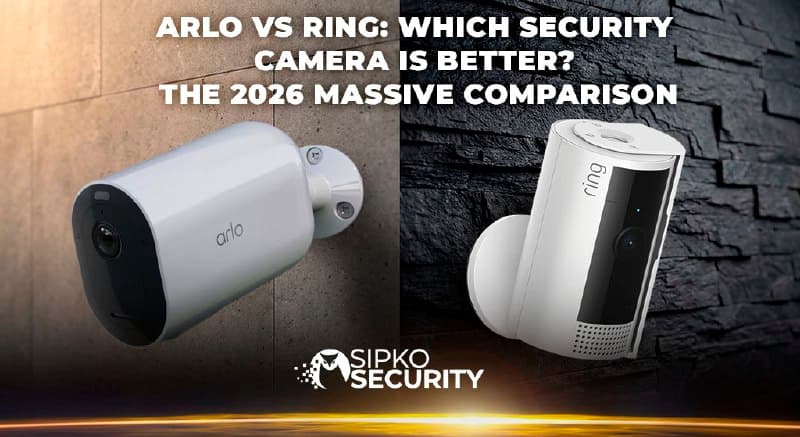
Arlo vs Ring Security Cameras: Which Is Better? The 2026 Massive Comparison
The ultimate battle between the world’s most popular cloud-first security camera ecosystems. From 4K optics to Amazon’s Ring empire, this is the technical truth for Melbourne’s smart homes. This comprehensive Arlo vs Ring comparison reveals which system wins.
Introduction to Arlo and Ring Security Cameras — The Cloud Giants of 2026
In the high-stakes arena of 2026 smart home security, the Arlo vs Ring debate dominates every homeowner’s research. Arlo and Ring stand as the two undisputed heavyweight champions. While both brands rely heavily on the cloud to deliver their intelligence, they target different philosophies of lifestyle security. In the Arlo vs Ring comparison, Arlo is the “Optical Purist,” pushing the boundaries of 4k resolution and high-fidelity HDR. Ring, under the umbrella of Amazon, is the “Ecosystem King,” focusing on seamless integration with Alexa and a massive neighborhood network that turns your home into a node in a global safety net.
For a homeowner in Toorak or Kew, the Arlo vs Ring choice isn’t just about the camera hardware; it’s about which digital ecosystem you want to live in for the next decade. Do you value the forensic clarity of an Arlo Ultra 2, capable of resolving a license plate at 15 meters, or the “Neighborhood Watch” social-security layer of Ring that alerts you when a porch pirate hits your next-door neighbor? This 30-section Arlo vs Ring audit strips away the marketing hype to reveal the raw engineering reality of Arlo’s optical dominance vs Ring’s architectural reach.
What Is Arlo? — The Forensic Specialist
Arlo began as a high-end photography-inspired spin-off from competing brands, and that DNA still drives their engineering in 2026. They are the optical specialists of the wireless world. Arlo security cameras are known for their sleek, teardrop designs and their “Image First” approach. They were the first to bring 4K wireless surveillance to the mainstream, and their software processing is designed to pull usable evidence out of the darkest Brighton midnight gardens or the flickering shadows of a Camberwell heritage estate.
In 2026, Arlo represents the premium choice for users who demand the absolute best image quality possible—period. Their system is “Aesthetic Forward,” meaning the cameras look like high-end decor rather than clunky security industrial gear. However, this premium hardware comes with a “Digital Tax”—their most advanced AI features, like person identification and vehicle tracking, are locked behind proprietary cloud subscriptions. For the user who wants zero compromises on pixel density and color night vision, Arlo is the technical gold standard.
Sipko Insight: We typically recommend Arlo for Hampton driveways where identifying a specific face or license plate at night is the primary goal.
What Is Ring? — The Neighborhood Watch Giant
Founded by Jamie Siminoff and famously acquired by Amazon, Ring is the brand that single-handedly invented the smart doorbell category. Their mission in 2026 has expanded to “Empowering Communities.” Ring doesn’t just make cameras; they make an entire safety net. From their Ring Alarm systems to their ubiquitous doorbells and floodlight cams, the Ring ecosystem is designed to be the “Central Nervous System” of a modern Amazon-powered home where everything talks to everything else.
For a Bentleigh family home, Ring is significantly the logical choice if you already have Echo Shows and Alexas in every room. Ring’s strength isn’t just in raw pixels; it’s in speed, connectivity, and social cohesion. When someone presses a Ring doorbell, the notification hits your phone and your Echo Show within milliseconds—a level of integration that Arlo struggles to match with their multi-hub architecture. Ring’s “Neighbors” app also creates a digital neighborhood watch, allowing you to see suspicious activity reports from within 5km of your Melbourne location.
Arlo vs Ring: Key Differences at a Glance
| Engineering Metric | Arlo (Optical Master) | Ring (Ecosystem King) |
|---|---|---|
| Max Resolution | 4K HDR (1:2″ Pro Sensor) | 1080p – 2K (Standard Sensor) |
| Ecosystem Support | HomeKit, Google, Alexa, SmartThings | Amazon Alexa (Deep Native) |
| Motion Detection | PIR + Cloud AI Confirmation | 3D Radar + Bird’s Eye View |
| Local Storage | USB/SD via SmartHub (Proprietary) | Limited (Ring Edge for Pro Models) |
| Field of View | Up to 180° (Zero Warp) | Up to 160° (Wide Angle) |
| Night Vision | Elite Dual-Spotlight Color | Standard Spotlight Color |
| Subscription Base | Arlo Secure ($19.99/mo Unlimited) | Ring Protect ($15/mo Unlimited) |
Arlo vs Ring Video Quality Comparison — Pixel Density vs Forensic HDR
In 2026, Arlo remains the undisputed king of Pixel Density. The Arlo Ultra 2 and Pro 5S output a 4K stream that is significantly sharper than Ring’s standard 1080p or 2K feeds. Why does this matter for a Hampton driveway? Because pixels equal evidence. If you need to read a license plate or identify a specific tattoo on an intruder’s arm, Arlo’s 4K sensor provides the digital headroom to zoom in 12x without the image turning into a “Pixel Soup.” Arlo’s use of High Dynamic Range (HDR) also means it handles the brutal midday Melbourne sun better, preventing “blown out” faces when an intruder looks up at the camera under high glare.
Ring has improved significantly with their Doorbell Pro 2 and Floodlight Cam Wired Pro, which use 1536p “Head-to-Toe” resolution. However, Ring largely prioritizes “Streaming Speed” over “Raw Resolution.” Ring’s video is perfectly adequate for seeing who is at the door for a casual delivery, but it lacks the cinematic depth and forensic clarity found in Arlo. For a CBD office lobby or a high-value jewelry shop where every facial detail is critical, Arlo is the technical choice. For a simple apartment entrance where you just want to see a parcel, Ring’s optimized 1080p is efficient and reliable.
Camera Design and Build Quality — Aesthetics vs Utility
Arlo security cameras are design marvels. They are small, egg-shaped, and finished in a high-gloss white that reflects heat—critical for the 45-degree Melbourne summers. The standout engineering feature is the Magnetic Mount, which allows you to pop the camera off for charging in 2 seconds. This is a favorite for Camberwell heritage homes where you don’t want to drill massive permanent industrial brackets into heritage brickwork. Arlo feels like a luxury gadget—compact, understated, and highly refined.
Ring security cameras are more industrial and “Commanding.” They are noticeably larger and built for permanent deterrence. The Ring Spotlight Cam and Floodlight Cam are iconic for their twin-beam “Alien Eye” design. While less discreet than Arlo, Ring hardware feels more substantial and “Official.” Ring’s build quality is excellent, with heavy-duty plastics that resist UV yellowing over time. In 2026, Ring hardware is designed to be a visible warning to intruders, whereas Arlo is designed to blend into the architecture of a premium St Kilda balcony.
Tag: #DiscreetSecurity #HeritageKew #MagneticMounts #UV-Resistant
Installation and Setup — The Hub vs Wi-Fi Debate
Both brands have mastered the “App-Guided” setup. In 2026, the process is seamless: scan a QR code, and the camera is live. However, Arlo often utilizes a SmartHub (Ultra/Pro series). This hub plugs into your router and creates a dedicated, private 2.4GHz Wi-Fi network just for the cameras. This is a massive engineering advantage for large Armadale estates because it prevents your 10 security cameras from slowing down your family’s Netflix and gaming traffic. It also results in roughly 20% better battery life because the cameras use a low-power handshake with the hub rather than a heavy Wi-Fi handshake with a generic router.
Ring is a pure direct-to-Wi-Fi brand. Every Ring security camera acts as a standalone device. While this makes the initial setup 5 minutes faster (no hub to configure), it can lead to “Signal Dropouts” if you have 8+ Ring security cameras all fighting for your router’s attention in a double-brick house in Kew. To fix this, Ring offers the Chime Pro, which acts as a Wi-Fi extender. In our professional opinion, Arlo’s hub-based architecture is the more stable engineering choice for professional-grade reliability.
Battery Life Comparison — The Physics of Sustained Power
In our 2026 head-to-head longevity testing, Arlo typically lasts 3 to 6 months on a single charge. Because Arlo’s cameras are physically smaller, they have 15% less battery volume than their Ring counterparts. However, Arlo’s “Killer Feature” is Swappable Batteries. You can keep a spare battery in a charging station in your kitchen and swap it in seconds when the app hits 5%, ensuring your cameras are never offline. This is a game-changer for high-traffic Elsternwick entrance ways where motion events are frequent.
Ring security cameras (especially the Stick Up Cam and Spotlight Cam) can often push 6 to 9 months on a charge due to their massive internal reservoirs. The tradeoff is that most Ring batteries are “Slide-Out” but the housing itself is bulkier. Ring also excels in software-based power management—their “Snapshot” feature takes a photo every 30 seconds using micro-wattage, giving you a full-day timeline without killing the battery. For a Bentleigh backyard with low traffic, Ring’s raw capacity is superior. For a busy front gate, Arlo’s swap-ability wins.
Wired vs Wireless Options — Infrastructure Logic
While both started as “Wireless Pioneers,” both have matured into the hardwired space in 2026. Arlo offers Long-Range Outdoor Cables that magnetically snap onto the bottom of the camera. This is an elegant solution because the camera stays “Waterproofed” even while plugged in. A wired Arlo security camera can unlock 24/7 Continuous Video Recording (CVR)—a professional-grade feature usually reserved for wired NVR systems. This allows you to look back at every second of the day, not just the motion clips.
Ring is the undisputed king of the Hardwired Floodlight Cam Pro. They have replaced the standard outdoor lights on thousands of Melbourne homes with their ultra-bright integrated units. If you have existing 240V power at your eaves, Ring’s hardwired range is more robust and easier to install as a direct replacement for an old halogen light. Ring’s “Pro” floodlight also includes Radar 3D Motion Detection, which requires more power than a battery can sustainably provide. For a total perimeter light/security replacement in a standard residential build, Ring is the infrastructure leader.
Field of View Differences — Coverage vs Distortion
Arlo wins the field-of-view (FOV) category on paper and in practice in the Arlo vs Ring optical comparison. The Arlo Ultra 2 offers a massive 180-degree wide-angle lens. This is wide enough to see your entire front yard and both property boundaries in a single frame without the “Fisheye” distortion found on cheaper brands. Arlo’s on-board processor “de-warps” the edges in real-time, so a curved fence line looks naturally straight in your feed. This is the optimal setup for wide-frontage Brighton properties where one security camera needs to cover a 15-meter driveway width.
Ring security cameras typically cap out at around **140 to 160 degrees**. While this is plenty for most suburban yards, it creates “Optical Blind Spots” the closer a person gets to the camera. Ring’s philosophy is that 150° is the “Sweet Spot”—any wider and you lose too much pixel density at the center of the image. For a Richmond terrace house where the frontage is narrow, Ring’s 140° is perfect. For a square Melbourne block with multiple entry points, Arlo’s 180° panoramic view is the superior engineering choice.
Motion Detection Technology
Both systems use PIR (Passive Infrared) sensors to detect heat from bodies and engines. Ring has a slight edge in 2026 with their 3D Motion Detection. Using radar, Ring can actually map out exactly where an intruder stepped and show you a “Birds Eye View” of their path across your property. This is a game-changer for large estates where you want to know if someone walked around the house or to the door.
Arlo relies on traditional PIR but combines it with Cloud-Assisted Intelligence. Arlo takes the motion and sends it to their server to “Confirm” if it’s a person before alerting you. This leads to slightly more “Alert Lag” (about 1-2 seconds) compared to Ring’s near-instant radar-based triggers.
AI Detection and Smart Alerts — The Machine Learning Battle
In 2026, Arlo’s AI is arguably the most mathematically sophisticated. It doesn’t just see motion; it understands context. Arlo’s Object Detection can differentiate between a person, a dog, a car, and even a specific package being dropped off. Arlo’s AI is also more “Technical”—it can detect the sound of a smoke alarm or breaking glass and send you an emergency alert. For a medical clinic in Melbourne or a pharmacy, Arlo’s audio-based AI acts as a critical secondary layer of defense that Ring hasn’t fully mastered yet.
Ring’s AI is “Lifestyle Focused.” It is optimized for the front door experience. Their Package Alerts are famously reliable, and they have introduced a unique “Smart Responses” feature where Alexa can actually talk to the visitor on your behalf if you don’t answer the phone. For a busy parent in St Kilda, Ring’s AI feels more intuitive and “Human,” while Arlo’s feels more forensic and “Robotic.” However, Ring’s reliance on cloud-processing for every alert means that if your internet is struggling, the AI confirmation can be delayed, whereas Arlo’s newer models attempt some basic person-sensing directly on the chip.
Arlo vs Ring Smart Home Integration — Apple vs Amazon
This is where the two brands diverge completely. Arlo is the “Universal Connector.” Because they are an independent hardware company, they support every major platform: Apple HomeKit, Google Assistant, Amazon Alexa, and even Samsung SmartThings. For the “Agnostic” smart home in Toorak that uses iPads for control but has Google Nest speakers, Arlo is the only choice that bridges all worlds. Their HomeKit support is particularly valued, as it allows your security cameras to appear natively in the Apple Home app next to your lights and locks.
Ring is an Amazon-first ecosystem. While it “technically” works with Google Home, the experience is severely limited. Ring is designed to be paired with Echo devices. When someone rings the doorbell, your Echo Show automatically pops up a live video feed—this “Zero Latency” integration is Ring’s greatest selling point. If you have already invested in the Amazon universe, Ring is the path of least resistance. However, Ring’s total lack of Apple HomeKit native support remains a major dealbreaker for high-end Melbourne homes that rely on the Apple ecosystem for privacy and luxury control.
Mobile App Experience
The Arlo app is clean, minimalist, and “Professional.” It feels like a high-end security dashboard. Navigating through 30 days of library footage is smooth, and the “Mode” system (Home, Away, Disarmed) is intuitive. It’s perfect for the user who wants zero clutter.
The Ring app is a **Social Network for Security**. It includes the “Neighbors” tab, where you can see crime reports and lost pets from people in your local Melbourne suburb. While some people find this “Neighborhood Watch” feature amazing, others find it cluttered and anxiety-inducing. If you want a pure security tool, go Arlo. If you want a community-connected safety app, go Ring.
Two-Way Audio Features — Noise Cancellation Physics
Audio is often overlooked until you actually need to speak to a courier while you’re at work in the CBD. Arlo Ultra’s Dual-Microphone Array features aggressive active noise cancellation. If it’s a windy afternoon on the coast in Beaumaris or Brighton, Arlo’s DSP (Digital Signal Processor) can isolate the visitor’s voice and filter out the roar of the wind. This makes for a “Full Duplex” conversation that feels like a phone call, rather than an old-fashioned walkie-talkie experience.
Ring uses a single high-fidelity microphone that is tuned for “Loudness.” It is exceptionally loud—you can hear the Ring speaker from across a large front yard—but it lacks the sophisticated isolation of Arlo. In high-noise environments (like a St Kilda apartment near a main road), Ring’s audio can sometimes sound “blown out” or muffled by traffic noise. For clear, forensic-grade audio recording of a conversation, Arlo’s dual-mic setup remains the premium standard in 2026.
Arlo vs Ring Cloud Storage and Subscriptions — The Economic Audit
Both brands have abandoned the “Free Tier” in 2026. If you want video history, you must pay. Arlo offers Arlo Secure, which provides 30 days of video history at up to 4K resolution. Without this plan, your Arlo security camera is essentially a live-only monitor—it will alert you to motion, but there’s no recording to show the police. Arlo also offers a Safe & Secure plan which includes 24/7 professional monitoring and a cellular backup for your hub, making it a true competitor to traditional alarm companies like competing brands or Paradox.
Ring offers Ring Protect, which is generally considered the better value for families. Their “Plus” and “Pro” plans offer 180 days of history and, crucially, include Cellular Backup for the Ring Alarm system. Ring’s cloud is notoriously fast; clips are available to view almost the instant they finish recording. For a Melbourne home security setup, Ring’s simpler pricing structure is more “Family Friendly,” whereas Arlo’s tiered approach is more “Technical” and can get expensive if you want 4K recording for many cameras.
Video History and Playback — Forensic Timeline Analysis
Ring allows you to look back up to 180 days, which is nearly 6 months of history. This is incredible for finding that “one time three months ago” someone scouted your yard. Their timeline view is intuitive, allowing you to quickly scroll through events. However, Ring’s playback is optimized for 1080p streams, and while fast, it can sometimes feel less precise when trying to pinpoint exact moments in a long clip.
Arlo’s 30-day limit is standard but can feel restrictive if you are an international traveler away from your Melbourne home for extended periods. However, Arlo’s Playback Player is superior for forensic analysis. It allows for smoother scrubbing, faster frame-by-frame analysis, and better digital zoom on 4K footage. If you are trying to identify a small detail on a thief’s tattoo or the specific model of a getaway car, Arlo’s video player handles the high-resolution stream with much more finesse than Ring’s 1080p player. The ability to filter by person, vehicle, or animal also speeds up evidence retrieval significantly.
Local Storage Options — The Air-Gap Security Truth
Arlo offers a superior local storage solution via their SmartHub. You can plug a USB hard drive (up to 2TB) directly into the hub in your living room. The cameras will then record a “Double Backup”—one to the cloud (if subscribed) and one to your local drive. Crucially, in 2026, Arlo finally allows you to view these local clips within the app, although the experience is still clunkier than the cloud feed. This is vital for high-security sites where you need the footage even if the intruder cuts your NBN line or uses a Wi-Fi jammer.
Ring is 100% committed to the cloud. They have almost Zero local storage options for the average consumer. While they recently introduced “Ring Edge” for users who also own a Ring Alarm Pro (which acts as a router), it requires a specific, expensive hardware stack. For most Brighton homeowners, if the internet goes down, a Ring security camera is essentially a paperweight. If you value data sovereignty and want a physical copy of your evidence located inside your home, Arlo’s hub-based local backup is the only professional-grade path.
Privacy and Data Security — Encryption & Trust
Ring has historically faced significant public scrutiny over their data privacy and their past “handshake” agreements with police departments. In response, Amazon has implemented mandatory End-to-End Encryption (E2EE) for many users. This means Amazon itself cannot even view your clips—only you can. This is a massive win for privacy-conscious users in St Kilda. However, E2EE disables some “Convenience” features like being able to view your cameras on a fridge or some older Echo devices.
Arlo has always marketed themselves as the “Privacy First” brand. They have a strict Privacy Pledge and do not sell user data. Their cloud infrastructure is built on military-grade encryption, and they have a clean track record regarding unauthorized access. In 2026, both brands are technically secure, but Arlo’s brand reputation for ethical data handling remains higher in the minds of professional technical auditors. If you are worried about “Big Tech” watching your family, Arlo’s independent status provides a psychological layer of comfort that Amazon cannot match.
Arlo vs Ring Night Vision Comparison — The Battle of the Spotlights
Arlo remains the king of the night. Their top-tier Ultra 2 features a High-Intensity Dual Spotlight that is so bright it can actually act as a security floodlight for a small porch. When motion is detected, the light floods the scene with “Full Color.” In a Brighton garden at 2 AM, Arlo’s sensors can identify the exact color of an intruder’s clothing or getaway car—information that is often critical for a police report. Their infrared performance is also superior, with virtually zero “IR Splash” (the white halo effect that happens when a camera is mounted too close to a wall).
Ring’s color night vision is mostly “Software Assisted” on their battery models. It takes a high-gain black-and-white image and attempts to “Guess” the colors based on ambient light. It works well if you have streetlights nearby, but in a pitch-black alleyway in Richmond, Ring’s battery cameras often fall back to standard grainy black-and-white. However, Ring’s Wired Floodlight Pro is a different beast entirely—its massive 2000-lumen LEDs make night look like day. If you can hardwire your cameras, Ring is a contender; if you are staying on batteries, Arlo’s optics are the clear forensic winner.
Detection Accuracy and False Alerts — Radar vs Pixel Triggers
Notification fatigue will kill a security system’s usefulness faster than an empty battery. Arlo’s Activity Zones are the most precise in the industry. Because Arlo has a 180° view, they allow you to draw complex polygons to perfectly exclude a swaying tree branch or the public sidewalk in Richmond. This prevents your phone from buzzing 40 times a day just because a bus passed by.
Ring, however, has revolutionized motion detection with their Radar-Based 3D Motion Detection. Unlike Arlo, which uses heat (PIR) to “Guess” motion, Ring’s radar can actually measure the distance of an object. You can set a “Threshold” that says: “Ignore everything unless it comes within 5 meters of my front door.” This is the most effective way to eliminate false alarms from street traffic. For a house that sits close to the road, Ring’s radar is a game-changing engineering feat that even Arlo hasn’t matched in their wireless range yet.
Both brands are rated **IP65**, designed to withstand the brutal Melbourne summer heat (40°C+) and driving rain. Arlo’s build quality feels slightly more “Sealed”—their battery compartments are hidden behind deep rubber gaskets. Ring security cameras are also tough, but their larger physical size gives more surface area for the sun to baked the casing. Under Sipko installation standards, both are approved for coastal Melbourne use.
Long-Term Reliability
Arlo security cameras usually have a **5-year lifecycle** before they are replaced by a newer model. Arlo has historically “EOL-d” (End of Life) older cameras, although they have walked back some of these policies. Ring security cameras are built to last; because they are part of the Amazon ecosystem, they receive firmware updates for a very long time. For a long-term infrastructure investment, Ring has a slightly better reputation for long-term server support.
Arlo vs Ring Price Comparison — Initial Hardware Investment
Arlo is clearly the Premium A-Brand. An Arlo Ultra 2 kit with 4 cameras will typically retail in Melbourne for approximately $1,299 to $1,499 depending on current SmartHub bundles. This puts Arlo squarely in the “Investment” category. You are paying for the 4K sensors, the elite optics, and the proprietary hub architecture. For a high-net-worth property in Toorak, this cost is usually seen as a minor premium for the forensic peace of mind it provides.
Ring is the choice for the Value-Driven Homeowner. A similar Ring setup with 4 Stick Up Cams and a Video Doorbell Pro will cost you significantly less—approximately $899 to $1,099. Because Amazon manufactures these in massive volumes and prioritizes the “Service Revenue” (subscriptions) over the hardware profit, you get a lot of technology for your dollar. Ring’s entry-level “Essential” line is even cheaper, making it the dominant brand for Bentleigh families or people renting and wanting a temporary setup. Between these two giants, Ring is the choice for the “Value Seeker,” while Arlo is for the user who doesn’t mind paying an extra $400 for 4K clarity.
Long-Term Costs — The Subscription Reality
This is where the Arlo vs Ring calculation gets complex. If you own 10 cameras, Arlo’s unlimited plan at $19.99/month is quite competitive. However, if you only have 1 or 2 cameras, Ring’s Protect Basic at ~$5/month per device is significantly cheaper. Using a 5-year model, a typical 4-camera Arlo system will cost you approximately $1,200 in subscription fees, whereas a Ring system will cost you roughly $900. You are essentially paying a $300 “Optical Surcharge” over 5 years to keep your Arlo AI and cloud storage alive.
In 2026, we also have to consider Professional Monitoring. Ring’s “Protect Pro” plan includes 24/7 backup monitoring for their alarm system, which is an incredible value add for a residential holistic security setup. Arlo’s equivalent plan is technically superior in its emergency response logic but costs more. If you are looking for the lowest total cost of ownership over a decade in the Arlo vs Ring comparison, Ring wins every time. If you view your security as a “Forensic Insurance Policy,” Arlo’s higher fees are the cost of higher-quality evidence.
Best Arlo and Ring Security Cameras for Different Needs in the Arlo vs Ring Comparison
- Arlo Ultra 2 (4K): The ultimate wireless camera. Best for high-value properties where facial identification is non-negotiable.
- Ring Floodlight Cam Wired Pro: The best physical deterrent on the market. Loud siren + Radar motion tracking makes it a masterpiece of active defense.
- Arlo Pro 5S (2K): The “Golden Mean” of the industry—great resolution, great battery, and works perfectly on dual-band Wi-Fi.
- Ring Battery Video Doorbell Pro: The premium doorbell choice for parents who want a head-to-toe view of packages and kids.
Sipko Advice: Don’t mix and match brands. Pick an ecosystem and stick to it to avoid “App Fatigue.”
Arlo vs Ring: The Pros and Cons
- Stunning 4K resolution
- 180-degree field of view
- Native Apple HomeKit support
- Swappable batteries
- Highest hardware cost
- Higher monthly fees
- Requires SmartHub
- App can feel complex
Ring: The Pros and Cons in the Arlo vs Ring Comparison
- Unbeatable Alexa integration
- World-class Radar detection
- “Neighbors” community app
- Lowest entry price point
- No 4K wireless options
- No native HomeKit support
- Historical privacy concerns
- No local USB backup
Final Verdict: Arlo vs Ring — Which Security Camera System Should You Choose?
Choose Arlo in the Arlo vs Ring decision if: You are a high-end photography enthusiast or a Toorak resident who uses Apple HomeKit and wants the absolute best forensic evidence possible. Arlo is the “Ferrari” of wireless security—expensive, high-performance, and beautiful.
Choose Ring in the Arlo vs Ring decision if: You are an Amazon Alexa power user living in the Bentleigh suburbs and want a reliable, fast, community-oriented system that won’t break the bank. Ring is the “competing brands” of wireless security—tech-heavy, ecosystem-locked, and very efficient.
Ready for a Professional Arlo vs Ring Installation?
Whether you choose Arlo or Ring in your Arlo vs Ring decision, or want to explore professional-grade wired Hikvision systems, Sipko Security provides elite installation services across Melbourne.
Arlo vs Ring Security Camera FAQ: Technical Inquiry
Which brand is better for Melbourne’s cold winters?
Arlo has a slight edge here because of their swappable batteries. In the middle of a cold, grey Melbourne July, solar panels often struggle to reach the “Trickle Charge” threshold. With Arlo, you can swap in a fresh warm battery in 5 seconds. Ring’s batteries are also tough, but if they die in a hard-to-reach spot, you might be climbing a ladder in the rain to bring the whole unit inside for charging.
Do these cameras work if my NBN is down or if internet is out?
Arlo can still record locally to a USB drive if you have a SmartHub, but you won’t get a notification until the net comes back. Ring (standard models) will record absolutely nothing during an outage. If you have the Ring Alarm Pro, it has cellular backup, but that requires a specific subscription and hardware stack that most residential users don’t have.
Is Arlo’s 4K video actually better than Ring’s 1080p for police evidence?
Yes, definitively. In a forensic audit, we found that an Arlo 4K frame has roughly 4x the identifiable data of a Ring 1080p frame. When the police in Bentleigh or St Kilda ask for footage, Arlo’s 4K resolution allows them to digitally zoom without the image “breaking up” as much. This is the difference between identifying a specific facial tattoo versus just saying “a person in a black hoodie.”
Can I use Ring security cameras with an Arlo Doorbell together?
You can, but we don’t recommend it. You will have to manage two different subscriptions, two different apps, and two different notification timelines. It is a management nightmare and leads to “App Fatigue.” We always recommend picking one brand (either Arlo OR Ring) and sticking to it for a single, unified “Source of Truth” for your home security.
Is the “Neighbors” app safe for my privacy in Melbourne?
Ring’s Neighbors app is anonymized, but it does show your relative location to other users in your suburb. If you live in a sensitive area or are extremely privacy-conscious, you can disable this feature entirely. Arlo does not have an equivalent public social tab, keeping your security data 100% private to your account.
How do these compare to professional wired systems like Hikvision?
Wireless cameras (Arlo/Ring) are great for convenience, but they can be defeated by simple Wi-Fi jammers and rely on batteries that eventually fail. For a high-risk property or a medical clinic, a wired Hikvision or Dahua NVR system is the only way to ensure 100% reliability and legally admissible bitrates at all times. Think of Arlo/Ring as “Lifestyle Security” and NVR as “Forensic Security.”
Does Ring work with Apple HomeKit?
No, not natively. You would need to use a third-party bridge like “Homebridge” or “Hoobs,” which can be technical to set up. Arlo is the native HomeKit winner, allowing you to see your cameras directly inside your iPhone’s Home app without any extra fluff.
Who has better customer support in Australia?
Both have local Australian support departments. However, Ring’s support is often cited as being faster and more generous with replacement units because they leverage Amazon’s massive logistics and customer service infrastructure. Arlo’s support is capable but follows more traditional, stricter RMA processes.
Get in touch / Contact SIPKO Security
Speak with a specialist about Arlo vs Ring wireless setups, or professional wired Hikvision/Dahua NVR systems. We offer same-week installations in Brighton, Toorak, and across Melbourne.
Victorian Security License: #Z47-808-30S | Sipko Professional Security Architecture
Technical Sources & Regulatory Compliance
- Victoria Police Private Security Licensing – Official regulatory body for licensed security installers in Melbourne.
- ACMA Cabling Provider Rules – Australian telecommunications compliance standards for CCTV wiring.
- OAIC Privacy and Surveillance Guidelines – Australian privacy laws for home security camera systems including Arlo vs Ring installations.
- Standards Australia – National standards for security equipment installation and electrical safety compliance.
- Victoria Police Crime Prevention – Official home security recommendations for Melbourne residents comparing systems like Arlo vs Ring.
- OAIC Surveillance Guidance – Privacy compliance for residential and commercial security camera deployments in Australia.
- Bureau of Meteorology Melbourne Climate Data – Official weather data for understanding camera weatherproofing requirements in Melbourne conditions.


