Commercial Security Cameras for Business: How to Choose the Right Surveillance System
Why Modern Businesses Are Investing in Better Surveillance
Running a business today involves far more than simply locking the doors after hours. Australian companies face a wide range of security challenges, from theft and vandalism to unauthorised access, workplace incidents and stock losses. As a result, more organisations are investing in commercial security cameras that do much more than record video.
Modern commercial surveillance cameras combine high-definition imaging, artificial intelligence, remote monitoring and smart alerts to help businesses stay protected around the clock. Whether you operate a retail store, warehouse, office or manufacturing facility, choosing the right surveillance solution can improve security while also making daily operations more efficient.
Many business owners searching for security cameras commercial solutions are no longer looking for basic recording equipment. Instead, they want systems that provide real-time visibility, remote access from mobile devices and useful insights that help them manage staff, visitors and property more effectively.
More Than Just Security
Today’s surveillance technology delivers value well beyond preventing crime. A professionally designed system supports both security and business management by giving owners better visibility across their entire operation.
Some of the biggest advantages include:
- discouraging theft and vandalism;
- improving employee safety;
- monitoring deliveries and loading areas;
- protecting valuable stock and equipment;
- reviewing workplace incidents quickly;
- supporting insurance claims with recorded evidence;
- improving day-to-day business operations.
Many Australian businesses also use recorded footage to investigate customer complaints, review workflow efficiency and identify areas where processes can be improved.
Modern commercial video surveillance systems are becoming valuable management tools rather than simply security equipment.
Commercial Systems Are Built for Business
Residential cameras are designed to protect homes, but business environments have very different requirements. Offices, warehouses, retail stores and industrial sites often require continuous recording, multiple cameras and advanced monitoring features.
Professional commercial security camera systems are built to operate 24 hours a day while supporting future expansion as a business grows.
Most commercial installations include features such as:
- continuous recording;
- support for dozens or even hundreds of cameras;
- AI-powered motion and object detection;
- remote monitoring from any location;
- integration with alarm and access control systems;
- centralised management across multiple sites.
Unlike home surveillance, commercial video security systems are designed to become part of an overall business security strategy rather than functioning as standalone devices.
What Makes Up a Complete Surveillance System?
Installing cameras is only one part of building an effective security solution. A reliable surveillance system combines several technologies that work together to provide continuous monitoring and secure storage.
The main components usually include:
| Component | Purpose |
|---|---|
| Security cameras | Capture live video throughout the property |
| Recording device | Stores video for future review |
| Video management software | Allows users to monitor cameras and manage recordings |
| Cloud or local storage | Keeps footage secure and accessible |
| Network infrastructure | Connects every device together |
Choosing quality hardware across all of these areas helps ensure reliable long-term performance.
Choosing the Right Business Security Cameras
Every business has different security requirements. A small office may only need a few cameras, while a distribution centre could require dozens of monitoring points.
Selecting the right business security cameras starts with understanding what you want to protect. Some businesses focus on customer areas, while others need to monitor production lines, loading docks or restricted access zones.
A single business security camera positioned at an entrance may provide basic monitoring, but larger premises benefit from complete coverage that eliminates blind spots and provides clear evidence whenever an incident occurs.
Professional installers usually assess:
- building layout;
- lighting conditions;
- entry and exit points;
- high-value assets;
- employee work areas;
- outdoor security requirements.
This approach ensures every camera serves a practical purpose instead of simply increasing equipment costs.
Why Small Businesses Shouldn’t Overlook Surveillance
Modern security technology is no longer reserved for large corporations. Affordable systems have made professional surveillance accessible for smaller companies across Australia.
Many owners looking for security cameras for small business discover that today’s solutions offer enterprise-level features without requiring a huge investment.
Reliable small business security cameras can help protect retail stores, cafés, medical clinics, workshops and professional offices from theft, property damage and false liability claims.
Even compact small business CCTV security systems now include features such as:
- mobile phone access;
- AI motion detection;
- cloud backup;
- remote playback;
- automatic alerts;
- high-definition video recording.
Businesses researching security cameras small business options should also think about future growth. Choosing equipment that supports additional cameras later can save both time and money as operations expand.
Choosing the Right Camera for Every Business Environment
No two workplaces are exactly the same, so using one type of camera across an entire property rarely delivers the best results. Different locations have different lighting conditions, security risks and monitoring requirements. A combination of camera styles usually provides the most effective coverage.
Dome Cameras
Dome cameras remain one of the most popular choices for indoor commercial environments. Their compact design blends easily into offices, retail stores, hotels and healthcare facilities while making it difficult for people to tell which direction the camera is facing.
They’re commonly installed in:
- reception areas;
- retail floors;
- office corridors;
- restaurants;
- customer service areas.
Because they’re discreet and resistant to tampering, dome cameras are an excellent option for cameras in the workplace, where businesses want effective monitoring without creating an intimidating environment.
Bullet Cameras
Bullet cameras are designed for longer viewing distances, making them ideal for outdoor applications where clear visibility is essential.
They’re frequently used to monitor:
- building entrances;
- loading docks;
- warehouse yards;
- perimeter fencing;
- staff parking areas.
Their larger housing also allows for improved weather resistance, making them well suited to Australia’s changing climate.
Turret Cameras
Turret cameras combine the image quality of dome cameras with easier installation and excellent night performance. They produce fewer infrared reflections, making them especially effective in low-light conditions.
Many businesses install turret models as workplace cameras because they perform equally well inside offices and outside commercial buildings.
PTZ Cameras
Pan-Tilt-Zoom (PTZ) cameras allow security staff to remotely control the camera’s movement and zoom level.
These cameras are commonly installed in locations such as:
- shopping centres;
- logistics facilities;
- schools;
- industrial sites;
- large warehouses.
Rather than monitoring one fixed area, PTZ cameras allow operators to actively follow people or vehicles whenever necessary.
Panoramic Cameras
Large open spaces often require wide-angle monitoring instead of multiple standard cameras.
Panoramic cameras are ideal for:
- factories;
- supermarkets;
- distribution centres;
- exhibition halls;
- warehouse interiors.
They reduce blind spots while lowering the number of cameras required across large indoor areas.
IP Cameras or Traditional CCTV?
Many Australian businesses upgrading older surveillance equipment ask whether they should keep analogue CCTV or move to IP technology.
Traditional cctv systems commercial installations are still found in many businesses because they remain reliable, cost-effective and suitable for smaller premises. If existing cabling is already installed, upgrading an analogue system may also reduce installation costs.
However, most new commercial security camera systems are now based on IP technology because they offer significantly greater flexibility.
Some of the biggest advantages include:
- sharper image quality;
- remote viewing from any location;
- AI-powered analytics;
- cloud connectivity;
- easier expansion;
- centralised management.
For companies planning future growth, IP systems generally provide better long-term value.
Wired or Wireless Surveillance?
Both wired and wireless systems have their place, depending on the building and operational requirements.
A wired installation remains the preferred solution for permanent commercial premises because it provides:
- stable network performance;
- uninterrupted recording;
- higher bandwidth;
- improved cybersecurity;
- greater reliability.
Wireless systems can be an excellent choice for leased offices, temporary worksites or smaller businesses where running network cables is difficult or expensive.
When selecting business security cameras, it’s worth considering not only current requirements but also how the system may need to expand over the next five to ten years.
Choosing the Right Storage Solution
Recording quality is only one part of an effective surveillance system. Businesses also need a reliable method of storing footage safely while ensuring recordings remain available whenever they’re needed.
Most organisations choose one of three storage options.
| Storage Type | Benefits |
|---|---|
| Local NVR or DVR | Full control, fast access and no internet dependency |
| Cloud storage | Remote access, automatic backups and simple management |
| Hybrid storage | Combines local recording with secure cloud backup |
For many Australian companies, hybrid storage provides the ideal balance between security, convenience and long-term scalability.
How Artificial Intelligence Is Changing Surveillance
Artificial intelligence has transformed surveillance from simple video recording into an intelligent monitoring solution.
Modern commercial video security systems can now analyse activity automatically instead of relying entirely on human operators.
Depending on the system, AI features may include:
- recognising people and vehicles separately;
- reducing false motion alerts;
- licence plate recognition;
- detecting unusual behaviour;
- identifying unauthorised access;
- sending instant notifications when predefined events occur.
These smart functions reduce the amount of footage staff need to review while helping security teams respond more quickly when genuine incidents occur.
Monitoring Employees Responsibly
Many Australian businesses use surveillance to improve safety as well as security. Properly positioned cameras for workplace environments help employers monitor hazardous areas, investigate incidents and ensure safety procedures are being followed.
It’s important, however, that surveillance is implemented transparently. Employees should understand why monitoring is in place and how recorded footage will be used.
Well-planned cameras at the workplace can contribute to a safer working environment without creating unnecessary concerns about privacy, provided businesses follow Australian legislation and communicate their surveillance policies clearly.
Surveillance Solutions for Different Industries
Every business operates differently, so there is no single surveillance system that suits everyone. The most effective solution is one that’s designed around your daily operations, the layout of your premises and the level of security you require.
Professional commercial surveillance cameras can be configured for businesses of almost any size, from a small office through to a multi-site industrial operation.
Retail Stores
Retail businesses deal with constant customer traffic, making surveillance an important part of both security and day-to-day management.
The most common locations for cameras include:
- store entrances;
- checkout counters;
- shop floors;
- stockrooms;
- delivery areas.
Besides reducing theft, modern commercial video surveillance systems allow managers to review customer flow, investigate complaints and improve staffing during busy trading periods.
Warehouses and Distribution Centres
Warehouses require continuous monitoring of valuable stock, equipment and vehicle movements.
Security systems are commonly installed around:
- loading docks;
- storage aisles;
- dispatch areas;
- forklift routes;
- vehicle entry points;
- external yards.
High-resolution commercial security cameras provide valuable evidence if inventory goes missing while also helping businesses improve workplace safety around heavy machinery.
Office Buildings
Office environments usually focus on protecting employees, visitors and company assets without creating an uncomfortable atmosphere.
Typical monitoring locations include:
- building entrances;
- reception areas;
- lifts;
- corridors;
- meeting room entrances;
- shared workspaces.
Many organisations also integrate surveillance with access control systems, allowing security staff to quickly investigate unauthorised access attempts.
Healthcare Facilities
Medical centres, clinics and hospitals require reliable monitoring while maintaining patient privacy.
Surveillance is generally focused on:
- reception areas;
- public waiting rooms;
- pharmacies;
- staff entrances;
- external access points.
Healthcare providers should ensure surveillance complies with Australian privacy legislation and internal policies regarding patient confidentiality.
Manufacturing and Industrial Sites
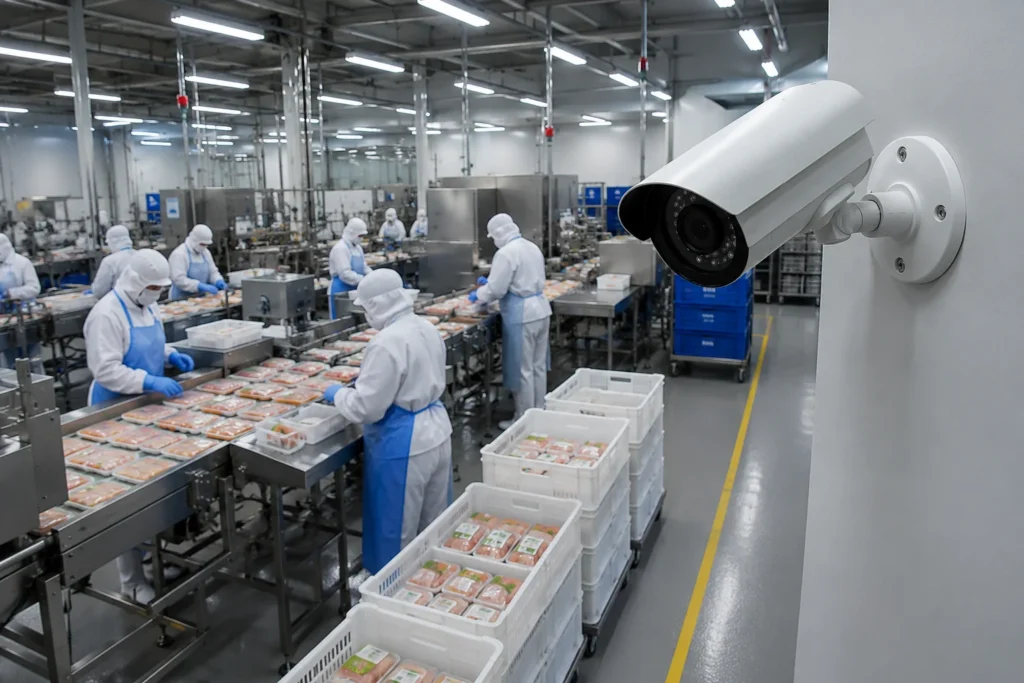
Factories often present unique security challenges because they combine valuable equipment, restricted production areas and potentially hazardous work environments.
Well-designed commercial security camera systems help monitor:
- production lines;
- machinery;
- raw material storage;
- loading bays;
- restricted areas;
- perimeter fencing.
Recorded footage can also assist during safety investigations and equipment damage assessments.
Privacy and Employee Awareness
Installing surveillance should always balance security with privacy.
Businesses should clearly inform employees, contractors and visitors whenever monitoring is taking place. Signage at entrances helps ensure everyone understands that video recording is being used for security purposes.
A clear surveillance policy should explain:
- why monitoring is required;
- who can access recordings;
- how long footage is retained;
- how data is protected;
- when recordings may be reviewed.
Although workplace cameras improve safety and security, they should never be installed in areas where people have a reasonable expectation of privacy, including bathrooms, change rooms or similar facilities.
Where Should Cameras Be Installed?
Camera placement often has a greater impact than simply purchasing expensive equipment.
For most commercial properties, priority locations include:
- main entrances and exits;
- reception desks;
- loading docks;
- warehouses;
- cash handling areas;
- staff car parks;
- building perimeters;
- emergency exits.
Indoor cameras should avoid strong backlighting from windows, while outdoor cameras should be mounted high enough to reduce the risk of vandalism without affecting image quality.
Professional installation also helps eliminate blind spots that could otherwise reduce the effectiveness of the entire surveillance system.
A Practical Solution for Small Businesses
Surveillance technology has become far more affordable over the past decade, making professional security accessible to businesses of every size.
Many owners searching for security cameras for small business are surprised by the range of features available in modern entry-level systems.
A typical installation may include:
- four to eight cameras;
- a Network Video Recorder (NVR);
- secure mobile access;
- AI-powered motion detection;
- cloud or hybrid storage;
- remote playback.
Reliable small business security cameras provide excellent protection without requiring the budget of a large corporation.
Many growing companies also choose expandable small business CCTV security systems, allowing additional cameras to be added as the business expands instead of replacing the entire installation later.
If you’re comparing security cameras small business solutions, it’s worth looking beyond the initial purchase price and considering future flexibility, software updates and warranty support.
Common Mistakes Businesses Should Avoid
Investing in surveillance is a long-term decision, so avoiding common mistakes can save significant money later.
Some of the most common issues include:
- choosing equipment based only on price;
- installing too few cameras;
- overlooking future expansion;
- ignoring cybersecurity;
- placing cameras incorrectly;
- failing to maintain the system regularly.
Businesses should also ensure that passwords are strong, firmware is updated regularly and administrator access is limited to authorised staff only.
These simple practices help protect both the surveillance network and the wider business IT environment.
Final Thoughts
Today’s surveillance technology is about much more than recording incidents. A well-designed system helps businesses prevent theft, improve employee safety, protect valuable assets and gain better visibility across daily operations.
Whether you’re installing your first business security camera or upgrading existing commercial video security systems, it’s worth investing in equipment that can grow alongside your business.
The best commercial surveillance cameras combine excellent image quality, reliable recording, intelligent software and simple remote management. By selecting scalable commercial security camera systems, Australian businesses can build a solution that continues delivering value for many years.
Rather than focusing only on purchase price, consider overall performance, long-term reliability and the level of support available after installation. Choosing the right business security cameras today will help protect your people, your property and your business well into the future.

FAQ
What are commercial security cameras used for?
Commercial security cameras help businesses monitor their premises, protect employees, reduce theft and improve overall security. Modern systems also support remote access, AI-powered analytics and high-quality video recording, making them useful for both security and day-to-day business management.
What’s the difference between commercial security camera systems and residential cameras?
Commercial security camera systems are designed for larger properties and continuous operation. They usually support more cameras, longer recording periods, advanced video analytics, access control integration and centralised management across one or multiple business locations.
Are commercial surveillance cameras suitable for small businesses?
Absolutely. Modern small business security cameras are affordable and scalable, making them ideal for retail stores, cafés, offices, workshops and medical clinics. Many systems include mobile access, motion detection and cloud storage without requiring a large upfront investment.
What are the best security cameras for small business?
The best security cameras for small business depend on your premises and security goals. Dome cameras are ideal for indoor areas, bullet cameras work well outdoors, while turret and IP cameras provide excellent image quality and night vision. A professional assessment can help determine the right combination.
Should I choose IP cameras or CCTV systems commercial installations?
Traditional cctv systems commercial installations remain suitable for some existing setups, particularly where analogue infrastructure is already in place. However, most new businesses choose IP-based systems because they offer higher image quality, remote monitoring, AI features and easier expansion.
Can workplace cameras improve employee safety?
Yes. Properly installed workplace cameras help monitor hazardous areas, investigate incidents and encourage compliance with workplace safety procedures. Businesses should always inform employees that surveillance is being used and comply with Australian privacy regulations.
How long should businesses keep surveillance recordings?
The retention period depends on your industry, company policy and legal obligations. Many Australian businesses keep footage for 30 to 90 days, although organisations handling sensitive operations may retain recordings for longer. Your storage capacity should be planned accordingly when installing commercial video surveillance systems.
Can business security cameras be viewed remotely?
Yes. Most modern business security cameras allow authorised users to securely access live video and recorded footage from a smartphone, tablet or computer. Remote monitoring is especially useful for businesses operating across multiple sites or for owners who travel frequently.