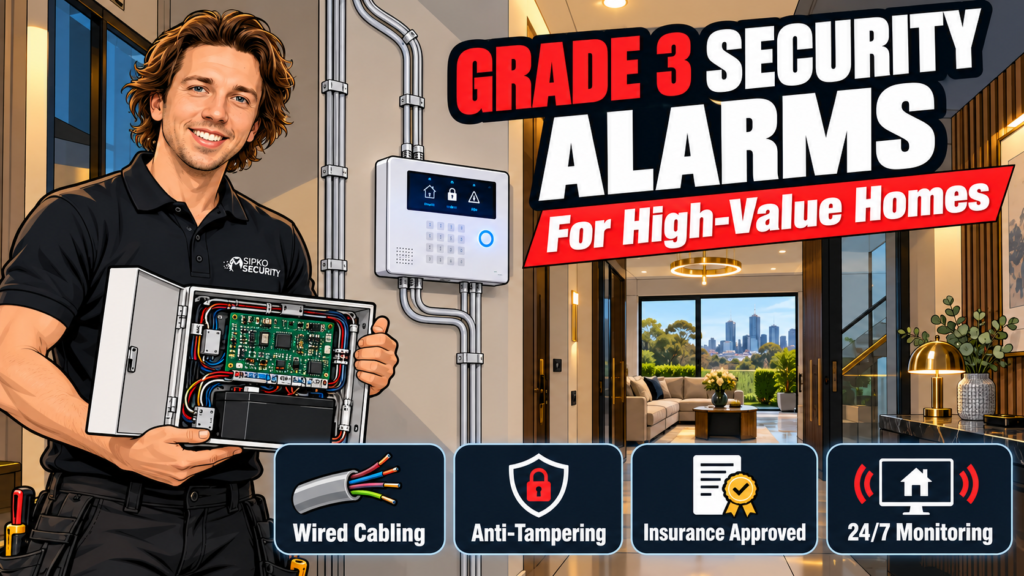
Most homeowners don’t realise alarm systems come in grades, or that Grade 2 isn’t actually the top tier available. Grade 3 is designed for high-value homes where your insurer requires it or where significant assets (jewellery, art, collections) need protection. The key difference: Grade 3 resists intruders with expert knowledge who know how to disable systems, while Grade 2 protects against opportunistic thieves. The difference between Grade 2 and Grade 3 isn’t just a step up in cost—it’s a complete rethink of how your system protects against burglars who know exactly how most alarms work.
We’ve installed both grades across Melbourne homes and commercial spaces, and here’s what we’ve learned: Grade 2 works brilliantly for most households. Grade 3 is for the homes where the stakes are higher.
When Grade 3 Makes Sense for Your Home
Grade 3 isn’t a one-size-fits-all upgrade, and we’ll always tell you honestly if your property doesn’t need it. But here are the scenarios where we recommend it:
High-value assets on site. If your home contains significant jewellery, art, designer watches, collections, or cash, your insurer will often require Grade 3 before they’ll cover those items. Many premium insurance policies simply won’t extend coverage for high-value contents without it. Check your policy—the requirement might already be sitting there.
Location and risk profile. Homes in high-crime areas, or those visible from public spaces (corner properties, ground-level apartments, homes without fencing), face a different threat level. Experienced burglars who know their way around alarm systems present a risk that Grade 2 wasn’t designed to handle.
Insurance requirement. This is the one we see most often. Your insurer flags that your home’s contents value or location profile means you need Grade 3. It’s not a suggestion—it’s a condition of coverage.
Property value and visibility. Larger homes, particularly those with valuable contents or in affluent suburbs, are targets for more organised theft. The difference between an opportunistic intruder and a deliberate target isn’t luck.
The Real Differences: Grade 2 vs Grade 3
This is where the standards matter. We follow EN 50131 (the European standard adopted for alarm grading), and here’s how Grade 2 and Grade 3 separate:
| Feature | Grade 2 | Grade 3 |
|---|---|---|
| Installation | Can be wired or wireless | Must be entirely wired |
| Coverage | Protects multiple entry points | Protects ALL potential entry points |
| Intruder type | Limited knowledge, some tools | Expert knowledge, full toolkit |
| Anti-tampering | Basic | Sophisticated—detects masking/covering |
| Power backup | Optional | Mandatory |
| System supervision | Basic monitoring | Continuous supervision required |
| Monitoring centre | Required for Grade 2 status | Required for Grade 3 status |
| Detection reliability | Good under normal use | Designed to resist deliberate bypass attempts |
This separation is defined by EN 50131, the European Standard for Intruder Alarm Systems, which alarm installers across Australia follow as industry best practice.
What Makes Grade 3 More Difficult to Defeat
This is where Grade 3 earns its certification. The components and system design are built to resist someone who knows exactly how alarms work. (For a deeper technical breakdown, see our guide to Ajax Grade 3 systems, which covers the architecture in detail.)
Anti-tampering detection. Grade 3 sensors don’t just trigger when a door or window opens. They detect when someone tries to cover or mask the sensor itself—a common tactic to block detection. Many experienced burglars will place tape, paint, or a small sticker over a sensor to disable it silently. Grade 3 systems detect this masking attempt instantly and report it. Most break-ins involve disabling the alarm first, so Grade 3 sees that attempt and triggers an alarm before the burglar gets near the thing they’re trying to protect.
Backup power and dual signalling. Grade 3 systems have dedicated backup batteries that continuously power the system if mains power fails. Many burglaries start with cutting power to the house. Grade 2 systems can handle a brief outage; Grade 3 systems are designed assuming power loss is part of the attack plan. Monitoring signals also use redundancy—typically a primary path (broadband) and a backup path (mobile/GSM). If one fails, the other reports the alarm.
Continuous system supervision. The control panel itself is monitored—not just the sensors. A faulty wire, a failing battery, a disabled component—Grade 3 systems report all of it to the monitoring centre in real time. A sophisticated attacker might disable one sensor; a Grade 3 system reports that immediately. Grade 2 systems report faults, but Grade 3 treats every fault as a potential attack.
Installation and Cost Implications
Grade 3 installation is not a like-for-like swap. This is where the grade requirement hits your home hardest.
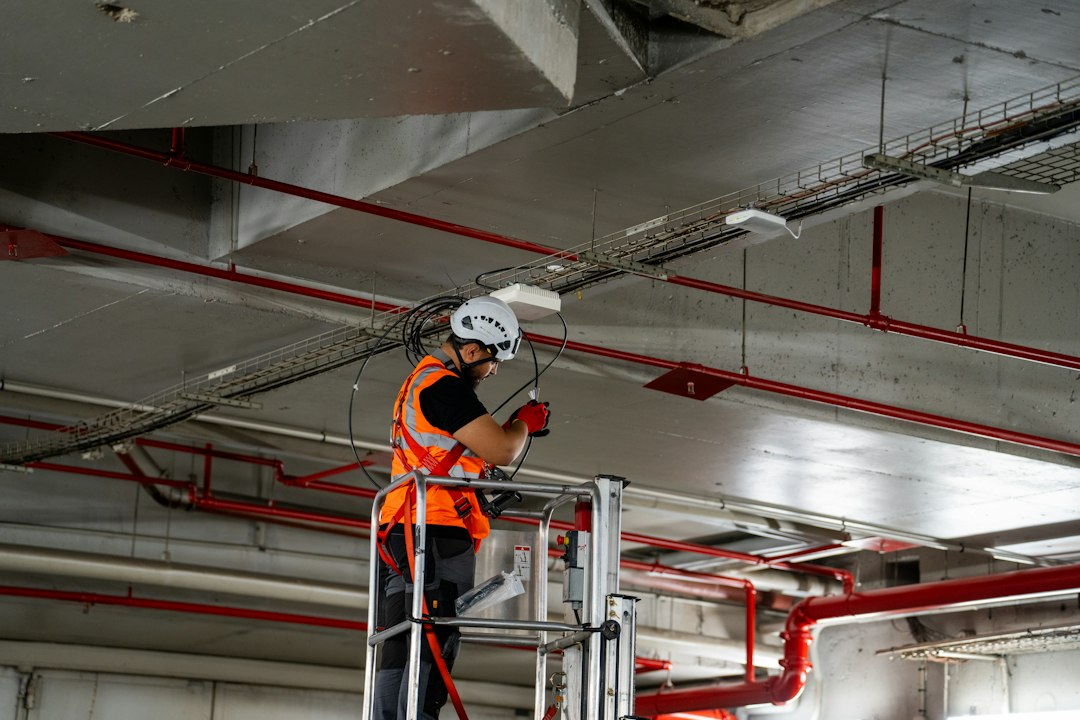
More time on site. Wiring an entire home, running conduit, routing cables through walls and ceiling spaces—we typically need 2–3 days for a standard suburban home. Grade 2 wireless or hybrid installs we can do in a day. The difference is the cabling runs.
More disruption during installation. Wall chasing (cutting channels in plaster for cables), cable runs through ceiling spaces, conduit routing—it all means plaster dust, wall cuts that need patching after, and noise. If you’re renovating, we coordinate with the builders. If you’re retrofitting to an existing home, you’ll see the impact. The payoff is a system you can’t bypass, but the installation is more involved than plugging in wireless sensors.
Higher equipment cost. Grade 3 components are built to higher standards and tested more rigorously. Panel, keypads, sensors, and cabling all carry certified Grade 3 specs.
Professional installation required. You cannot DIY Grade 3. Certification requires installation by a licensed, accredited alarm installer. We handle that end-to-end for you.
Beyond the initial outlay, Grade 3 monitoring costs are comparable to Grade 2—both require professional monitoring, and both sit in the same price range (from $49/month AUD +GST, no lock-in, with our service). Many customers combine Grade 3 alarms with our 24/7 alarm monitoring and rapid response service for full coverage.
Insurance Recognition and Approval
This is why many homeowners choose Grade 3: insurance companies recognise it.
Premium discounts. Some insurers offer a discount on home and contents premiums for Grade 3 alarms—check with your provider on the actual percentage, as it varies widely.
Coverage requirements. For high-value contents, many insurers won’t quote without Grade 3 in place. It’s not that they suggest it; they require it as a condition of the policy. Your jewellery, art, or collections sit uninsured without it.
Claims support. In a break-in claim, having a certified Grade 3 system strengthens your position. Insurers know the system met rigorous standards, which means false alarms are less likely and the alarm truly activated when it should have. That credibility matters when a claim is assessed.
We recommend checking your current policy and asking your insurer directly: “For my contents value, do you require Grade 3?” Most high-value home insurers will confirm it on the phone.

Is Grade 3 Right for Your Home? A Decision Framework
Here’s an honest framework:
You probably need Grade 3 if:
- Your insurer has flagged it or your policy requires it
- Your home contains significant high-value items (jewellery, art, collections, firearms, cash)
- Your suburb is in a higher-risk bracket (check local crime statistics or ask your insurer)
- You’re in a corner property, ground-level apartment, or highly visible location
- Your home value is well above the local average
Grade 2 is likely sufficient if:
- Your insurer hasn’t mentioned a requirement
- Your contents are standard household items (TV, furniture, typical jewellery)
- Your neighbourhood is low-crime and your home isn’t particularly exposed
- You’re renting and can’t justify the Grade 3 cost
- You want maximum convenience and don’t mind wireless alarm systems
That said, every property is different. A free professional site walk-through with one of our installers will tell you exactly what your home needs, what your insurer requires, and what the cost looks like. No obligation, no pressure.
Disclaimer: The information in this article reflects our experience as Melbourne-based security installers. Alarm grades are defined by EN 50131 (European Standard for Intruder Alarm Systems). Insurance requirements vary by provider and policy—always check your specific coverage and ask your insurer directly what they require. Prices are current as of October 2026 and reviewed quarterly. A fixed quote for your installation will follow a free professional site walk-through.
Ready to find out if Grade 3 is right for your home? Book a free consultation with us today, or call 0406 432 691. We’ll assess your property, check your insurance requirements, and give you an honest recommendation—no pressure.