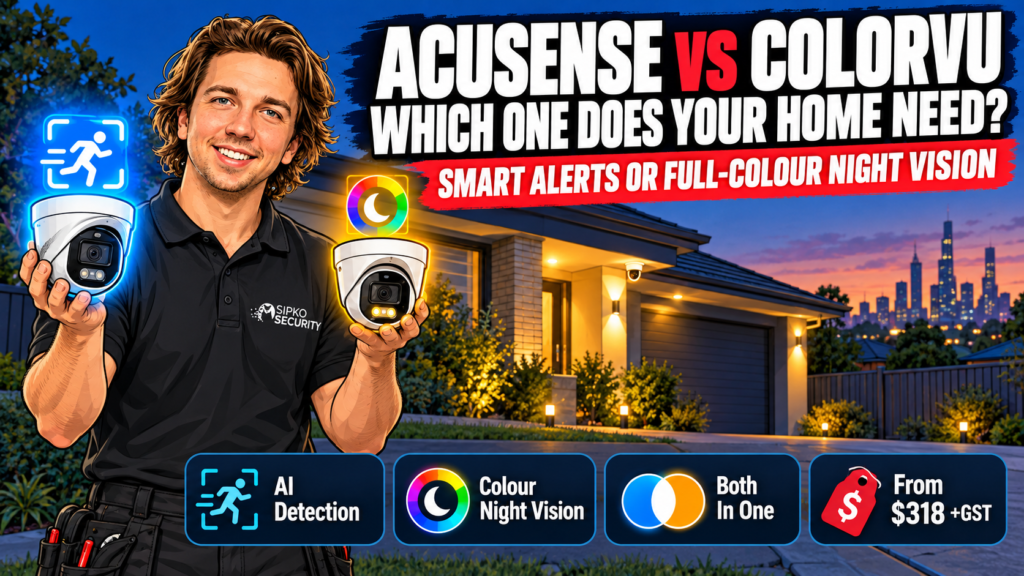
Short answer: AcuSense makes your alerts smarter, ColorVu makes your night footage clearer. Most Melbourne homeowners we quote end up with a camera that does both, because Hikvision builds the two into the same turret now for not much more than a single-feature model. That’s our take as the installer, not an independent lab test, just what we see fitting these across real driveways and front doors every week.
- What is Hikvision AcuSense?
- What is Hikvision ColorVu?
- AcuSense vs ColorVu — what's actually different
- Can one Hikvision camera run both at once?
- When AcuSense alone is the right call
- When ColorVu earns its keep
- What we actually install for most Melbourne homes now
- Installed price reference (Melbourne, October 2026)
Quick disclaimer, since this is a “vs” article: both AcuSense and ColorVu are genuinely good Hikvision technologies that do different jobs well. Nothing below is a knock on either one. It’s about which job your camera needs to do, based on what we’ve seen installing both around Melbourne.
| Attribute | AcuSense | ColorVu |
|---|---|---|
| What it actually does | AI classifies a moving object as human, vehicle or “other” | Captures a full-colour image in near-darkness |
| What you notice day to day | Fewer junk alerts (no possums, headlights or tree branches) | Colour footage instead of black-and-white at night |
| Helps you describe a visitor’s car or clothing at 2am | No, the night image is still black-and-white IR | Yes |
| Cuts false alarms from pets, rain, passing cars | Yes, this is its whole job | Only as a side effect of clearer footage |
| Needs a bigger lens/aperture | No | Yes — Hikvision’s ColorVu lenses typically use an F1.0 aperture |
| Can one camera run both | — | Yes, on most current Hikvision Pro Series models |
| From, installed (AUD, +GST) | A$317.89 — DS-2CD2186G2-I AcuSense dome | A$378.00 — DS-2CD2387G3-LIS2UY/SL combined ColorVu + AcuSense turret |
Caption: Prices current as of October 2026, +GST, reviewed quarterly. Final fixed pricing after a free site walk-through.
What is Hikvision AcuSense?
Hikvision AcuSense is a deep-learning feature built into the camera (and, for full functionality, the recorder). It looks at everything moving in frame and sorts it into three buckets: human, vehicle, or other. Only the first two trigger a real alert.
That sounds small until you’ve had a camera that pings you every time a possum crosses the yard at 11pm. AcuSense is the fix for that specific annoyance. It doesn’t make the picture any clearer, it just makes the alerts worth opening.
What is Hikvision ColorVu?
Hikvision ColorVu is an imaging technology, not an alert technology. It pairs a large-aperture lens with a bigger sensor and better image processing so the camera can hold colour in light levels that would normally force a camera into black-and-white infrared mode.
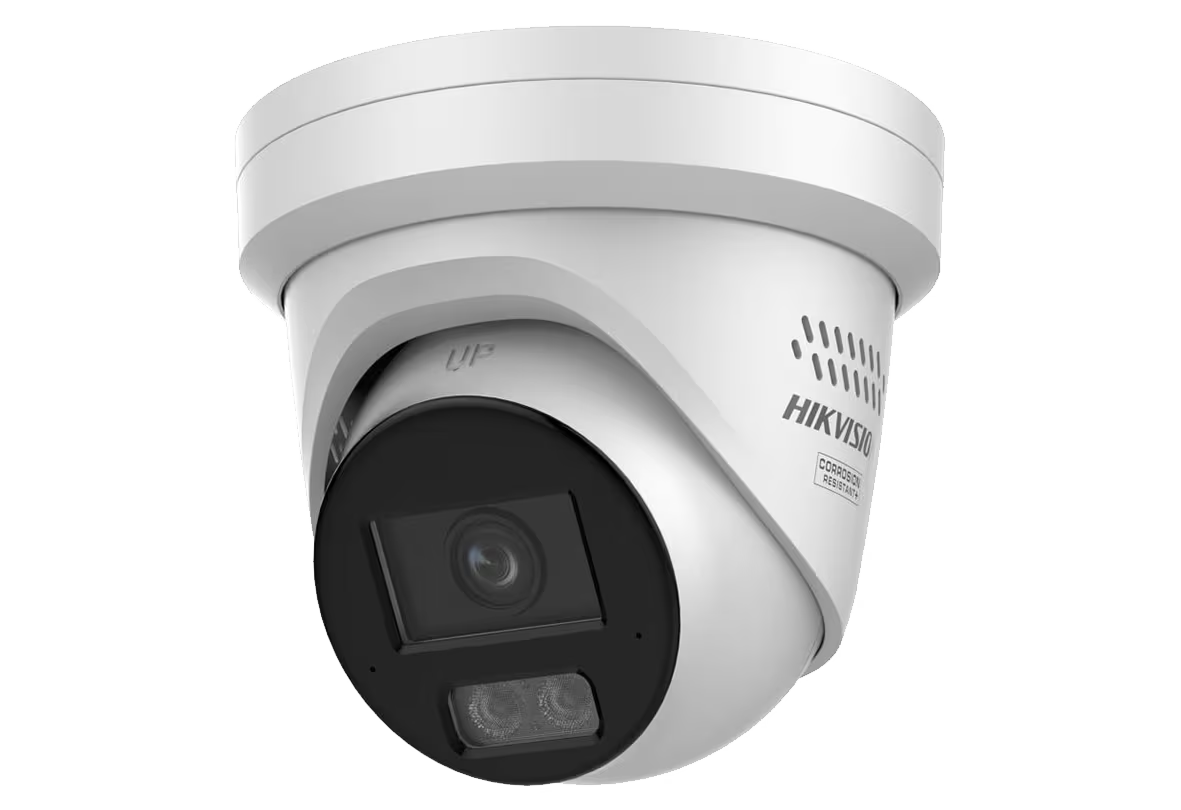
It’s not magic: the lens still needs some light reaching it, whether that’s a porch light, street light, or the camera’s own built-in warm-white LED kicking in on motion. What ColorVu buys you is the difference between “someone was at the door” and “someone in a red jacket was at the door.”
AcuSense vs ColorVu — what’s actually different
The cleanest way we explain it on a job: AcuSense changes what the camera understands. ColorVu changes what the camera sees. One is software sitting on top of the video feed, filtering out noise. The other is physical lens and sensor hardware, capturing more information in the first place.
They don’t compete for the same job, which is why asking “which is better” misses the point a bit. It’s closer to asking whether a smoke alarm or a sprinkler system is better. Different jobs, often fitted together.
There’s a practical flow-on too: because AcuSense tags clips as human or vehicle, it also speeds up reviewing footage later. Instead of scrubbing through a full day’s recording after a parcel goes missing, you can filter the timeline to just the “human” events and jump straight to the relevant clip. ColorVu doesn’t do that filtering job; it just makes whatever you find in that search easier to identify.
Can one Hikvision camera run both at once?
Yes, and on current Hikvision stock this is increasingly the default rather than the exception. UK installer guide Netview CCTV notes that Hikvision’s current EasyIP 4.0 Plus range bundles AcuSense 3.0 alongside ColorVu 3.0 as standard, which matches what we’re seeing land in Australian stock too. The Pro Series (EasyIP) range we install most often for homes runs the same combination, and the combined turret we fit most for home driveways and entrances, the DS-2CD2387G3-LIS2UY/SL, runs both at once for A$378.00 installed pricing, +GST.
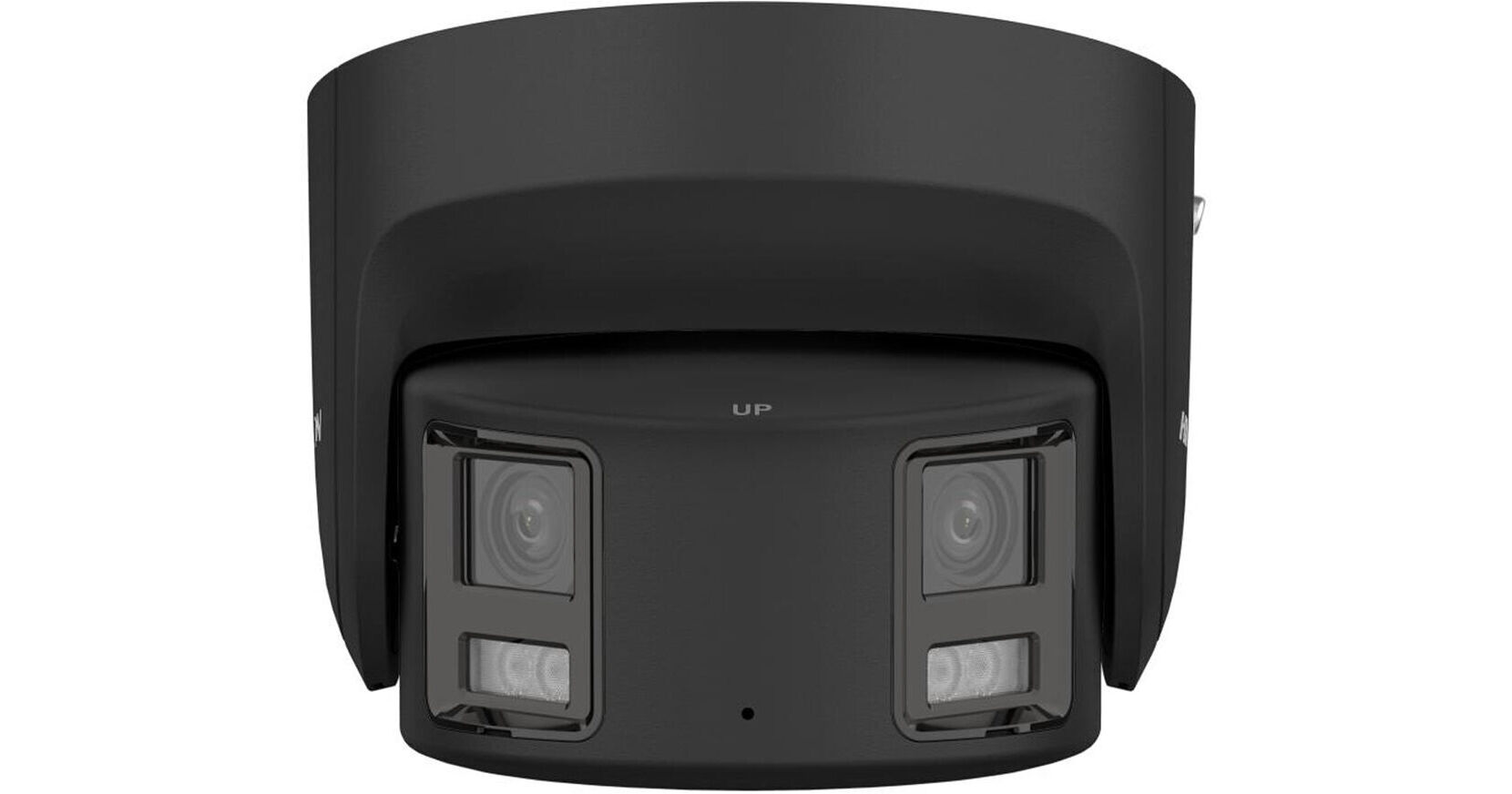
On that model, you also get Smart Hybrid Light, which keeps the camera on discreet infrared most of the time and only switches to warm white light, and full colour, when AcuSense actually classifies a human or vehicle in frame. That combination is why we rarely spec a bare, feature-less camera for a front door anymore.
When AcuSense alone is the right call
A handful of spots on most properties don’t need colour at all. They need a reliable “yes, something was there” record with minimal false pings:
- Side gates and narrow access paths, where you mostly care about motion, not detail
- A mailbox or letterbox camera, where IR range matters more than colour
- Anywhere already well-lit by a sensor floodlight, which makes colour redundant on that specific view
- A secondary camera covering a yard where pets, possums or windblown foliage would otherwise flood a standard motion feed with junk alerts
If that’s your use case, a straight AcuSense dome or bullet with no ColorVu premium does the job and saves you the lens upgrade cost.
When ColorVu earns its keep
ColorVu is worth paying for wherever identification matters more than detection:
- Front doors and verandahs, where you want to see a face or a parcel, not just a silhouette
- Driveways, if you need a vehicle’s colour or make for a police report
- Anywhere a porch light already exists but the current camera still drops to grainy black-and-white at night
- Shared entries or townhouse complexes, where “someone was there” isn’t specific enough to be useful
What we actually install for most Melbourne homes now
Here’s the judgement call we make on most residential quotes: unless a site genuinely only needs one or two bare motion points, we default to the combined ColorVu + AcuSense turret rather than mixing two separate camera lines. At current pricing the gap between the AcuSense-only dome and the combined turret is around A$60 per camera, usually less than the cost of running a second cable drop to add colour later.
It’s also simpler on install day. Running one camera body and one mounting bracket across every point on a job, rather than stocking two different lines, means fewer spares in the van and less chance of fitting the wrong model at the wrong point on a multi-camera job.
What you don’t need, in our experience: the 180° panoramic ColorVu model for a standard single-entry driveway. That camera earns its price on wide carparks or long frontages; on a normal suburban block it’s paying for field of view you’ll never use. A standard turret covers the same driveway for less.
For anyone weighing this against other brands rather than within the Hikvision range, our Ajax vs Hikvision CCTV comparison and best home security camera systems guide cover that ground. If you’re ready to move on fitting, our Hikvision installation page has the Melbourne-specific process.
Installed price reference (Melbourne, October 2026)
| Model | Technology | Installed price (AUD, +GST) |
|---|---|---|
| DS-2CD2186G2-I | AcuSense only, EXIR 2.0 IR to 30m | A$317.89 |
| DS-2CD2387G3-LIS2UY/SL | ColorVu 3.0 + AcuSense 3.0 + Smart Hybrid Light | A$378.00 |
Caption: Per-camera hardware pricing, +GST, current as of October 2026 and reviewed quarterly. Full-system quotes depend on cable runs, mounting height, camera count and recorder choice; we confirm the final number at a free site walk-through.
Can I get a Hikvision camera with both AcuSense and ColorVu?
Yes. Most current Hikvision Pro Series (EasyIP) cameras, including the turret we install most often for homes, bundle AcuSense 3.0 and ColorVu 3.0 together rather than making you choose one. Check the model code: if it includes both a “ColorVu” and an “AcuSense” reference, it has both.
Does ColorVu work in complete, zero-light darkness?
Not without help. ColorVu needs some light reaching the lens: ambient light, a porch light, or the camera’s own built-in white LED switching on. In genuinely pitch-black conditions with no supplementary light at all, any camera, ColorVu included, falls back to infrared.
Will AcuSense alerts work with my existing NVR?
It depends on the recorder. Older Hikvision NVRs and cameras that predate AcuSense won’t run the classification. We check your existing hardware before quoting an upgrade and will tell you plainly if a recorder swap is needed to get the smarter alerts working.
Is ColorVu footage good enough to identify a face at night?
For most residential distances (a front door, a driveway under about 10 metres), yes, assuming there’s some ambient or supplementary light. Beyond that range, or in genuinely dark rural settings, image quality drops the way it would on any camera; we size the lens and mounting position to the actual distance on site.
Does AcuSense need a separate app or subscription?
No. AcuSense runs locally on the camera and recorder and shows up as smarter alerts inside the same Hik-Connect app you’d already use. There’s no extra fee for the detection itself; only cloud storage plans, if you choose one, carry a monthly cost.
If you’re not sure which combination suits your place, send us a few photos of the entry points you want covered and we’ll tell you straight whether you need the colour upgrade or not.