
A commercial CCTV decision should start with a task: identifying a delivery incident, reviewing an overnight intrusion or letting several facilities teams use the same recordings. Hanwha vs Vivotek becomes a useful comparison when those jobs shape the camera, recording and management design.
Start with Hanwha Vision when an established Wisenet WAVE workflow or a particular specialist camera fits the brief. Start with Vivotek when its VSS investigation tools or proposed panoramic layout fit better. Both warrant consideration for substantial commercial estates; camera count alone does not divide them.
SIPKO provides Hanwha installation and recording setup and Vivotek installation, repairs and maintenance in Melbourne. A global feature listing still needs confirmation against the Australian equipment and support included in your proposal.
Research checked September 2026. Capabilities below vary by model, firmware, software edition, licence and region. Starting recommendations are site-design judgements, not comparative performance tests.
Which system fits your site?
Consider Hanwha Vision first when operators already use WAVE, compatible metadata search is central, or a specific panoramic/fixed-plus-PTZ arrangement solves the coverage problem.
Consider Vivotek first when the team prefers VSS search and case handling, or its proposed panoramic and edge-analytics cameras suit the site geometry.
Compare both for multi-building operation, strong cybersecurity requirements or major expansion. Test the same incident-retrieval task and the same failure scenario on both designs.
Hanwha Vision
Particularly strong when: WAVE operation, specialist camera combinations and a specified recording-resilience design align.
Things to check: metadata support, camera/server AI allocation, licences, recorder limits and Australian commissioning support.
Vivotek
Particularly strong when: camera geometry, edge metadata and VSS investigation tools fit the operators’ work.
Things to check: VSS edition, analytics packages, server sizing, per-sensor licensing and the supported migration path.
Hanwha vs Vivotek: commercial comparison
This compares available approaches. It does not mean every camera or recorder includes every listed function.
| Requirement | Hanwha Vision | Vivotek |
|---|---|---|
| Core CCTV focus | Cameras, recorders and several commercial management platforms. | Network cameras, NVRs, VSS and hybrid/cloud options. |
| Camera range | Fixed, panoramic, multi-directional and PTZ designs. | Fixed, fisheye, panoramic, multi-directional and PTZ designs. |
| NVR depth | Compact systems through multi-drive PRN recorders. | Embedded Core/Core+ recorders and recording-server designs. |
| VMS | Wisenet WAVE; other Hanwha platforms have separate specifications. | VAST Security Station (VSS), with Lite, Standard and Professional editions. |
| Storage | Recorder disks or VMS server storage; size usable capacity. | NVR disks or server storage; verify supported drives. |
| RAID/resilience | Selected PRN models offer RAID and N+1 arrangements. | Selected NVRs offer RAID; VSS failover is edition-dependent. |
| Analytics | Selected intrusion, line-crossing, loitering and counting functions. | Smart VCA event rules vary by camera and package. |
| AI classification | Supported cameras classify people, vehicles and other specified objects. | Supported Vision Object Analytics cameras classify people and vehicles. |
| Metadata/search | WAVE object/attribute search needs compatible metadata or plugins. | VSS Deep Search needs supported metadata and the appropriate edition. |
| Low-light | Selected WiseNR II, infrared and low-light camera options. | Selected SNV, infrared and low-light camera options. |
| PTZ | Zoom, tracking and combined fixed/PTZ designs on selected products. | Speed domes with model-specific zoom and Smart Tracking. |
| Panoramic/multi-sensor | Stitched panoramas and independently directed camera designs. | Stitched panoramas, fisheye and adjustable multi-sensor designs. |
| Edge intelligence | Supported cameras generate events/metadata; server AI is separate. | Supported cameras generate events/metadata; confirm recorder/VMS support. |
| Bandwidth optimisation | H.265 and selected WiseStream implementations. | H.265 and selected Smart Stream implementations. |
| Cybersecurity | Selected models document secure boot, signed firmware and certificate controls. | Selected models document secure boot, signed firmware and certificate controls. |
| ONVIF/integration | Profiles, native drivers and SUNAPI support vary by product. | Profiles, native drivers and API support vary by product. |
| Remote management | WAVE Sync and management tools have distinct requirements. | VSS and supported VORTEX services have distinct requirements. |
| Multi-site management | WAVE multi-server operation; design links, permissions and failover. | VSS central management; specify edition, servers and permissions. |
| Commercial scalability | Recording load, decoding, licences and infrastructure determine capacity. | Recording load, decoding, edition and infrastructure determine capacity. |
| Typical starting point | An established WAVE team or a defined specialist-camera requirement. | An established VSS team or a defined coverage/investigation requirement. |
Wisenet WAVE vs VSS: test the operator’s job
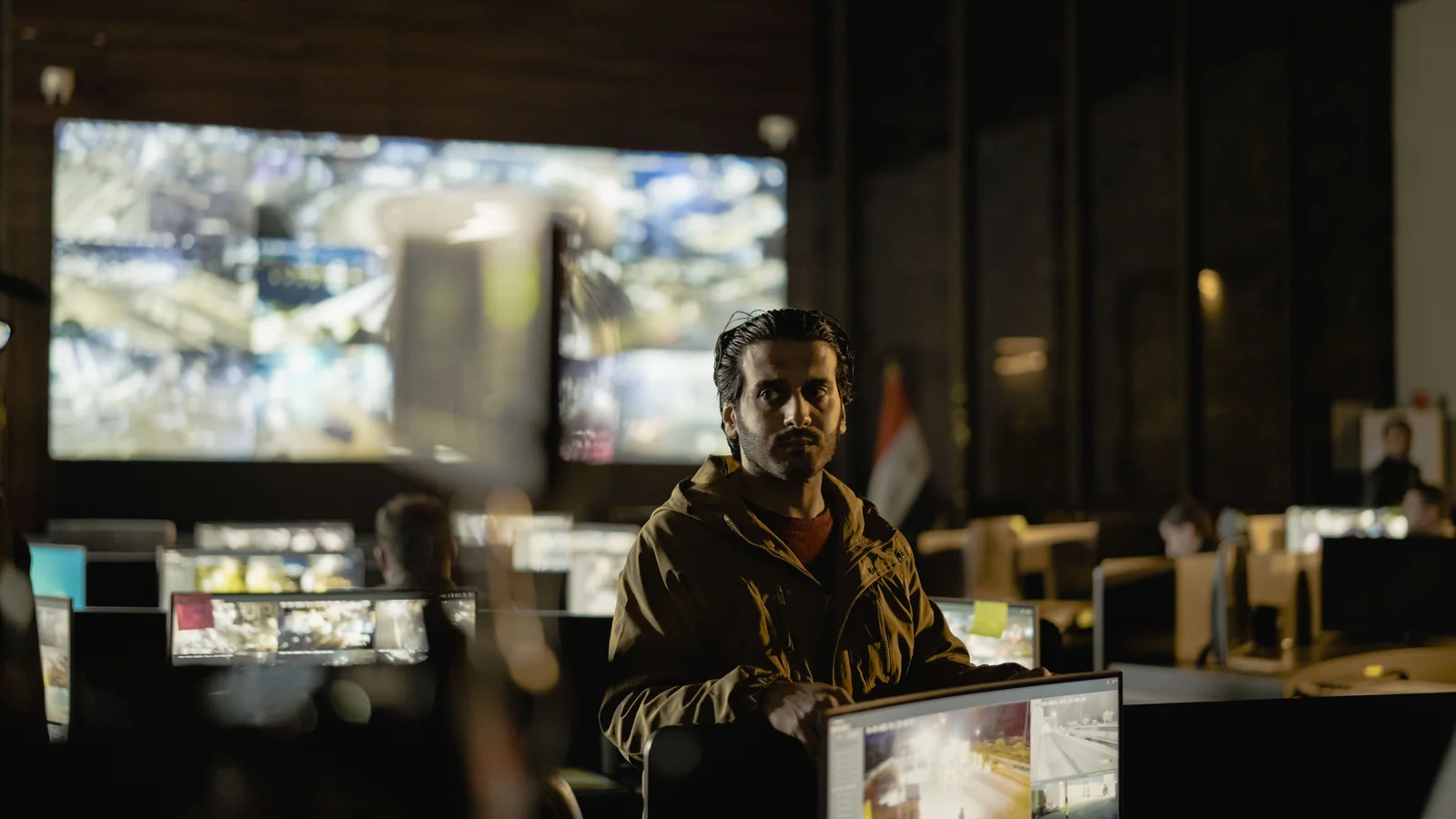
A network video recorder (NVR) may handle one building. A video management system (VMS) becomes important when several operators need coordinated playback, permissions, searches and recording servers.
Wisenet WAVE supports native Hanwha camera/NVR functions and multi-server operation. Object searches depend on metadata supplied by supported cameras or analytics plugins. User-group and LDAP workflows can help established IT teams; verify the deployed release, account permissions and remote-access configuration. Other Hanwha platforms, including SSM, have separate capabilities.
Vivotek’s current platform is VAST Security Station (VSS). Its Standard and Professional editions support Attribute and Scene Search; Professional adds tools such as Case Vault and central-management/failover functions. Camera support and licensing remain essential. Legacy VAST installations need a supported migration assessment, not an assumption that current VSS features are already available.
For either proposal, ask an ordinary operator to locate a vehicle, follow relevant views, export clips and demonstrate restricted access. Price recording licences, third-party cameras, analytics, optional services and future expansion explicitly. Maximum camera counts do not establish simultaneous recording, search or playback performance.
Analytics, wide coverage and useful night footage
Hanwha’s PNM-A13022RV illustrates panoramic AI classification, attributes and event rules. Vivotek Smart VCA offers supported intrusion, line-crossing and other rules; Vision Object Analytics can supply people/vehicle metadata. Specify the actual event and retrieval task, rather than asking which brand has “better AI”.
Edge analytics run in the camera. Recorder/server analytics consume different resources and may need additional licensing. Confirm simultaneous rules, supported metadata, processing capacity and retention of searchable information. Demonstrate nuisance events as well as successful detections.
Vivotek’s MS9390-EHV-V2 provides a stitched 180-degree panorama. Hanwha also offers panoramas, while its PNM-C19183RVTP combines three fixed views with a PTZ. These are different geometries, not equivalent benchmarks. Check subject detail, blind spots, mounting, streams and licences per housing. A PTZ can turn away from an incident, so retain fixed coverage at essential doors.
WiseNR II on selected Hanwha cameras and SNV on selected Vivotek cameras describe particular processing approaches. Useful night footage still depends on sensor, lens, lighting, motion, exposure, mounting and distance. Test moving people and vehicles under the actual closing-time lighting; a bright stationary picture cannot prove identification detail.
Seven commercial scenarios: where to start
1. Office or commercial building
Need: entrances, reception, shared areas and car park coverage, with remote viewing and manageable permissions. Start with Hanwha/WAVE where facilities staff already use WAVE: familiar layouts and account workflows can simplify handover. For a new team, demonstrate VSS as well. Verify: backlit faces, after-hours lighting, restricted views, export rights and mobile access for each staff role.
2. Small warehouse
Need: aisles, loading dock, yard and night recording at a moderate camera count. Start with a Vivotek NVR design if its proposed panoramic dock view and edge rules meet the brief without a full VMS. This is a layout choice, not a claim that Vivotek is cheaper. Verify: rack obstruction, forklift motion, recorder analytic limits, retention and remote playback. Hanwha remains a valid alternative for conventional fixed views.
3. Large warehouse or distribution site
Need: many cameras, longer retention, operators, analytics, PTZ and planned expansion. Start with Hanwha/WAVE when coordinated searches and selected fixed-plus-PTZ coverage match the operating brief. Compare VSS Professional against the same tasks; Vivotek is not confined to small sites. Verify: recording throughput, concurrent searches, spare server capacity, usable storage and recovery. A warehouse security assessment should map actual traffic and obstructions first.

4. Multi-building commercial property
Need: central management, many users, separate building permissions and consistent investigations. Start with VSS Professional when its central-management and Case Vault workflow matches the facilities team’s procedures. WAVE deserves an equivalent demonstration. Verify: inter-building/WAN capacity, tenant separation, edition/licence scope, local recording during link loss and the way evidence is retained after export.
5. Panoramic or multi-sensor coverage
Need: fewer mounting positions, wide coverage and efficient review without losing essential detail. Start with Vivotek for a site where a stitched panorama or independently aimed sensors fit the layout. Shortlist Hanwha’s corresponding designs, especially if combined PTZ matters. Verify: detail at the far edge, obstructions, sensor angles, dewarping support and recording/licensing requirements. Fewer housings do not necessarily mean fewer channels.
6. Strong cybersecurity requirements
Need: controlled accounts, supported firmware, secure updates and documented vulnerability handling. Start with whichever exact models meet the organisation’s written policy. Both publish relevant controls; neither wins on brand alone. Verify: device documentation, certificate handling, update testing, advisory monitoring, network separation and responsibility for patching. Reject a proposal that replaces these checks with a general “secure” claim.
7. Existing CCTV replacement or migration
Need: preserve useful cabling and cameras while replacing weak recording or management components. Start with the supported existing ecosystem if it still meets the brief: compatible Hanwha/WAVE or Vivotek/VSS additions may reduce retraining. Verify: cable condition, PoE, codecs, firmware, events, metadata and playback on a pilot connection. Plan downtime, rollback and access to historic recordings before changing the recorder.
Recording, storage and resilience need separate decisions
Hanwha’s PRN-6400DB4 illustrates a large recorder with RAID 5/6, hot-swap disks and N+1 support. Vivotek’s ND9542P illustrates an embedded recorder offering RAID 0/1/5. These are different-capacity products, not a like-for-like contest. Check recording throughput, disk limits, playback load and any reduction when analytics or recovery are active.
Calculate retention from camera bitrates, schedules and required days, allowing for usable RAID capacity and growth. WiseStream or Smart Stream may reduce traffic in suitable scenes; validate moving detail after compression rather than budgeting a fixed percentage saving.
RAID is not backup, and RAID 0 has no disk-failure redundancy. Failover needs spare recording, network and storage capacity. Camera edge storage does not automatically backfill every VMS archive. Specify UPS coverage, disk/server alerts, evidence exports and recovery tests.
Cybersecurity and integration: require written checks
Hanwha’s XNV-A8084R and Vivotek’s MS9390-EHV-V2 document secure boot, signed firmware, HTTPS and certificate-related controls. Those examples do not establish identical protection across either catalogue. Review Hanwha’s security advisories and Vivotek’s published advisories against the quoted firmware, then agree patching and account-management responsibilities with IT.
ONVIF is a compatibility route, not a promise of every native feature. Check exact profiles and supported-device lists. Native VMS drivers, third-party integrations and documented APIs each need separate testing for events, metadata, audio, PTZ and playback. Systems running side by side are not necessarily integrated.
Compare complete installed proposals
Cost includes cameras and lenses, recorder/server, storage, VMS and analytics licences, switches, cabling, access equipment, labour, resilience, commissioning and support. Compare equivalent coverage, retention and operating tasks. Neither a hardware subtotal nor a global catalogue establishes Australian supply, warranty terms or a cheaper installed system.
Include operator training, update ownership, fault response and expansion costs. Agree acceptance tests before ordering: moving night detail, incident retrieval, clip export, permissions and recovery from the specified outage.
Questions to settle with your installer
- How many cameras now and later, and where is identification detail essential?
- Is VMS needed, for how many operators, buildings and remote users?
- Which analytics and metadata searches will staff actually use?
- Would panoramic, multi-sensor or PTZ cameras improve the coverage?
- What retention, RAID, failover and usable storage are required?
- What bandwidth, PoE, server and expansion headroom is available?
- Which cybersecurity controls, integrations and retained infrastructure need testing?
- Which licences, services, training and ongoing support are included?
FAQ
Is Hanwha better than Vivotek for commercial CCTV?
There is no universal winner. Select around coverage, recording resilience and the staff’s investigation workflow. Compare the exact cameras and licensed platforms against the same acceptance tests.
Which should I choose for a warehouse?
For a modest site, test a camera/NVR design against aisle and dock requirements. Larger warehouses should compare WAVE and VSS operation, storage and recovery alongside specialist coverage.
Can Vivotek handle a large commercial property?
Yes, with an appropriately specified VSS architecture. Edition, server resources, network capacity, recording load and licensing determine suitability; the camera brand alone does not set the limit.
Which has stronger AI or forensic search?
Compare the actual rules, supported object attributes and retrieval task. Verify where processing occurs, which metadata reaches the VMS and what licences apply. Demonstrate representative incidents before choosing.
Can existing cameras and cabling be reused?
Often some can, after inspection and compatibility testing. Prove recording, events and playback on a pilot setup, and preserve required historic footage separately before migration.
Plan the system around your commercial property
Ask SIPKO to assess coverage, camera count, analytics, VMS, storage, network, expansion and operational requirements through a commercial CCTV installation assessment in Melbourne. The proposal should show how the chosen system serves the site and the people using it.