Uniview vs Vivotek is a choice about how your commercial site captures, records and uses video. Start with Uniview when a practical camera-and-recorder installation is the main requirement. Put Vivotek on the shortlist early when multi-sensor coverage, camera metadata and a defined video management workflow are central.
That is a starting point, not a split between basic and enterprise equipment. Both offer standalone recording and larger managed systems. Compare complete designs for your loading dock, yard and operators.
SIPKO offers Uniview camera and NVR installation and Vivotek installation, repair and maintenance in Melbourne. Confirm Australian model availability, software support and the proposed commissioning scope before treating a global catalogue feature as part of your quote.
Which system fits your site?
Consider Uniview first for an NVR-led warehouse with conventional fixed cameras, varied low-light views and selected active-deterrence requirements.
Consider Vivotek first when independently aimed multi-sensor cameras, edge metadata and VSS operator workflows could materially improve coverage or investigation.
Compare both for large or growing sites. Write down recording, monitoring and cybersecurity requirements before selecting a platform. Neither central management nor specialist cameras belong exclusively to one brand.
Uniview vs Vivotek: practical comparison
Checked against manufacturer material available in September 2026, including Uniview’s 2026 product guide. Functions vary by model, firmware, region and software licence; this table describes options, not standard inclusions.
| Requirement Core CCTV focus |
Uniview Camera/NVR systems with central-management platforms available. |
Vivotek Network cameras, embedded recorders, VSS and cloud/hybrid options. |
|---|---|---|
| Requirement Camera range |
Uniview Easy, Prime and Pro families plus specialist products. |
Vivotek Fixed, PTZ, fisheye and multi-directional/multi-sensor families. |
| Requirement NVR depth |
Uniview Compact PoE units through larger multi-drive recorders. |
Vivotek Embedded ND recorders and server-based NR appliances. |
| Requirement VMS architecture |
Uniview Unicorn appliances and UNV Guard software; size the chosen platform. |
Vivotek VSS editions with server/client and central-management roles. |
| Requirement Storage |
Uniview Drive bays, supported disks and throughput vary by recorder. |
Vivotek Embedded storage or recording servers; check the supported-drive list. |
| Requirement RAID and resilience |
Uniview Selected platforms offer RAID, redundancy and standby arrangements. |
Vivotek Selected NVRs/servers offer RAID; VSS failover needs the right design/licences. |
| Requirement Analytics |
Uniview SIP/UMD and other functions vary across camera and recorder families. |
Vivotek Smart VCA and Vision Object Analytics on supported cameras. |
| Requirement Low-light options |
Uniview LightHunter, ColorHunter and Wise-ISP on selected products. |
Vivotek SNV, IR and newer Chroma24 options on selected products. |
| Requirement PTZ |
Uniview Optical-zoom and specialist PTZ choices; verify tracking functions. |
Vivotek Speed domes and supported tracking options; verify scene suitability. |
| Requirement Panoramic coverage |
Uniview MultiView and OmniView families warrant comparison for wide areas. |
Vivotek Fisheye, stitched panoramic and independently aimed multi-sensor designs. |
| Requirement Active deterrence |
Uniview Selected Tri-Guard cameras combine detection, lighting and audible warnings. |
Vivotek Specify the camera/audio/output arrangement; do not infer a built-in siren. |
| Requirement Perimeter detection |
Uniview Selected SIP rules classify people/vehicles for intrusion alerts. |
Vivotek Supported Smart VCA line-crossing/intrusion rules; confirm target classes. |
| Requirement Edge intelligence |
Uniview Camera-side functions can reduce dependence on recorder analytics. |
Vivotek Supported cameras generate metadata for compatible forensic-search tools. |
| Requirement Cybersecurity |
Uniview Published signing, authentication and update practices; verify device implementation. |
Vivotek Selected models document secure boot, signed firmware, TPM and HTTPS. |
| Requirement Bandwidth optimisation |
Uniview Ultra 265/H.265 options; validate compatibility and moving detail. |
Vivotek Smart Stream III/H.265 options; measure usable evidence after optimisation. |
| Requirement PoE |
Uniview PoE cameras, recorder variants and switches; check total power. |
Vivotek PoE cameras and selected embedded-PoE NVRs; check power class. |
| Requirement Remote management |
Uniview UNV-Link, desktop tools and VMS options serve different roles. |
Vivotek Supported mobile tools, VSS and VORTEX paths have different requirements. |
| Requirement Multi-site operation |
Uniview Unicorn/UNV Guard options extend beyond standalone NVR viewing. |
Vivotek VSS central management can organise recording servers and operators. |
| Requirement Commercial scale |
Uniview Camera counts, storage streams and forwarding limits are separate constraints. |
Vivotek Server sizing, client decoding and licence tiers constrain the deployment. |
| Requirement Typical starting point |
Uniview A recorder-led warehouse with mixed fixed, low-light and deterrence views. |
Vivotek A site prioritising multi-sensor coverage and a specified VSS workflow. |
Recording capacity and management capacity are different
Choose the recording architecture first
An embedded network video recorder (NVR) can suit one warehouse. A video management system (VMS) becomes more useful when operators need coordinated searches, permissions and multiple recording locations. Uniview offers Unicorn and UNV Guard; Vivotek’s current platform is VAST Security Station (VSS). VAST 2 is now legacy, so existing installations need a supported migration plan.
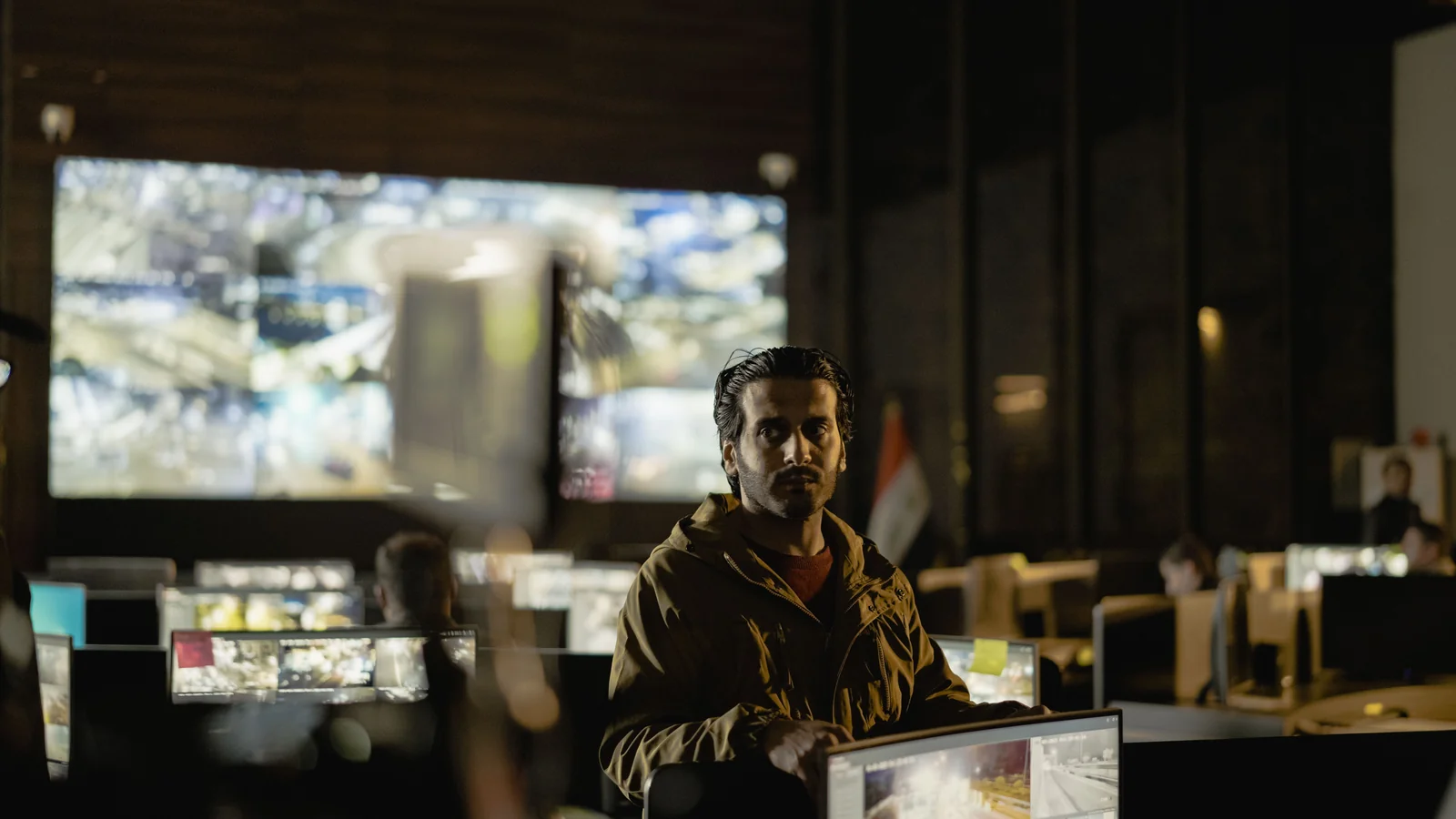
Do not confuse cameras managed with cameras recorded. The cited Unicorn specification lists 2,000 managed channels but 256 recording storage streams and 512 Mbps storage bandwidth. Those are separate ceilings, not a promise to record 2,000 cameras simultaneously. Verify the locally supplied version.
Vivotek also has embedded recorders: the ND9542P lists 32 channels, four internal disks and 192 Mbps recording throughput. Larger VSS server designs introduce hardware sizing and licensing decisions. Compare recording, playback, live decoding and failover requirements separately.
Size retention and resilience explicitly
As an illustration, 16 cameras averaging 4 Mbps continuously generate roughly 20.7 TB over 30 days, before reserves and storage overheads. That is a calculation, not a recommended bitrate or retention rule. Measure realistic settings and allow for audio, extra streams, RAID capacity and future cameras.
RAID can tolerate particular disk failures depending on its level; RAID 0 has no redundancy. It does not replace independent exports or backups, and a working disk array does not prevent recorder, power or network failure. Specify UPS coverage, health alerts, recovery arrangements and any licensed failover. Test the failure you expect the design to survive.
Judge analytics and night footage by useful evidence
Uniview’s selected SIP and Tri-Guard products offer people/vehicle filtering and perimeter rules. Vivotek’s supported Smart VCA and Vision Object Analytics cameras provide edge events or metadata for compatible searches. Ask which work happens in the camera, recorder or server, which licences apply, and whether the operator can retrieve the event afterwards.
Wide coverage also needs detail. Vivotek’s MA9322-EHTV-V2 combines four adjustable 5MP views; that may help cover several approaches from one mounting position. It does not make distant faces identifiable automatically. Compare Uniview’s relevant multi-view options and check streams, licences and pixel detail per view.
For night testing, use moving people or vehicles at the required distance. Sensor, lens, shutter, mounting, illumination and exposure matter more than a low-light label. Assess selected Wise-ISP, LightHunter, SNV or Chroma24 products against the same scene. Check what supplemental lighting changes and whether a PTZ leaves another important direction uncovered while tracking.
Cybersecurity and integration need a written scope
Vivotek documents secure boot, signed firmware, HTTPS and TPM on selected cameras. Uniview’s August 2026 cybersecurity white paper describes signing, secure boot, authentication and vulnerability handling. Read this alongside Vivotek’s security documentation, then verify the quoted hardware and firmware. Published controls do not establish a universal security winner.
Agree separate user accounts, restricted privileges, network segmentation, certificate management, firmware maintenance and an approved remote-access path with IT. A phone app is not a central monitoring service. Confirm who responds to alerts and which local recording functions survive an internet outage.
ONVIF support is not full native integration. Check the exact profiles, firmware and supported-device lists, then test video, audio, events, metadata, PTZ and playback. Native VMS features may require matching cameras or licences. Two systems operating side by side are not necessarily integrated.
Strengths and checks before choosing
Uniview
Particularly strong when: a recorder-led design benefits from its camera breadth and selected deterrence or low-light options.
Things to check: analytics allocation, recorder throughput, central-platform limits, firmware support and regional availability. Entry equipment does not inherit every professional feature.
Vivotek
Particularly strong when: specialist camera geometry and VSS investigation workflows match the operating brief.
Things to check: camera metadata support, software edition, licences, server specification, migration and local commissioning support. A feature-rich design still needs trained operators.
Seven warehouse and commercial scenarios
A warehouse CCTV assessment should begin with actual movement, obstructions and recording needs. These are starting recommendations to test against a site survey.

1. Small warehouse
Start with a Uniview camera/NVR design for loading docks, roller doors, aisles and a modest yard. Its fixed-camera and recorder choices give a practical starting point for moderate camera counts and local recording. Compare Vivotek if one multi-directional camera could usefully cover several approaches. Verify face detail at doors, rack obstruction, forklift motion, night lighting, drive capacity and the owner’s remote playback—not just the live picture.
2. Larger distribution warehouse
Start with a Vivotek VSS design when several viewing stations, incident search and central administration drive the project. Supported camera metadata can help operators find relevant movement across a large recording estate. Benchmark that design against Uniview’s larger recorders and central platforms. Verify recording throughput, retention, concurrent playback, failover licensing and operator permissions. Specify PTZ or specialist cameras for defined views; a high camera limit alone does not establish a working design.
3. Commercial office or business site
Start with Uniview for conventional entrance, reception, car-park and perimeter views with local recording and straightforward phone access. Vivotek remains a credible alternative where its selected camera coverage or an existing VSS environment simplifies operations. Verify backlit doorways, after-hours lighting, restricted viewing rights and recording recovery after a power interruption. Keep cameras away from unnecessary private detail and assign responsibility for responding to alerts.
4. Multi-building commercial property
Start with Vivotek VSS where central operators need a consistent investigation and permission workflow across buildings. Compare Uniview Unicorn or UNV Guard against the same brief rather than assuming UNV cannot centralise. Verify inter-building links, WAN upload, local recording during link failures, separate tenant permissions and remote administration. Test losing one building’s connection: operators should understand which recordings continue and what becomes temporarily unavailable.
5. Yard or perimeter-heavy site
Start with selected Uniview Tri-Guard and appropriate low-light cameras if person/vehicle rules and audible or visible deterrence are central. Long fence lines may instead require different lenses, PTZ or specialist detection, so compare Vivotek’s suitable cameras and edge rules. Test detection at the actual distance and moving detail after dark. Check headlights, vegetation, weather, response staffing and whether lighting or speakers would disturb neighbours.
6. Existing CCTV replacement
Start with the installed equipment and required workflow, not a brand swap. An established Vivotek/VSS estate may favour compatible Vivotek additions; a serviceable UNV recording estate may favour a targeted UNV upgrade. Inventory firmware, supported streams, PoE, cabling and retained footage. Test mixed-brand events and playback before committing. SIPKO’s warehouse CCTV upgrade guide explains staged changeovers; agree gaps, fallback and historic-footage access before disconnecting equipment.
7. Site likely to expand
Start with Uniview if growth mainly means additional conventional cameras and recorder storage. Start with Vivotek VSS if the defined next stage centres on more operator workstations, metadata searches or centrally managed buildings. Both need a costed expansion design. Check spare channels, aggregate bitrate, drive bays, network uplinks, PoE headroom, VMS licences and future camera types. Include the labour and downtime of expansion in today’s quote.
Compare installed value, not a hardware subtotal
Request itemised designs covering camera models and lenses, recording hardware, disks, VMS and analytics licences, switching, cabling, installation access, commissioning and support. Include redundancy, update responsibilities and recurring cloud charges where proposed. There is no verified like-for-like basis here for declaring either brand cheaper.
Accept the system against agreed tests: required views, moving night detail, recording retention, clip export, permissions and recovery. Record exclusions and unresolved items. An impressive catalogue cannot compensate for an untested loading-dock view or an operator who cannot retrieve yesterday’s incident.
What should you ask before choosing?
- How many cameras now and later, and which views need identification detail?
- What lighting remains after closing, and is deterrence or PTZ useful?
- Would panoramic or multi-sensor cameras improve the layout?
- Which analytics and searches will staff actually use?
- How many recording days, and which failure must RAID or failover cover?
- Is VMS needed, with how many viewing stations and sites?
- What cybersecurity controls and remote permissions does IT require?
- What infrastructure can be tested and reused?
- Which camera, VMS, analytics and expansion licences apply?
- Who handles commissioning, updates, faults and staff handover?
FAQ
Is Uniview better than Vivotek for a warehouse?
Uniview is a sensible starting point for many recorder-led warehouses. Vivotek merits early assessment when camera form factors or VSS operations solve a specific problem. Compare complete designs against the same coverage, retention and staffing requirements.
Which is better for a large commercial site?
Both have central-management options. Choose around the required operators, recording servers, resilience and support arrangements. Confirm licensed capacity and real throughput; neither a brand label nor a maximum camera count establishes suitability.
Which has better analytics?
Request a demonstration of the exact rules and search functions you need. Both offer selected people/vehicle and perimeter functions, but camera metadata, recorder support and licences affect the result. Test nuisance events as well as successful detections.
Which gives better night footage?
There is no defensible brand-wide winner. Compare the proposed cameras with moving subjects, the intended lens and actual site lighting. A brighter static image or longer advertised IR distance does not prove useful identification detail.
Can existing cameras and cabling be reused?
Sometimes, after inspection and compatibility testing. Verify cable condition, PoE, codecs, ONVIF profiles, events and playback. Preserve required recordings separately: replacing an NVR does not automatically migrate footage or every camera function.
Choose around the site and the people using it
Ask SIPKO to assess your Melbourne site’s camera layout, lighting, retention, analytics, storage, network and expansion plans. A scoped commercial CCTV installation assessment provides the basis for comparing Uniview and Vivotek against the same operational requirements.