CCTV and alarm readiness
Homeowner guide with data
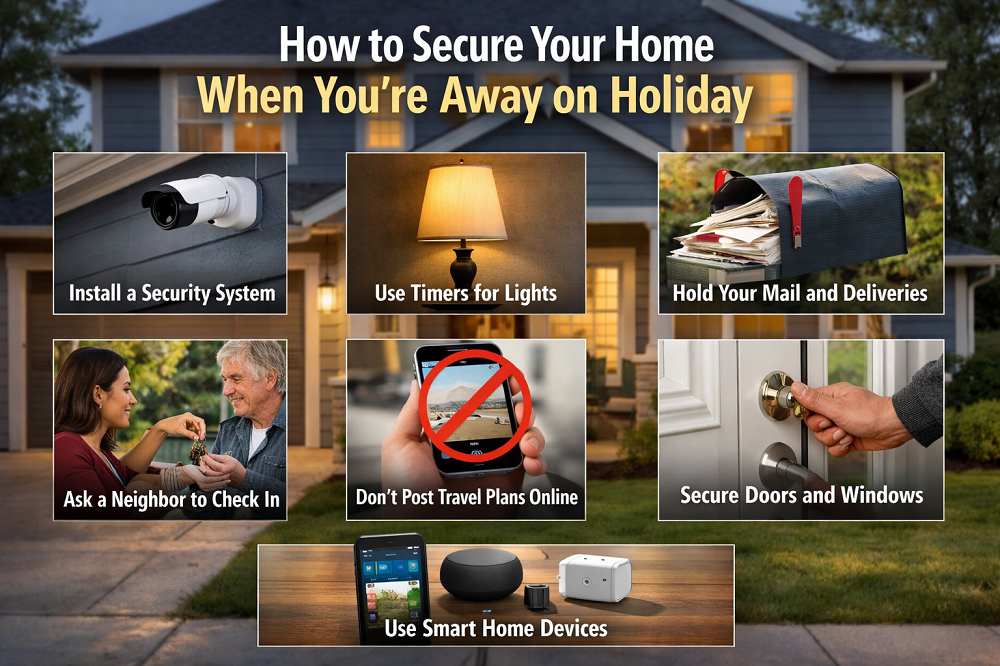
The seven practical ideas behind this guide are straightforward: install a security system, use timers for lights, manage mail and deliveries, ask a neighbour to check in, avoid posting travel plans online, secure doors and windows, and use smart home devices. That is a strong starting point, but a useful home-security article should explain why each step matters. A house during a holiday does not behave like a house on an ordinary workday. Signs of daily life disappear. Driveways do not change. Curtains do not move. Side access goes quiet. Parcels collect. If your system has weak coverage, missed notifications, or obvious patterns, an empty property can become easier to read from the street. Good holiday security is not about making a house look like a fortress. It is about making it look occupied enough, monitored enough, and inconvenient enough that testing it feels like a poor decision.
Australian households experienced a break-in in 2024–25.
Australian households experienced an attempted break-in in 2024–25.
Of households with a break-in reported the most recent incident to police.
Of the most recent break-ins involved property damage.
Why holiday security needs a different approach from everyday home security
A normal day creates a layer of natural deterrence. Cars come and go. Lights change. Doors open and close. People collect packages or move bins. During a holiday, those patterns disappear, and that changes how a property is perceived. The risk is not only forced entry. The risk is being identified as a house that can be watched, tested, and approached without interruption. That is why holiday security should not stop at generic advice like “lock the front door.” The real issue is the combination of visible absence and weak response.
Official Australian Bureau of Statistics data shows that 1.8% of households experienced a break-in in 2024–25, while 2.0% experienced an attempted break-in. The same ABS release notes that 69% of households reported the most recent break-in to police, 69% had something stolen in the most recent break-in, and 44% had property damaged. Those numbers do not mean every empty house is at immediate risk. They do mean that break-ins and attempted break-ins remain frequent enough for practical preparation to matter, especially during periods when a home is clearly unattended.
ABS household crime snapshot for holiday-security planning
The chart below shows the same 2024–25 ABS household crime figures referenced in the text, so readers can compare the key indicators at a glance.
Install a security system, but do not treat visible devices as the whole solution
Visible security does influence behaviour. However, homeowners often overestimate the protection offered by a single visible device. A camera mounted at the front can be helpful, but it does not automatically protect the side path, rear gate, garage approach, or the internal door between the garage and the house. During holiday periods, these secondary access routes matter more because they are often quieter and less visible from the street.
A professional way to think about CCTV for a holiday is to ask four direct questions. Can the system clearly show the approach path rather than only the facade? Is it recording reliably? Will alerts reach someone who will actually act on them? Can a trusted contact verify an event if you are on a flight, asleep in another time zone, or in weak mobile coverage? If the answer to any of those is uncertain, the system needs review before you leave.
Front approach covered, side or rear path covered, night image checked, storage verified, alert delivery tested, and one backup contact able to respond if you cannot.
One front camera only, no recent playback test, unknown recording status, notifications going to one phone, and no plan for what happens after an alert appears.
Use timers for lights, but make the pattern believable
Lighting is one of the easiest ways to reduce the appearance of total absence. A dark house every night looks inactive. But lighting can also become unnatural if it never changes. Leaving one room on until the same time every night may be better than complete darkness, yet it can still look staged. Better occupancy simulation uses selected rooms, varied timing, and a pattern that resembles normal evening use rather than an obvious script.
Exterior lighting serves a different purpose. It should reduce concealment around side access, rear entries, and gate lines. Motion-activated lighting is usually more useful than leaving the entire frontage brightly lit all night. The goal is not to flood the home with light. The goal is to remove the comfort of quiet, dark approach paths.
Hold your mail and deliveries because visible build-up advertises an empty house
A full mailbox is one of the clearest visual signals of absence. Accumulated mail, door flyers, and parcels left in place tell a simple story: nobody has touched the entry for days. This weakens the effect of your locks, cameras, and lights because it confirms absence in a way passers-by can understand immediately.
Where possible, pause deliveries before travel. If that is not realistic, arrange for someone you trust to clear items quickly. The same logic applies to bins left out too long or side gates that remain half open. A secure holiday setup is built from many small signals. If the street view of the property says “nobody is here,” even good technology starts to work harder than it should.
Ask a neighbour to check in because human visibility still matters
A trusted neighbour adds something cameras cannot create on their own: real signs of activity. A trusted neighbour can clear the mailbox, bring bins back, notice a gate left open, or park in the driveway occasionally. Even small signs of real human oversight create uncertainty for anyone trying to judge whether the house is a safe target.
This does not require giving broad access to multiple people. It works best when one reliable person understands what normal should look like. Which lights are expected to change? Which access point should always remain shut? Who should be contacted if a package sits at the front all day or if a side path light has been triggered repeatedly? A neighbour does not replace security equipment. They make the rest of the plan more credible.
Do not post travel plans online because real-time posting removes ambiguity
Posting travel updates in real time is one of the easiest mistakes to avoid. Public or semi-public posts about airport departures, travel duration, or your exact location can confirm that the property is empty. This matters even more for homes with visible valuables, detached garages, workshop tools, or routines that are easy to observe from outside.
A more secure habit is simple: share after you return. Delay location-tagged content. Avoid discussing how long the property will be vacant. Physical security is strongest when your absence is not being broadcast in real time.
Secure doors and windows, including the access points most people overlook
The most useful advice here is not only “lock up.” It is “verify every likely route, not just the obvious one.” Front doors usually receive the most attention. Side gates, rear sliding doors, laundry entrances, windows screened by fences, and garage-to-house doors often receive less. Yet these are the points that can be more attractive during holiday periods because they can be tested with less visibility from the street.
Check locks one by one. Confirm that windows are secured in the way you expect. If you use smart locks, verify battery health and app access before departure. If you rely on manual locks, physically test them. Planned security is not the same thing as verified security.
Use smart home devices, but build the plan around reliability rather than novelty
Smart devices can be extremely useful in a holiday setting. Timed lamps, door sensors, app alerts, smart locks, smart plugs, and integrated camera systems all help close the gap between being away and still having visibility. The risk is false confidence. If the whole setup depends on one app, one phone, one home internet connection, or one person noticing every alert, the plan can fail quietly.
A stronger approach is layered. Check that devices are online before you leave. Confirm firmware updates before the trip rather than during it. Make sure critical alerts are not buried among non-critical notifications. Add a second contact if the platform allows it. Smart-home security becomes professional when it continues to function under imperfect conditions, not only when everything is ideal.
What the ABS numbers suggest in practical terms for homeowners
The most useful statistics are the ones that change behaviour. In the latest ABS release, 69% of households experiencing a break-in had something stolen in the most recent incident, 44% had property damaged, and 12% encountered the perpetrator during the incident. For attempted break-ins, common evidence included a damaged or tampered door or window and someone being seen or heard trying to get in. These details are especially relevant for holiday planning because they support a layered approach rather than a single-device approach.
In simple terms, homeowners should care about more than entry after the fact. They should care about early signs of testing. A side gate left unsecured, a dark path, a visible package, a missed app alert, or a recorder that has not been checked recently can all make an unattended home easier to evaluate. Holiday security works best when it makes the property harder to read, harder to approach quietly, and more likely to trigger a timely response.
Pre-departure holiday security checklist
- Test live view and playback on every camera you expect to rely on.
- Confirm that alerts are enabled and visible on the phone or phones that matter.
- Check side gates, rear entries, garage doors, sliders, and garage-to-house access.
- Set realistic lighting timers rather than one repetitive on-off schedule.
- Pause or manage deliveries so mail and parcels do not build up at the front.
- Ask one trusted neighbour to notice anything that looks out of pattern.
- Keep trip timing and location details off social media until you are back.
- Verify smart lock batteries, sensor batteries, and any backup power needs.
- Use motion lighting where someone would try to approach without being seen.
- Do a final walk-by from the street to see what an outsider would notice first.
Frequently asked questions
Do I need CCTV if I already have an alarm?
Yes. An alarm can tell you that something is wrong, but CCTV helps verify what happened, where the approach came from, and whether the event requires immediate action.
Is one front camera enough when I am away on holiday?
Usually not. Front-only coverage often misses the side gate, garage edge, rear line, or other routes that are more attractive during an unattended period.
Should lights stay on all night while I am away?
No. Constant lighting can look artificial. Timers or smart scenes that create believable evening activity are usually more effective.
Why do parcels and mail matter so much for security?
Because they are visible signals of inactivity. If items build up at the entry, they can confirm that the home has not been attended for several days.
Is a neighbour really useful if I have smart devices?
Yes. A trusted neighbour adds visible human oversight and can notice small changes that technology may not communicate clearly.
Is posting holiday photos while I travel risky?
Yes, especially when the content shows timing, destination, or duration. It is safer to share after you return.
What entry points are commonly forgotten before a trip?
Rear sliders, side gates, garage-to-house doors, laundry entries, and windows screened from street view are often overlooked.
What should I test in my security app before leaving?
Check live view, playback, push alerts, night image quality, storage status, and whether notifications arrive on the devices you rely on.
Do smart home devices make a house secure by themselves?
No. They are most effective when combined with strong physical access control, realistic occupancy signals, and a clear response plan.
What should a backup contact actually do during my trip?
They should know what normal looks like, when to act on an alert, and who to call if access points, lights, or deliveries look wrong.
Need a pre-holiday security review instead of a generic quote?
SIPKO Security can help review weak access points, confirm CCTV coverage, test alerts, and make sure your home-security setup is configured for an unattended period rather than for normal daily living. That is often more useful than simply adding another device to a system that has not been checked properly before a trip.