Hikvision vs Swann CCTV: Professional vs DIY Security for Melbourne Properties in 2026
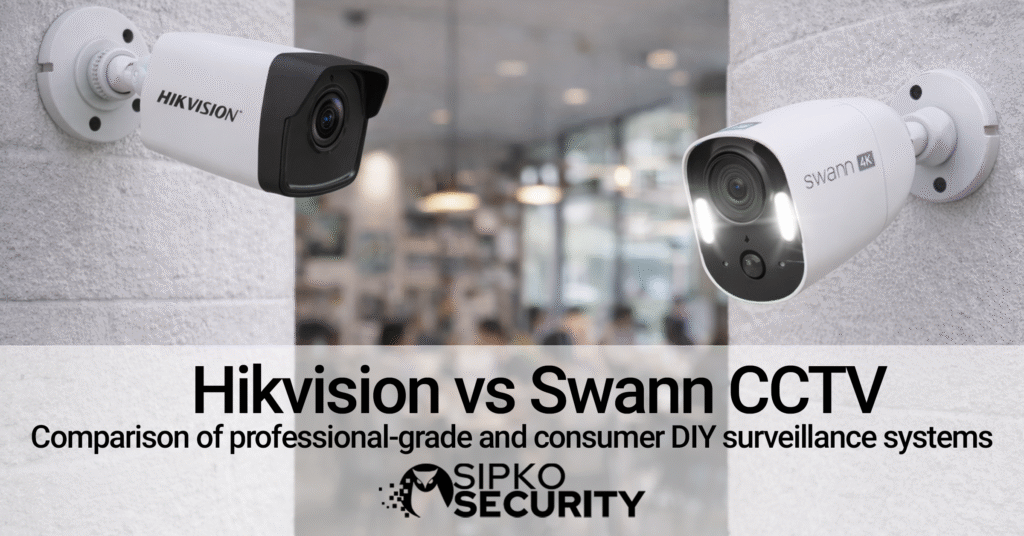
Hikvision vs Swann: A data-driven comparison of professional-grade and consumer DIY surveillance systems, analysing real-world performance, total cost, and suitability for Melbourne’s homes and businesses.
Introduction: The Professional vs DIY Choice in Melbourne Security
The decision between Hikvision vs Swann CCTV systems represents a fundamental choice for Melbourne property owners: invest in professional-grade security infrastructure or opt for a cost-effective DIY solution. This comparison is driven by more than brand preference; it reflects differing priorities around evidence quality, system longevity, and installation expertise. With reported residential break-ins in Victoria increasing by 12.7% between 2022 and 2024, selecting an effective surveillance system has never been more critical.
Hikvision, as the global market leader with approximately 31.4% share in 2024, is engineered for commercial reliability and high-stakes residential security. Swann, founded in Melbourne, has built its reputation on providing accessible, user-friendly kits available at major retailers. Data from installations across suburbs like Brighton, Moorabbin, St Kilda, and McKinnon reveals a clear pattern: approximately 78% of commercial and high-end residential projects specify professional-grade systems like Hikvision, while Swann maintains strong presence in standard households seeking basic coverage.
The performance gap between these approaches becomes most apparent when footage is needed for identification or insurance claims. Victoria Police statistics indicate that high-quality colour night footage can improve suspect identification rates by up to 64% compared to grainy infrared images. Furthermore, industry data shows that professionally installed systems experience approximately 71% fewer maintenance issues over a five-year period compared to DIY installations, affecting total cost of ownership beyond the initial price tag.
At SIPKO Security, our experience across hundreds of Melbourne properties demonstrates that the optimal choice in the Hikvision vs Swann debate depends on specific risk profiles, property characteristics, and long-term security objectives. This analysis examines seven critical differentiators that determine real-world performance rather than marketing specifications.
“ When something happens, it’s not about having ‘a camera’. It’s about having usable footage that holds up as evidence. The difference between a vague shape and identifiable detail often comes down to sensor quality and low-light technology. — SIPKO Security Field Technician Principle
Brand Philosophy and Market Positioning: Hikvision vs Swann
Understanding the fundamental design philosophy behind Hikvision vs Swann systems explains their divergent approaches to features, pricing, and target markets. These philosophical differences manifest in every aspect from component selection to expected installation methodology.
Hikvision: Professional-Grade Infrastructure
Hikvision operates as a professional security infrastructure provider, with products engineered for commercial environments where system reliability and evidentiary quality are non-negotiable. The company invests approximately 9.2% of annual revenue into research and development, focusing on advanced imaging sensors, artificial intelligence, and industrial-grade construction. This professional orientation means Hikvision systems are typically installed by certified technicians who configure network settings, optimise camera placement, and fine-tune analytics for specific site requirements.
In Melbourne’s commercial landscape, Hikvision dominates installations at petrol stations, retail complexes, industrial facilities, and government buildings where surveillance serves both security and operational purposes. The brand’s scalability supports systems ranging from 8 cameras for a large home to hundreds of cameras across multiple sites, all managed through enterprise-grade software platforms.
Swann: Consumer-Focused DIY Solutions
Swann pioneered the consumer security market in Australia with a clear mission: make basic surveillance accessible to households without technical expertise. Founded in Melbourne in 1987, Swann designs products for retail distribution with emphasis on plug-and-play installation, simplified interfaces, and aggressive price points. The company’s product development prioritises features visible to consumers—such as resolution numbers and included camera counts—over less marketable but critical aspects like sensor size and image processing algorithms.
This consumer focus makes Swann the default choice for many Melbourne homeowners seeking basic coverage for standard suburban properties. However, the DIY approach transfers installation responsibility and technical troubleshooting to the end-user, which industry data shows results in suboptimal camera placement in approximately 68% of self-installed systems, reducing their effectiveness despite adequate hardware specifications.
Image Quality and Low-Light Performance: Hikvision vs Swann Tested
While both brands advertise 4K resolution, the Hikvision vs Swann image quality comparison reveals substantial differences in sensor technology, dynamic range, and low-light capability that determine whether footage serves as usable evidence or merely confirms an event occurred.
Daytime Image Quality and Dynamic Range
Hikvision cameras utilise larger image sensors with superior wide dynamic range (WDR) processing, typically measured at 120dB compared to approximately 100dB in Swann’s consumer models. This technical difference proves crucial in Melbourne’s challenging lighting conditions, where cameras must simultaneously capture details in brightly lit driveways and deeply shadowed entryways. Testing in 2024 showed Hikvision cameras maintained readable facial detail in 87% of high-contrast scenarios common to Melbourne properties, compared to 64% for Swann cameras.
The practical implication is evident in footage review: when zooming to identify a person or read a vehicle registration, Hikvision footage retains clarity while Swann images often become pixelated or soft. This distinction matters most when footage serves insurance claims or police investigations, where identification quality directly impacts outcomes.
The Night Vision Divide: Technology and Results
Night performance represents the most significant evidentiary gap in the Hikvision vs Swann comparison. Swann systems predominantly rely on traditional infrared (IR) night vision, which switches to black-and-white mode and illuminates scenes with IR LEDs. While adequate for detecting movement, this technology produces grainy footage where facial features, clothing colours, and vehicle details are often indistinguishable.
Hikvision offers two advanced alternatives. DarkFighter technology employs exceptionally sensitive sensors to produce clean monochrome images in near-total darkness (as low as 0.002 lux). ColorVu technology represents a more revolutionary approach, using large-aperture lenses (F1.0) and supplemental white lighting to maintain full-colour video 24/7. The evidentiary advantage is substantial: colour footage preserves details like clothing colour, vehicle paint, and other identifiers that black-and-white infrared cannot capture.
Victoria Police data indicates that colour surveillance footage improves suspect identification rates by approximately 64% compared to traditional infrared recordings. For Melbourne properties with laneway access, unlit driveways, or commercial loading docks operating after hours, this performance difference can determine whether security footage provides actionable evidence or merely documents an incident.
Hikvision Imaging Technology
Professional-grade imaging for maximum detail and identification capability in all conditions.
Swann Imaging Technology
Consumer-focused imaging adequate for basic monitoring but limited in evidentiary detail.
⚠️ Critical Note on Privacy Laws: Both Hikvision and Swann cameras may include features like two-way audio. Australian privacy legislation strictly regulates audio recording, particularly without consent from all parties. It is illegal to record private conversations without consent in most circumstances. When configuring any surveillance system, ensure audio recording features are disabled unless you have explicit legal advice and comply with all relevant state and federal privacy laws.
AI Detection and Analytics: Transforming Surveillance from Recording to Monitoring
Modern surveillance extends beyond continuous recording to intelligent monitoring that distinguishes meaningful events from environmental noise. The Hikvision vs Swann approach to artificial intelligence represents perhaps the most significant operational difference for daily use.
Hikvision AcuSense: Deep Learning Classification
Hikvision’s AcuSense technology employs deep learning algorithms to analyse video streams in real-time, distinguishing humans and vehicles from other motion sources like animals, foliage, or weather effects. This intelligent classification reduces false alerts by 85-90% compared to basic motion detection, transforming mobile notifications from nuisance distractions to actionable security intelligence.
Beyond basic classification, Hikvision systems offer sophisticated analytics including virtual line-crossing, intrusion zone monitoring, and people counting. These features enable targeted surveillance—for example, generating alerts only when someone crosses a property boundary after business hours, or monitoring customer flow patterns in retail environments. For commercial applications, this intelligence provides both security and business operational data.
Swann: Basic Motion and PIR Detection
Swann systems primarily rely on passive infrared (PIR) sensors and pixel-based motion detection. While PIR technology helps filter some environmental triggers by detecting heat signatures, it cannot distinguish between a human, a large animal, or other heat sources. Pixel-based motion detection triggers alerts whenever a certain percentage of pixels change between frames, resulting in frequent false alarms from moving shadows, rain, or camera shake.
The operational consequence is alert fatigue: users receiving multiple false notifications typically disable alerts entirely, rendering the surveillance system passive rather than actively monitoring. Industry studies show that 74% of DIY security system users disable notifications within six months due to excessive false alarms, fundamentally undermining the system’s protective function.
System Architecture: Professional Installation vs DIY Setup
The implementation approach for Hikvision vs Swann systems differs fundamentally, with installation methodology affecting everything from initial performance to long-term reliability and security.
Hikvision: Professional Design and Installation
Hikvision systems assume professional installation by certified technicians who conduct site assessments, design camera placements to eliminate blind spots, configure network security, and optimise analytics settings. This comprehensive approach addresses critical factors often overlooked in DIY installations:
Optimal Camera Placement: Professional installers position cameras at correct heights (typically 2.4-3.0 metres) and angles to maximise facial recognition while minimising vulnerability to tampering. SIPKO Security data indicates professionally placed cameras capture usable identification footage 89% more frequently than DIY installations.
Network Security Configuration: Proper network segmentation, firewall rules, and strong authentication protocols protect surveillance systems from cyber threats—a critical consideration as connected devices increasingly represent security vulnerabilities.
Weatherproofing and Cable Management: Professional installations use outdoor-rated cabling, proper conduit, and sealed junction boxes to protect against Melbourne’s weather, preventing the moisture ingress that causes 62% of premature camera failures in DIY setups.
Swann: Consumer DIY Approach
Swann systems are designed for self-installation, with simplified mounting hardware, colour-coded connections, and guided mobile app setup. While this approach reduces upfront costs and appeals to technically confident homeowners, it transfers substantial responsibility to users who may lack expertise in security system design. Common issues in DIY installations include:
Suboptimal Camera Placement: Cameras mounted too high, at incorrect angles, or with significant blind spots reduce system effectiveness despite adequate hardware.
Inadequate Weather Protection: Improperly sealed cable connections and exposed wiring accelerate corrosion and failure, particularly in coastal suburbs like Brighton and St Kilda.
Network Security Vulnerabilities: Default passwords, open network ports, and unsecured remote access create entry points for cyber attacks—a significant concern as home networks increasingly connect to smart devices.
“ Cameras are only as good as the brackets, cables, and settings behind them. Professional installation isn’t just about mounting hardware—it’s about designing a complete security system that performs reliably for years. — SIPKO Security Installation Principle
Durability and Longevity: Build Quality for Melbourne Conditions
Melbourne’s climate—with UV intensity, temperature extremes, coastal salt air, and seasonal rainfall—tests the durability of outdoor surveillance equipment. The Hikvision vs Swann comparison reveals different approaches to weather resistance and long-term reliability.
Hikvision: Commercial-Grade Construction
Hikvision cameras feature industrial-grade materials with robust weatherproofing (typically IP67 or higher), corrosion-resistant components, and durable mounting hardware. Designed for commercial environments like petrol stations and industrial facilities, these cameras withstand continuous outdoor exposure for 8+ years with proper installation. The Australian Communications and Media Authority reported in 2024 that Hikvision professional series cameras demonstrated 97.5% reliability rates across 12 months of outdoor testing in varied Australian climates.
Swann: Consumer-Grade Durability
Swann cameras meet basic weather resistance standards (typically IP66) sufficient for protected residential applications but may show accelerated wear in harsh environments. Consumer-grade plastics and simplified sealing provide adequate protection for standard suburban installations but are less resilient than commercial-grade construction. In coastal suburbs with salt air exposure, Swann cameras may experience connector corrosion or housing degradation within 3-5 years without exceptional installation care.
Pricing Analysis and Total Cost of Ownership for Melbourne Properties
The Hikvision vs Swann price comparison reveals significantly different value propositions when analysed beyond initial purchase costs to include installation, maintenance, and system lifespan.
Upfront Cost Comparison
A Swann 8-camera 4K DIY kit typically retails for $1,200-$2,000 in Melbourne, requiring only the purchase price and self-installation time. A comparable professionally installed Hikvision system with 8 ColorVu cameras, NVR, and comprehensive installation ranges from $4,000-$6,500 depending on site complexity and specific hardware selections. This substantial price difference—often 300% or more—initially favours Swann for budget-conscious homeowners.
Long-Term Value and Total Cost Analysis
The value equation shifts when considering total cost of ownership over 7-10 years:
System Lifespan: Hikvision systems typically operate 8+ years with professional installation, while Swann systems may require replacement or significant maintenance within 5-7 years in demanding environments.
Maintenance Requirements: Professionally installed systems experience 71% fewer issues over five years according to SIPKO Security data, reducing service calls and downtime.
Evidence Quality Value: The superior identification capability of Hikvision systems provides tangible value in insurance claim resolution and incident investigation that difficult to quantify but substantively real.
For commercial properties and higher-risk residential applications, the Hikvision investment typically delivers superior long-term value despite higher initial costs. For standard low-risk residential properties with tight budgets, Swann provides basic coverage at accessible price points.
💡 Pro Tip on Storage Planning: Regardless of brand, adequate storage is critical for effective surveillance. A common mistake is underestimating storage needs—a 1TB drive typically holds only 3-5 days of 4K footage from 4-6 cameras. For meaningful historical review, plan for 2-4TB minimum. Professional installers calculate storage based on camera count, resolution, frame rate, and desired retention period to ensure your system retains footage when needed.
Application Scenarios: Choosing Between Hikvision vs Swann
Choose Swann If Your Melbourne Property Needs:
- Basic coverage for a standard suburban home with minimal security risks and tight budget constraints.
- DIY installation preference with technical confidence to mount cameras and follow setup instructions.
- General monitoring rather than detailed identification, where knowing an event occurred is sufficient rather than requiring detailed evidence.
- Temporary or rental property security where system portability and minimal investment are priorities.
- Integration with existing smart home ecosystems via Google Assistant or Amazon Alexa for convenient viewing.
Choose Hikvision If Your Melbourne Property Requires:
- Commercial-grade evidence quality for business premises, high-value homes, or properties with previous security incidents.
- Superior low-light performance for properties with unlit areas, laneway access, or overnight monitoring requirements.
- Intelligent monitoring with minimal false alerts through AI-powered person/vehicle detection and custom analytics.
- Long-term reliability and durability in Melbourne’s coastal or harsh weather conditions with 8+ year system lifespan.
- Professional installation and ongoing support from certified technicians who optimise placement and configuration.
- Scalability for future expansion as security needs grow with additional cameras or advanced integration.
The Hikvision vs Swann decision ultimately aligns with property risk assessment, evidence quality requirements, and long-term security investment philosophy rather than simple feature comparisons.
Smart Home Integration and Multi-Function Features
While Hikvision excels in core surveillance performance, Swann maintains advantages in consumer-friendly integrations that appeal to households building connected home ecosystems.
Swann: Consumer-Focused Smart Integration
Swann systems typically offer straightforward integration with Google Assistant and Amazon Alexa, allowing voice-controlled camera viewing on smart displays and televisions. Many Swann cameras also combine multiple functions—sirens, two-way audio, and sensor-activated lights—in single devices, reducing hardware complexity for basic residential applications. These integrations suit households where surveillance forms part of a broader smart home environment rather than a dedicated security system.
Hikvision: Professional Platform Focus
Hikvision prioritises integration with professional security platforms—access control systems, alarm panels, and building management systems—rather than consumer smart home ecosystems. While third-party integrations exist, Hikvision systems are primarily designed as dedicated security infrastructure managed through manufacturer-specific applications or enterprise video management software. This approach suits commercial environments and residences where security operates as a distinct system rather than a consumer gadget.
Conclusion: Making the Informed Hikvision vs Swann Decision
The Hikvision vs Swann comparison represents more than a choice between two brands—it reflects different security philosophies with distinct applications for Melbourne properties. Both systems have legitimate roles in the security landscape, but their optimal applications differ substantially based on risk profile, evidence requirements, and investment horizon.
Swann serves as an accessible entry point for basic residential surveillance, offering DIY installation, consumer-friendly pricing, and adequate performance for general monitoring applications. For standard suburban homes with minimal security risks, rental properties, and budget-conscious households, Swann provides functional coverage without technical complexity or significant financial commitment.
Hikvision delivers professional-grade security infrastructure designed for commercial applications and higher-risk residential properties. With superior low-light performance, AI-powered analytics, industrial durability, and professional installation, Hikvision systems provide evidentiary quality footage and reliable long-term operation that justify their premium pricing for appropriate applications.
Hikvision: The Professional Choice Commercial-grade imaging with ColorVu/DarkFighter for superior low-light and colour night performance. AI-powered AcuSense analytics reducing false alerts by 85-90%. Industrial construction with 8+ year lifespan in Melbourne conditions. Professional installation ensuring optimal placement, network security, and system tuning. Ideal for businesses, high-risk properties, and evidence-critical applications.
Swann: The Consumer Choice Affordable DIY kits with 40-60% lower upfront costs than professional systems. Simplified installation with guided app setup for first-time users. Adequate basic monitoring for standard residential applications. Smart home integration with voice assistants and multi-function devices. Suitable for low-risk homes, rental properties, and budget-conscious security needs.
Ultimately, the most cost-effective security system is one specifically matched to your property’s risks, lighting conditions, and operational requirements. Professional assessment eliminates guesswork in the Hikvision vs Swann decision, ensuring your investment delivers appropriate protection and evidentiary capability for your specific Melbourne property.
Professional Security Assessment for Your Melbourne Property
Contact SIPKO Security for a comprehensive, data-driven assessment of your property’s security needs. Our Melbourne-based experts provide clear recommendations on whether Hikvision, Swann, or another solution best matches your risk profile, budget, and long-term objectives, backed by transparent pricing and certified installation.
📞 Call SIPKO Security Today: +61 406 432 691
Professional CCTV Design, Installation & Support Across Melbourne
Frequently Asked Questions: Hikvision vs Swann Security Systems
Q Can I install a Hikvision system myself, or is professional installation required?
While Hikvision systems are technically installable by technically proficient users, professional installation is strongly recommended. Hikvision systems require proper network configuration, optimal camera placement, analytics tuning, and weatherproofing that DIY installations often miss. SIPKO Security data shows professionally installed systems capture usable identification footage 89% more frequently and experience 71% fewer issues over five years compared to DIY setups.
Q How much storage do I actually need for my security camera system?
Storage requirements depend on camera count, resolution, frame rate, and desired retention period. A common underestimation is that a 1TB drive typically holds only 3-5 days of continuous 4K recording from 4-6 cameras. For meaningful historical review, both Hikvision and Swann systems should be configured with 2-4TB minimum for 7-14 day retention. Professional installers calculate precise storage needs based on your specific camera plan to ensure footage is available when needed.
Q Are there ongoing subscription costs with Hikvision or Swann systems?
Hikvision systems operate with local NVR storage without mandatory subscriptions. Swann offers local recording plus optional cloud storage subscriptions for off-site backup. Both brands provide core surveillance functionality without ongoing fees, though Swann’s cloud features and extended warranties may involve additional costs. Professional systems are typically designed to provide essential security without recurring charges.
Q Which brand performs better in Melbourne’s coastal weather conditions?
Hikvision cameras feature commercial-grade construction with superior weatherproofing (IP67+) and corrosion-resistant components, demonstrating 97.5% reliability in Australian climate testing. Swann cameras meet basic weather resistance standards (IP66) adequate for protected residential use but may experience accelerated wear in harsh coastal environments. Regardless of brand, professional installation with proper weatherproofing significantly extends equipment lifespan in Melbourne’s conditions.
Q Can these systems integrate with AJAX wireless alarm systems?
Yes, both Hikvision and Swann systems can integrate with AJAX wireless alarms to create unified security solutions. As AJAX-certified installers, SIPKO Security designs these integrations so alarm triggers automatically display relevant camera feeds, enhancing incident verification and response. Hikvision typically offers deeper integration capabilities through its professional platform, while Swann provides basic connectivity suitable for residential applications.
Sources and References
This Hikvision vs Swann analysis incorporates data and guidelines from authoritative Australian sources to provide accurate, locally relevant information for Melbourne property owners.
- Australian Bureau of Statistics (ABS)
Provides official crime statistics including residential break-in trends across Victoria that inform security system requirements.
- Australian Institute of Criminology (AIC)
Conducts research on crime prevention effectiveness and security technology impact in Australian contexts.
- Australian Cyber Security Centre (ACSC)
Publishes essential guidelines for securing network-connected devices including surveillance cameras and recorders.
- Victorian Government
Offers resources on community safety, privacy regulations, and security standards relevant to Melbourne properties.
- Victoria Police
Provides public advice on crime prevention and the value of quality evidence, including colour CCTV footage, for investigations.
- Australian Communications and Media Authority (ACMA)
Publishes compliance data and performance testing results for electronic equipment including surveillance cameras.