Hikvision vs Hanwha Vision CCTV: 7 Critical Differences for Melbourne Properties in 2026
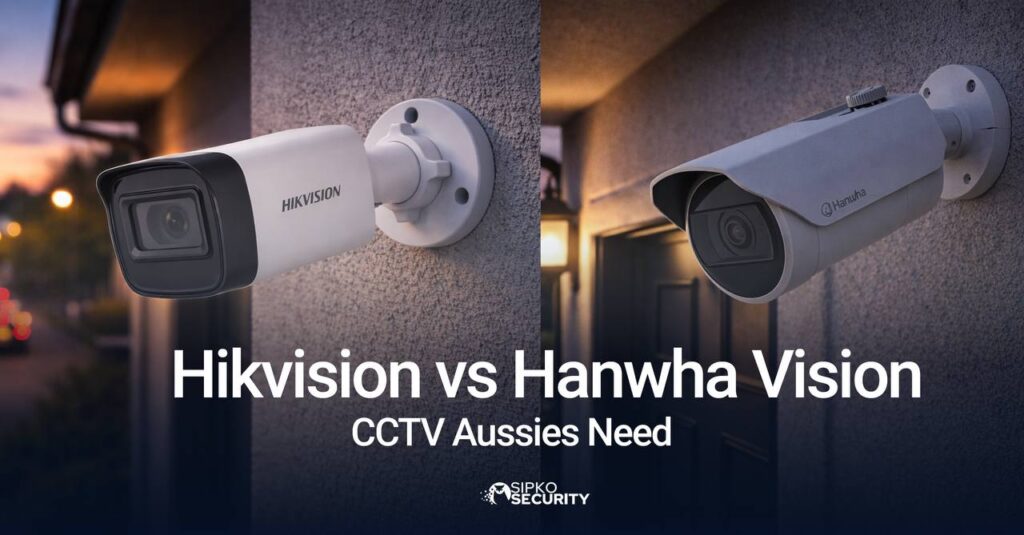
Hikvision vs Hanwha Vision: A data-driven analysis of two leading brands for Melbourne’s homes and businesses, examining technology, compliance, and long-term value in a growing security market.
Understanding the Hikvision vs Hanwha Vision Decision for Melbourne Security
When evaluating Hikvision vs Hanwha Vision for property security, Melbourne homeowners and business managers are navigating more than a simple feature list. This choice sits at the intersection of a rapidly advancing technological market and increasing regulatory awareness. The Australian AI CCTV market, valued at USD 541 million in 2023, is predicted to grow at a compound annual growth rate (CAGR) of 23.26% to reach USD 2.61 billion by 2030[citation:1]. This growth is driven by rising security concerns and smart city initiatives, making the selection of a future-proof system critical[citation:9].
In suburbs like Brighton, McKinnon, and Moorabbin, the decision often hinges on balancing advanced capabilities with practical budget constraints. Hikvision, as the global volume leader, brings professional-grade features to a broader market. Conversely, Hanwha Vision, originating from Samsung’s security division, has cemented its position as a premium provider focused on compliance and image fidelity[citation:6]. Data indicates that for many residential and small commercial sites, the initial cost difference can be significant, but long-term factors like cybersecurity and system longevity increasingly influence the final decision.
The integration of Artificial Intelligence (AI) is now a standard expectation. By 2024, features like human and vehicle detection, once premium extras, became commonplace in professional systems from both brands[citation:1]. This evolution means the Hikvision vs Hanwha Vision debate is less about who has AI and more about how intelligently it’s implemented to reduce false alarms and provide actionable alerts for Melbourne properties.
At SIPKO Security, our experience across hundreds of Melbourne installations reveals that the optimal choice is seldom universal. It depends on specific site vulnerabilities, the sensitivity of data under surveillance, exposure to harsh coastal elements in bayside suburbs like St Kilda, and the owner’s risk tolerance regarding supply chain and data security. The following analysis breaks down the seven critical differences that translate technical specifications into real-world performance and value.
“ In security, the true cost of a system is not its purchase price, but the price of its failure. This includes missed incidents, data breaches, and the loss of trust. — Industry Principle, Security Systems Design
Market Philosophy and Compliance: The Foundation of Hikvision vs Hanwha Vision
The divergent paths of Hikvision and Hanwha Vision stem from their core business philosophies, which directly impact product design, market positioning, and—increasingly for Australian buyers—regulatory acceptance. Understanding this background is key to predicting which brand will align with future security and compliance needs.
Hikvision: Volume and Vertical Integration
Hikvision’s strategy is built on scale. As the world’s largest video surveillance manufacturer with 2023 revenue of US $9.72 billion, it leverages massive production volume and vertical integration to achieve aggressive pricing[citation:6]. This model has successfully democratised access to high-resolution cameras and AI analytics, placing them within reach of Melbourne homeowners and small businesses. The company’s broad product portfolio ensures availability and competitive pricing across market segments. However, this volume-focused approach sometimes correlates with varying build quality across product tiers and a primary focus on optimising performance within its own proprietary ecosystem.
Hanwha Vision: Premium Compliance and Image Fidelity
Hanwha Vision, formerly Samsung’s security division, pursues a different path. With a focus on the premium commercial and government sectors, it emphasises image processing quality, hardware durability, and—critically—compliance. The brand is consistently listed as fully compliant with the United States National Defense Authorization Act (NDAA)[citation:4][citation:7][citation:10]. For Australian entities, NDAA compliance has evolved from a US-specific rule to a global benchmark for supply chain security and cybersecurity resilience. It is increasingly specified in tender documents for government projects, schools, healthcare facilities, and by corporations mindful of data sovereignty and insurance requirements.
The Geopolitical and Compliance Imperative
This is where the Hikvision vs Hanwha Vision comparison extends beyond hardware. Hikvision, as a Chinese manufacturer, is subject to geopolitical scrutiny and is explicitly named in the NDAA restrictions[citation:4][citation:7]. This has led to procurement bans in sensitive sectors across multiple Western countries. For a Melbourne medical clinic, legal practice, or business handling government contracts, this can be a decisive factor, often overriding technical specifications or price. Hanwha Vision’s NDAA-compliant status provides a clear, verifiable supply chain, reducing regulatory risk and aligning with best-practice cybersecurity frameworks now advocated by the Australian Cyber Security Centre[citation:10].
Core Technology and Image Processing: Hikvision vs Hanwha Vision Performance
Both manufacturers offer high-resolution cameras with advanced AI, but their engineering priorities create distinct performance profiles in real-world Melbourne conditions. The choice here often depends on the specific challenge: achieving usable colour at night versus managing harsh shadows and glare.
Hikvision ColorVu: Illumination-Based Night Vision
Hikvision’s signature ColorVu technology addresses low-light performance by integrating gentle, warm-white LED lights into its cameras. Paired with large-aperture lenses, this allows the camera to capture full-colour video even in near-total darkness, such as in an unlit driveway in Moorabbin or a rear laneway. The advantage is evident: colour footage provides significantly more detail for identification than traditional infrared black-and-white imagery. The trade-off is the presence of visible light, which some property owners may find undesirable, and the technology’s reliance on adding light rather than maximising natural light sensitivity.
Hanwha Vision: Sensor and WDR Excellence
Hanwha Vision invests heavily in sensor technology and image processing algorithms. Its strength lies in Wide Dynamic Range (WDR), which balances extreme differences in light within a single scene. This is invaluable for Melbourne commercial applications: clearly capturing details inside a delivery vehicle’s cabin while it’s backed against a bright yard, or viewing a shop entrance where bright sunlight creates deep shadows[citation:2]. This capability, often measured in high dB ratings, ensures details aren’t lost in blown-out highlights or crushed blacks. For low-light, Hanwha focuses on superior low-lux sensitivity and noise reduction to deliver cleaner images without always requiring supplemental lighting.
Hikvision Imaging Strategy
Optimised for consistent low-light areas like residential driveways and pathways where colour detail is prioritised.
Hanwha Vision Imaging Strategy
Engineered for challenging, high-contrast environments like retail shopfronts, loading docks, and car parks.
AI and Analytics: From Detection to Intelligence (Hikvision vs Hanwha Vision)
Both brands incorporate deep learning for accurate people and vehicle detection, drastically reducing false alarms from animals or foliage. Hikvision’s AcuSense and Hanwha Vision’s AI suites provide this baseline functionality. The divergence occurs in advanced applications. Hanwha Vision often offers more sophisticated analytics for commercial use, such as detailed heat mapping for retail customer behaviour analysis or advanced queue monitoring. For most Melbourne residential properties, the core AI detection from either brand is more than sufficient when properly configured to local conditions.
⚠️ Critical Configuration Note: AI analytics are only as good as their setup. Factory-default settings are often ineffective in Melbourne’s unique environment, plagued by false triggers from swaying trees, strong southern light, or local wildlife. Professional installation must include fine-tuning detection zones, sensitivity, and schedules. A poorly configured premium camera will underperform a well-configured mid-range model every time.
System Architecture, Software, and Cybersecurity
The cameras are only one component. The network video recorder (NVR) and video management software (VMS) form the brain of the system, dictating usability, scalability, and security. The Hikvision vs Hanwha Vision approach here again reflects their core philosophies: a streamlined, integrated experience versus an open, enterprise-ready platform.
Software Ecosystems and Usability
Hikvision’s ecosystem is designed for efficiency within its own brand. The Hik-Connect app and iVMS-4200 desktop software are straightforward, enabling Melbourne homeowners to quickly access live views, receive push alerts, and playback footage. This ease of use is a significant advantage for residential and small business applications where a dedicated security manager is not present.
Hanwha Vision’s Wisenet Wave VMS (powered by NX Witness) is architected for flexibility and larger deployments. It supports a wide range of third-party cameras and systems via open standards like ONVIF, making it ideal for businesses that may need to integrate existing equipment or plan for multi-vendor futures. Its interface allows for sophisticated floor plan mapping and advanced user management across multiple sites—key features for a Melbourne business with several locations.
The Paramountcy of Cybersecurity
In 2025, every IP camera is a network device and a potential entry point. This makes cybersecurity a non-negotiable part of the Hikvision vs Hanwha Vision evaluation[citation:5]. Hanwha Vision’s NDAA compliance provides a verified foundation, with secure boot processes, signed firmware, and a transparent supply chain[citation:4][citation:10]. For Hikvision systems, rigorous network hardening by a qualified installer is mandatory. This includes placing all cameras and the NVR on an isolated VLAN with strict firewall rules, disabling universal plug-and-play (uPnP), and enforcing strong, unique passwords. The Australian Cyber Security Centre reported over 76,000 cybercrime incidents in 2022 alone, a 13% year-on-year increase, highlighting the critical need for these measures[citation:5].
Durability, Product Range, and Melbourne’s Environment (Hikvision vs Hanwha Vision)
Melbourne’s climate—with its UV intensity, salty bayside air in suburbs like Brighton and St Kilda, and temperature swings—tests the build quality of any outdoor camera. Furthermore, the scope of a brand’s product range determines if it can provide a tailored solution for a specific monitoring challenge.
Build Quality and Weather Resistance
Hanwha Vision has a strong reputation for industrial-grade construction, with robust metal housings and high-quality seals that withstand harsh conditions over many years. This durability translates to a lower long-term failure rate, especially in exposed coastal locations. Hikvision’s build quality is tier-dependent; its professional series cameras offer solid protection (typically IP67-rated), but budget-oriented lines may use more plastic and less robust sealing. For any outdoor installation, professional workmanship—using weatherproof junction boxes, proper gland seals, and UV-rated cable—is as important as the camera’s own rating.
Product Range and Specialised Solutions
Hikvision’s vast catalogue is a key strength. Whether a homeowner needs a discreet mini-dome, a business requires a powerful PTZ (Pan-Tilt-Zoom) camera, or an industrial site needs explosion-proof models, Hikvision likely has an option. Hanwha Vision’s range, while comprehensive, is more curated towards commercial and industrial applications, with particular depth in thermal imaging cameras and specialised analytics. The choice here depends on how standard or unique the surveillance requirements are for the Melbourne property in question.
Cost Analysis and Value for Melbourne Properties
Price is a primary differentiator, but value encompasses the total cost of ownership over the system’s lifespan. The Australian CCTV market’s growth of 10.11% CAGR (2023-2029F) reflects ongoing investment, making a considered choice vital[citation:9].
Upfront Cost Comparison
Hikvision consistently offers a lower entry point. For a like-for-like camera specification (e.g., 4MP with AI), Hikvision equipment can be 15% to 30% less expensive than Hanwha Vision. This makes comprehensive coverage of a Melbourne family home more accessible. For a typical 8-camera residential system with a quality NVR and installation, budgets might range from $4,500 to $6,500 for Hikvision, while a comparable Hanwha Vision system may range from $6,000 to $8,500.
Long-Term Value and Total Cost of Ownership
The value equation shifts over time. Hanwha Vision’s potential advantages include:
• Reduced Compliance Risk: Avoids potential costs of future system replacement if compliance mandates tighten.
• Operational Efficiency: Superior video compression (like WiseStream) can reduce storage costs by 30-50% in large deployments.
• Durability: Higher build quality can lead to lower maintenance and failure rates over a 5-10 year period.
For a commercial entity, these factors can justify the higher initial investment. For a residential property, the long-term calculation is more personal, balancing budget against peace of mind and security priorities.
💡 Pro Tip: Always purchase surveillance equipment through authorised Australian distributors. Grey-market imports sold online may have modified firmware, lack local warranty support, and pose significant cybersecurity risks. Reputable installers will only work with properly sourced, warrantied equipment to ensure system reliability and their ability to provide ongoing support.
“ We don’t sell cameras; we provide risk mitigation. The right system is the one that addresses your specific vulnerabilities today and remains a trusted asset for years to come. — SIPKO Security, Design Philosophy
Application Scenarios: Choosing Between Hikvision vs Hanwha Vision
Hikvision vs Hanwha Vision: Which System Is Right for Your Property?
Choose Hikvision If:
- Your primary concern is maximising features and camera coverage within a constrained budget for a home or small business.
- Your property is in a residential suburb like McKinnon or Moorabbin without specific contractual compliance requirements (e.g., NDAA).
- You prioritise user-friendly mobile access and straightforward management without complex IT needs.
- Full-colour night vision in consistently dark areas (like a rear garden) is a top priority, and visible light is acceptable.
- You are committed to implementing, or having a professional implement, rigorous network segregation and security hardening for the camera system.
Choose Hanwha Vision If:
- Your installation is for a government entity, school, medical facility, or business with NDAA compliance requirements or sensitive data[citation:4][citation:10].
- You operate in commercial or industrial environments with challenging, high-contrast lighting (e.g., warehouse loading docks, retail storefronts).
- Your property is in a harsh coastal environment like Brighton or St Kilda, where superior weather sealing and long-term durability are critical.
- You foresee needing to integrate with other security systems (access control, alarms) or prefer an open-platform VMS for future flexibility.
- Long-term cybersecurity assurance, supply chain verification, and minimising regulatory risk are paramount considerations.
The Hikvision vs Hanwha Vision decision is not about finding a universal “best” but about matching the right tool to the job. A professional security assessment is invaluable, examining not just the property layout but also the owner’s risk profile, compliance landscape, and operational preferences to make a confident, informed recommendation.
Conclusion: Making an Informed Choice for Melbourne Security
The journey through the Hikvision vs Hanwha Vision landscape reveals a clear trade-off: accessible innovation versus assured integrity. For a significant portion of the Melbourne market—particularly residential and small commercial properties without stringent compliance mandates—Hikvision presents a compelling, cost-effective solution packed with advanced technology. Its ability to deliver professional-grade AI and imaging at a competitive price point is unmatched.
However, the security industry’s trajectory is moving decisively towards verified cybersecurity and supply chain transparency. In this context, Hanwha Vision’s NDAA-compliant status, enterprise-grade construction, and superior performance in difficult lighting conditions position it as the prudent long-term investment for projects where risk mitigation, compliance, and longevity are primary drivers. This is especially true for Melbourne’s commercial, government, and critical infrastructure sectors.
Hikvision Advantages Delivers exceptional value and advanced feature density, making professional surveillance accessible for Melbourne homes and SMEs. Its ColorVu technology provides a practical solution for full-colour night vision. Success hinges on professional installation that includes strict network security isolation to mitigate cybersecurity concerns associated with non-NDAA compliant equipment.
Hanwha Vision Advantages The definitive choice for compliance-conscious and enterprise applications. Offers full NDAA compliance, superior wide dynamic range for challenging lighting, and a robust build quality suited for harsh Australian environments. Justifies its premium pricing through reduced long-term regulatory risk, cybersecurity assurance, and operational efficiency in commercial deployments.
Ultimately, the most critical component is not the brand name on the camera, but the expertise behind its design and installation. A system tailored to your specific property in Brighton, McKinnon, or the CBD, installed with precision and configured for Melbourne’s unique conditions, will always outperform a poorly planned installation of premium equipment. For further insights into integrating your CCTV with other security layers, explore our analysis of modern alarm systems , read more about Hikvision vs Reolink: CCTV Melbourne Homes Need in 2026
Professional Security System Design for Melbourne
SIPKO Security provides certified, data-driven security assessments for Melbourne properties. We cut through the marketing specs to design systems based on your actual site conditions, risk profile, and operational needs, ensuring your investment delivers lasting protection and value.
📞 Contact SIPKO Security for a Consultation: 0406 432 691
Professional CCTV, Alarm, and Access Control Installation Across Melbourne
Frequently Asked Questions: Hikvision vs Hanwha Vision
Q Can I mix Hikvision and Hanwha Vision cameras on the same NVR?
Technically, it is often possible if the NVR supports the ONVIF profile standard. However, it is generally not recommended. You will lose access to each brand’s proprietary advanced features (like specific AI analytics or optimised low-light modes) and may face firmware compatibility issues. For a reliable, fully-featured system, choosing one brand for the Hikvision vs Hanwha Vision deployment is the professional approach.
Q Do I need NDAA-compliant cameras for my home in Brighton or McKinnon?
Legally, no. Practically, it’s a growing consideration. While not mandated for private homes, NDAA compliance like that offered by Hanwha Vision provides verified cybersecurity and supply chain assurance[citation:4][citation:10]. If you are concerned about data privacy, long-term system integrity, or your property’s future insurability, NDAA-compliant equipment offers greater peace of mind. For many, the cost-benefit of Hikvision outweighs this, provided the network is properly secured.
Q Which brand has better resistance to Melbourne’s coastal salt air?
Based on industry reputation and build standards, Hanwha Vision cameras are generally regarded as having superior weather sealing and corrosion-resistant materials, making them a strong choice for exposed coastal installations in suburbs like St Kilda or Brighton. That said, Hikvision’s professional-tier cameras (not entry-level models) also carry high IP ratings (e.g., IP67). The critical factor is combining a suitably rated camera with expert installation that uses weatherproof conduits and junction boxes to protect cable entries—the most common point of failure.
Q How do warranties and local support compare for these brands in Australia?
Both brands typically offer 2-3 year warranties on hardware when purchased through authorised Australian distributors. The key difference lies in support channels. Hikvision, due to its vast market presence, has a wide network of distributors and installers. Hanwha Vision, focusing on the commercial market, often provides support through a more select group of certified partners. Regardless of your Hikvision vs Hanwha Vision choice, ensure your installer is certified for that brand and can provide direct local support and handle warranty claims on your behalf.
Q Can these CCTV systems integrate with other security systems like alarms or smart home devices?
Yes, but the ease and depth of integration differ. Hanwha Vision’s open-platform approach typically offers more seamless and extensive integration with third-party video management software (VMS), access control systems, and building management systems. Hikvision systems integrate best within their own ecosystem (e.g., Hikvision NVRs with Hikvision access control). For basic smart home triggers (e.g., turning on lights via IFTTT), both can often be configured. For a unified security system, discuss your integration goals with your installer during the planning phase to ensure compatibility.
Sources and References
This analysis of Hikvision vs Hanwha Vision incorporates data from market research and official Australian sources to provide a factual, evidence-based comparison.
- Australian Institute of Criminology (AIC)
Provides national crime statistics and research on the effectiveness of surveillance technologies in crime prevention.
- Australian Cyber Security Centre (ACSC)
Publishes cybersecurity guidelines, threat reports, and best practices for securing network-connected devices, including CCTV systems.
- Australian Bureau of Statistics (ABS)
Offers official data on population demographics, household expenditure, and crime trends relevant to security market analysis.
- Victorian Government
Provides information on state-based regulations, building codes, and public safety initiatives that may impact security system installations.
- South Australian Government
Offers insights into procurement policies and security standards that often influence national best practices.
- New South Wales Government
A source for guidelines on commercial security system standards and public space surveillance.
- Queensland Government
Publishes resources on workplace health and safety regulations that can inform surveillance requirements for industrial and commercial properties.