Dahua vs Swann Security Cameras: Installer-Grade vs DIY Systems Explained
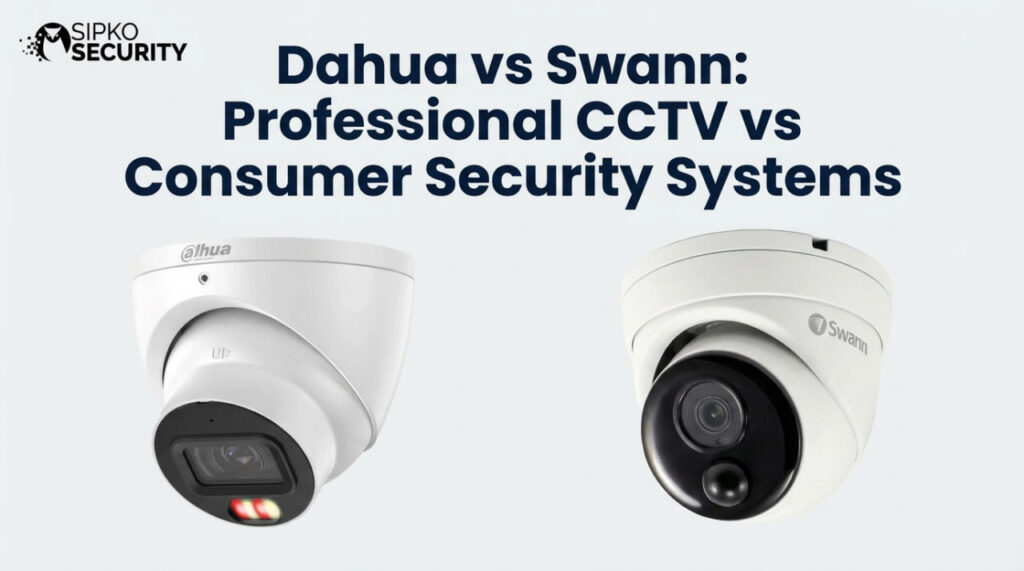
Dahua vs Swann: A choice between professional installer-grade equipment and plug‑and‑play retail kits, focusing on image quality, scalability, and long-term security for Melbourne properties.
Introduction
A parcel disappears from a porch in Preston and, within minutes, the laptop is open and camera brands are being compared. Search results fill with “Dahua vs Swann”, mixed reviews, and spec sheets that read more like a networking exam than home security. One name is pushed by professional installers, the other sits in a neat box at Bunnings with DIY splashed across the front.
At its core, Dahua vs Swann is a choice between installer-grade gear and plug‑and‑play retail kits. Dahua-style systems are built for professional use, with advanced AI and deep configuration that really shine when a technician sets everything up correctly. Swann kits are made for everyday buyers who want something they can buy off the shelf, mount themselves and get running with minimal fuss.
From what we see at SIPKO Security across Melbourne homes and businesses, both approaches have a place. The real difference comes down to installation complexity, how much growth you want later, how smart the features need to be, the level of support you expect and the true cost over five to ten years. This guide walks through those points—brand origins, technology, performance, pricing and property types—so it is easier to decide whether a DIY Swann kit is enough or a professional system with a local installer is the better path.
Brand Origins: Melbourne Roots vs Global Manufacturing
Swann has a stronger local story than many people realise. The company started in Melbourne under David Swann and, although now owned by American firm Infinova, it still has design and development staff based here. The cameras themselves are built in China by Raysharp, a large manufacturer that supplies CCTV gear for many badges. Swann’s strategy is clear: place affordable, all‑in‑one kits in major retail chains so a homeowner can walk into Bunnings, pick up a box and be recording by the afternoon.
Dahua, by contrast, is one of the world’s largest security manufacturers, selling professional-grade equipment to installers and wholesalers rather than stacking boxes in retail aisles. Its gear is widely used in commercial sites, industrial facilities and higher demand homes, where people want more than a basic set‑and‑forget system. In most cases, a Melbourne buyer deals with Dahua through a security company or distributor instead of buying direct.
In the Melbourne context that we work in every day, Swann leans on its local design roots and retail reach, while professional Hikvision security, HiLook and Dahua focus on higher performance when installed and configured properly. For properties facing CBD crime patterns, narrow side lanes, double‑storey blind spots or harsh coastal weather, that installer-grade approach can make a very real difference.
Technology Face-Off: AI Analytics vs All-In-One Convenience
When people compare Dahua vs Swann, they often focus on the resolution number printed on the box. The more important gap sits in how each brand uses processing power, AI and features to deal with real‑world events. Dahua pushes professional analytics and image control, while Swann tries to pack simple, familiar features into cameras that are easy for anyone to run.
Dahua’s Professional-Grade Technology
Dahua cameras are built with clear, detailed footage in mind, not just marketing numbers. Higher bitrates, better lenses and stronger low‑light performance help capture faces, plates and clothing in a way that stands up when evidence is needed. In darker laneways or side yards, powerful infrared and smart image processing keep images usable instead of turning everything into a grainy blur.
The real gap shows once AI comes into play. With features such as WizSense, Dahua systems can tell the difference between a person, a vehicle and background motion like trees or pets. That leads to far fewer false alarms and alerts that are worth checking. Higher‑end models add tools such as people counting, face detection and specific intrusion zones that suit shops, warehouses and offices that need to track movement through key areas.
Swann’s Integrated Multi-Feature Approach
Swann goes for a different kind of value. The brand offers Full HD through to 4K cameras that are more than adequate for standard driveways, front doors and small yards. Instead of separate lights, speakers and sirens, many Swann models pack these into one camera, so a single unit can show live video, light up intruders, sound a warning and let the owner talk through their phone.
For many homes this all‑in‑one style is appealing because it keeps gear counts low and wiring simple. Motion detection is straightforward and can trigger recordings and push alerts when someone approaches. However, the trade‑off with this DIY convenience is that the system rarely receives the deeper configuration that a professional would apply. Factory passwords might stay in place, and cameras can end up mounted where they miss key angles.
““The best camera system is the one that has been planned, installed and maintained properly, not just the one with the highest resolution on the box.”— SIPKO Security Installation Principle
Performance and Reliability
Looking past features, Dahua vs Swann also comes down to how each system holds up over years of use. Dahua-class equipment is built for continuous operation, often in harsher commercial environments. Housings, seals and electronics are designed for long‑term outdoor duty, which matters when a camera sits above a driveway in full western sun or takes salty air in suburbs near the bay.
Dahua and similar professional brands also tend to stand out at night. Their stronger infrared, better sensors and smarter processing give clearer images of moving people and vehicles, rather than streaks and ghosting. Swann, by comparison, has a decent reputation among everyday users who want simple coverage, though more demanding users often report softer night performance, especially with movement in low light.
💡 Pro Tip on Camera Placement: According to Victoria Police crime data, most burglaries target front doors and windows. Focus your highest-quality cameras on these entry points, ensuring they are mounted at a height that captures faces clearly without being easily reachable.
Installation and System Scalability
Dahua-style systems are usually installed as Power over Ethernet (PoE), where the same cable carries power and data. When set up by a professional, this gives very stable connections and a clean finish. At SIPKO Security, a standard job on a four to six camera home typically includes:
- • Standards-compliant cabling and weather sealing.
- • Careful camera placement and focus checks.
- • Password changes and firmware updates (Security Hardening).
- • Secure app setup for phones and tablets.
- • One-on-one training so the system feels easy to run.
Swann kits are packaged so that a DIYer can mount cameras and plug in pre‑cut cables. However, the catch is that once permanent cables go into walls or ceilings, the work legally falls under Australian cabling rules. Furthermore, scalability is limited by the recorder: a four-channel NVR is capped at four cameras forever. We almost always recommend an eight‑channel NVR from day one to allow for future expansion.
Pricing Models: Wholesale Competitiveness vs Retail Accessibility
On pure hardware price, Dahua often looks very sharp, especially on larger systems. The wholesale model keeps per‑camera costs down when installers buy multiple units. Swann, in contrast, aims for maximum visibility on retail shelves. While the upfront spend of a DIY kit can be lower, the true cost over ten years often favors professional gear that lasts longer and avoids early replacement due to recorder limits.
User Experience: Professional Control vs Consumer Simplicity
With Hikvision, Dahua and similar professional brands, the software offers deep control through both PC and mobile apps. Users can fine‑tune motion zones, AI rules, and recording schedules. Swann focuses on keeping things simple, with clear tiles in the app and straightforward playback. At SIPKO Security, we see our support as an advantage: the same specialist who installs the system helps you if your Wi‑Fi changes or you get a new phone.
Cybersecurity Considerations: Professional Hardening
In practice, the larger cyber risk comes from default settings rather than the brand badge. Poorly configured IoT devices are common targets for breaches. We treat “hardening” as standard practice, ensuring all passwords are changed, firmwares are updated, and remote access is securely configured. Research shows that homes with hardened systems in Melbourne see dramatically fewer security incidents.
Which System Suits Your Melbourne Property?
Choose Dahua If:
- You require reliable evidence-quality footage for identification.
- You are securing a large home, warehouse, or commercial office.
- You value modular expansion and long-term durability.
- You want a system fully hardened by professionals.
Choose Swann If:
- You need a basic visual deterrent for a small property.
- You are renting and want a temporary, portable unit.
- You prefer buying off-the-shelf for a weekend DIY project.
- You have a strictly limited budget for immediate coverage.
Conclusion
When the marketing is stripped back, Dahua vs Swann is really a choice between a DIY retail kit and a professional security platform. Swann suits buyers who want basic coverage. The Hikvision and Dahua-class systems we install at SIPKO Security are built for deeper configuration and long‑term use. For a deeper dive into professional vs DIY brands, check out our comparison of Dahua vs Reolink.
Get a Professional Security Assessment
Contact SIPKO Security for a comprehensive site assessment of your Melbourne property. We’ll design a customized security blueprint using installer-grade Dahua, Hikvision, or HiLook technology.
📞 Contact SIPKO Security: +61 406 432 691
Frequently Asked Questions
Can I install a Dahua system myself?
While technically possible, permanent cabling in Australia legally requires a licensed cabler. Furthermore, professional setup ensures correct configuration of AI triggers and network hardening that DIYers often miss.
Are Chinese-Manufactured Security Cameras Safe?
Most CCTV products, including Dahua and Swann, have links to Chinese manufacturing. The bigger issue is how the system is protected on your network. We treat “hardening” (strong passwords, segmented networks) as standard practice to ensure your cameras are used safely.
Do I need a subscription for remote viewing?
No. For both professional-grade and DIY kit-based systems, basic remote viewing on your smartphone is usually free once the recorder is connected to your internet.
Sources and References
- AU Cyber Security Centre (ACSC) – Guidelines for securing IoT and home devices.
- Victoria Police – Crime prevention resources and residential safety statistics for Melbourne.