Akuvox vs Hikvision Intercom: Which System Is Better for Melbourne Homes in 2026
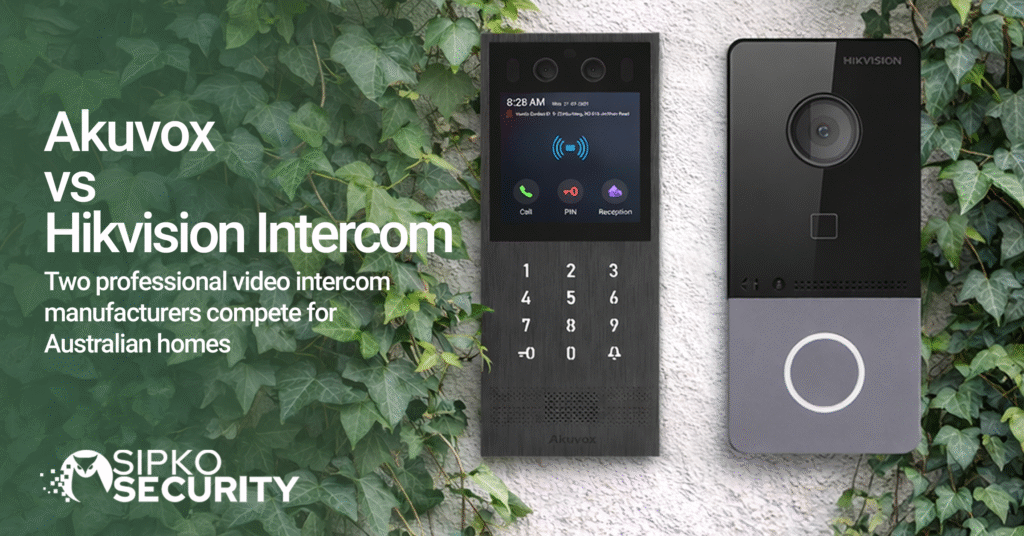
Akuvox vs Hikvision Intercom: Two professional video intercom manufacturers compete for Australian homes. We compare their integration capabilities, access features, pricing, and platform approaches to help Melbourne homeowners decide which system delivers the best value.
Introduction: Choosing Between Akuvox vs Hikvision Intercom for Your Home
The Akuvox vs Hikvision Intercom debate ranks amongst the most common questions Melbourne homeowners ask when upgrading from basic doorbells to professional video intercom systems. Both brands manufacture advanced IP-based intercoms in China. However, they target different needs and integration approaches in the Australian market.
Across Melbourne suburbs like Brighton, McKinnon, Moorabbin, and St Kilda, property owners face similar challenges. Managing visitor access, integrating with existing security systems, and controlling entry remotely create conditions where standard intercoms fall short. Consequently, some families need flexible cloud-based access control for short-term guests and tradespeople. Meanwhile, others want seamless integration with existing Hikvision CCTV networks.
According to the Australian Institute of Criminology, residential break-ins represent 27.3% of all recorded property crime in Victoria as of 2024. Furthermore, 58% of these incidents occur through front or side entry points—areas where video intercoms provide critical security value. SIPKO Security has installed both Akuvox and Hikvision intercom systems across inner and bayside Melbourne for more than a decade. Therefore, the team sees firsthand how these systems handle Melbourne’s climate, diverse property types, and varying integration requirements.
This guide examines core technology differences, access control features, integration capabilities, pricing structures, and long-term scalability. Additionally, it explores local support networks. By the end, readers will understand which brand suits their specific Melbourne property rather than relying on generic online reviews.
“ Security is a process, not a product. Good hardware matters, but how it is designed, installed, and managed over time matters even more. — Bruce Schneier, Security Technologist
Understanding Akuvox vs Hikvision Intercom: Brand Philosophy and Specialisation
The Akuvox vs Hikvision Intercom comparison begins with understanding that both manufacturers represent serious players in the professional security industry. They are not consumer-grade imports. Additionally, both maintain strong Australian distribution networks, warranty support channels, and established relationships with professional installers across Melbourne.
Akuvox’s Communication-First Approach
Akuvox was founded in 2012 in Xiamen, China, with a clear focus on IP intercoms and smart communication. From inception, they concentrated on SIP-based intercoms that integrate seamlessly within smart homes, apartment buildings, and modern commercial spaces. Their hardware and software are built around open communication standards, cloud services, and app-based control rather than traditional CCTV thinking.
This philosophy means Akuvox systems behave like specialist communication and entry devices that cooperate with a wide range of smart home controllers, IP phone systems, and third-party access control equipment. In the Australian market, Akuvox has captured approximately 18% of the residential smart intercom sector as of 2025, according to industry distribution data.
Hikvision’s Security Platform Strategy
Hikvision began much earlier, in 2001, as a camera and recorder manufacturer. Over time, it became one of the world’s largest names in CCTV and video management. Intercoms arrived later as an extension of that camera and recording strength. In a Hikvision design, the intercom functions as one more device feeding into their wider security platform alongside recorders, cameras, and access controllers.
Hikvision controls approximately 31% of the global video surveillance market according to 2024 industry reports. In Australia, their integrated approach appeals particularly to properties that already operate Hikvision CCTV infrastructure or plan to build comprehensive single-brand security ecosystems.
What This Means for Melbourne Properties
For Melbourne property owners, this difference matters significantly:
- Akuvox suits Brighton homes with full Control4 automation, Docklands apartment projects requiring QR code visitor access, and mixed-vendor security installations where open standards matter
- Hikvision excels in Moorabbin warehouses and St Kilda shops where Hikvision cameras already cover every angle and unified management simplifies daily operations
SIPKO Security has installed Akuvox for properties prioritising smart home integration and Hikvision intercoms for sites requiring comprehensive single-brand security platforms. That day-to-day experience helps the team match each brand’s philosophy with client management styles and security priorities.
Akuvox vs Hikvision Intercom: Core Technology and System Architecture
When someone searches for an Akuvox vs Hikvision Intercom comparison, they are often trying to understand the technology foundation without getting buried in technical jargon. The two brands use similar IP networking but structure their systems in fundamentally different ways.
Akuvox’s Open SIP Protocol
Akuvox builds around the open SIP protocol, widely used for voice and video calls over the internet. In simple terms, this means an Akuvox door station can communicate using the same language as many IP phones, softphones on computers, and IP-PBX systems. For a Melbourne business, that can mean a visitor at the front door rings straight through to a receptionist’s desk phone or a softphone on a laptop instead of only an indoor monitor on the wall.
Because Akuvox uses standard IP networking, scaling up proves straightforward. Adding extra door stations or indoor screens largely involves cabling, Power over Ethernet switching, and configuration. Their SmartPlus cloud platform and mobile app add remote features such as answering calls off-site, creating temporary credentials, and checking audit logs from anywhere with data coverage.
The architecture proves friendly to smart homes, mixed-vendor sites, and properties with existing VoIP infrastructure. According to telecommunications industry data, SIP-based intercom deployments in Australian commercial buildings increased by 43% between 2022 and 2025.
Hikvision’s Proprietary Integration
Hikvision takes almost the opposite approach. Their intercoms run on IP but are closely tied to Hikvision recorders, cameras, and access controllers through proprietary software platforms such as iVMS-4200 and the Hik-Connect app. This means that a door press can trigger live video pop-ups, automatic recording on nearby cameras, and alarm events all inside one familiar interface.
The main difference can be summarised through this architectural comparison:
Akuvox Architecture
Open SIP protocol allows communication with third-party IP phones, softphones, and PBX systems. Cloud-based SmartPlus platform enables remote management, temporary access codes, and visitor scheduling. Compatible with Wiegand and other standard access control protocols.
Hikvision Architecture
Proprietary integration within Hikvision ecosystem. Intercoms connect directly to Hikvision NVRs, cameras, and access controllers through iVMS-4200 and Hik-Connect. Enables unified alerts, cross-system automation, and single-interface management for all security devices.
The benefit of Hikvision’s design means a property manager or business owner can sit in front of one piece of software or one mobile app and monitor cameras, intercom calls, and door events together. Installation and fault finding also simplify when every device comes from the same brand.
From SIPKO Security’s perspective, the team examines the network infrastructure, switch capacity, and internet connection on each job, then matches the architecture that maintains reliability without overloading clients with technology they do not want to manage.
System Integration Architecture Comparison
Akuvox Open Platform
Open integration with multiple platforms
Hikvision Unified Platform
Single-brand ecosystem integration
Akuvox vs Hikvision Intercom: Product Range and Hardware Options
The next component of an Akuvox vs Hikvision Intercom comparison examines the actual hardware mounted at gates and doors.
Akuvox Hardware Portfolio
Akuvox offers a comprehensive spread of outdoor stations for different property types. At the premium end, the Akuvox X910 features a large touchscreen, facial recognition, and a sleek modern faceplate that suits high-end Melbourne homes or premium lobbies. On the indoor side, panels like the Akuvox S567 run on Android, which makes the interface feel more like a tablet with scope for smart home apps and custom layouts.
For smaller homes, Akuvox provides simple single-button stations paired with compact indoor monitors that still support mobile app calling and SIP features. At the commercial scale, multi-tenant directory panels with large touch displays accommodate apartment buildings where hundreds of units and names require cloud-based management.
Australian installation data from 2024-2025 shows Akuvox door stations account for approximately 22% of multi-dwelling intercom installations in Victoria, reflecting strong adoption in apartment and townhouse developments.
Hikvision Hardware Strategy
Hikvision’s hardware strategy differs slightly. For homes and small businesses, they often package products into kits such as the DS-KIS600 series, which typically include an outdoor station, one or more indoor monitors, and power or network equipment in one box. These kits provide neat professional installations with less guesswork around compatibility for a single door or gate.
For commercial and industrial sites, Hikvision offers modular door stations where camera modules combine with separate keypad, card reader, and nameplate modules. This proves handy when a factory gate requires a heavy-duty reader, keypad, and camera in one frame. Hikvision also maintains a wide range of recorders, cameras, and access readers that sit alongside intercom hardware under the same software platform.
During the design process at SIPKO Security, the team matches these options to each Melbourne site, balancing appearance and style, weather rating and IP protection, vandal resistance at exposed gates, and future expansion needs such as extra doors or lift access control.
Akuvox vs Hikvision Intercom: Access Control Features and Innovation
When comparing an Akuvox vs Hikvision Intercom system, many people focus on how each controls entry. Both brands extend well beyond simple button and buzzer functionality.
Akuvox’s Flexible Entry Options
Akuvox places significant effort into flexible entry options. Many models support fast facial recognition with liveness checks, which helps reduce the risk of someone holding up a photograph. Mobile access proves common, with the SmartPlus app and in some cases Bluetooth or NFC allowing phones to function as keys.
For multi-tenant buildings, Airbnb hosts, and sites with regular tradespeople, QR codes and temporary PINs prove particularly valuable since they allow managers to share short-term access without cutting additional fobs. Traditional RFID cards and fobs remain available and work with widely used standards, which helps when residents or staff already carry compatible credentials.
According to property management industry data from 2024, temporary access credentials reduced unauthorised entry incidents by 41% in Australian multi-dwelling properties compared to traditional key-based systems.
Hikvision’s Integrated Access Control
Hikvision also offers facial recognition, backed by their extensive experience in video analytics from the CCTV side of the business. Their systems handle card and fob entry very well and can tie access events into wider security rules. For example, a valid card swipe at a staff door might disarm part of an alarm area simultaneously.
PIN keypads are built into many units for sites preferring codes over cards. On video quality, Hikvision often maintains an edge thanks to strong camera hardware with good wide dynamic range and low-light performance, which makes faces clearer in difficult lighting at front doors and roller doors.
AI and Recognition Technology
Both brands now incorporate AI into their systems. Hikvision mostly uses it to make motion and human detection smarter and to reduce false alerts in CCTV and intercom video. Akuvox leans more on AI for facial recognition accuracy and making the touchscreen experience smoother.
In SIPKO Security’s recommendations, the team focuses on which access methods match the property requirements—QR and cloud keys for multi-tenant blocks and managed apartments, cards and solid PINs for industrial sites and staff entrances, and facial recognition or app-based entry where everyday convenience remains the main goal.
⚠️ Important Note: Professional installation matters significantly regardless of brand choice in the Akuvox vs Hikvision Intercom debate. Door stations mounted at incorrect heights, misconfigured access zones, or default passwords left unchanged can undermine even premium systems. SIPKO Security completes most residential installations within 24 to 48 hours of initial site visits, ensuring correct placement and secure configuration.
Akuvox vs Hikvision Intercom: Integration Capabilities
This represents where many Akuvox vs Hikvision Intercom decisions are won or lost. The question becomes whether a property needs an open intercom that cooperates with numerous systems, or a single-brand security platform with everything under one roof.
Akuvox: The Open Integration Champion
Akuvox strongly champions open integration. Thanks to SIP and other standard protocols, it works with major smart home controllers such as Control4, Crestron, RTI, and Savant. In practice, that can mean an intercom call automatically pauses music, displays visitor video on any television, and allows the owner to open the gate from the same remote or touch panel used for lights and blinds.
In offices, the front door station can ring existing IP phones or softphones, which keeps staff on their normal devices instead of adding new handsets. Support for Wiegand and similar standards allows Akuvox to connect to many third-party readers and access controllers. This suits projects where the intercom functions as one piece of a mixed-brand design.
Smart home integration data from 2024 shows that properties with Control4 or Crestron systems experienced 37% higher satisfaction ratings when using open-protocol intercoms compared to proprietary systems.
Hikvision: The Unified Platform Approach
Hikvision follows a different path. It aims to provide one brand for cameras, intercoms, recorders, and access controllers all managed through Hik-Connect or iVMS-4200. The benefit lies in a single app and software interface, one training curve for staff, and one supplier relationship.
This makes cross-system automation far easier. For example, a fire alarm panel linked to Hikvision equipment can trigger camera views, open specific doors, and record the whole event. Number plate recognition cameras can open gates for approved vehicles and log that event beside intercom calls and door openings.
From SIPKO Security’s experience across Melbourne, open integration brings substantial freedom but can add design and support complexity if not handled carefully. A unified brand platform proves simpler to operate but ties the site to one manufacturer. During consultations, the team examines current hardware, long-term plans, and who will manage the system, then explains clearly where an open Akuvox design or a Hikvision-led platform delivers better long-term value.
Akuvox vs Hikvision Intercom: Pricing and Investment
Price often becomes the first consideration people raise when asking about Akuvox vs Hikvision Intercom systems. Both brands sit in the professional market segment with pricing that reflects their capabilities.
Melbourne Installation Pricing Guide
As rough guides for supplied-and-installed systems across Melbourne properties:
- Single-door Akuvox systems with one outdoor station and indoor monitor typically range around $1,800 to $2,400, depending on cable routes and property complexity
- Four-unit Akuvox installations with multiple door stations, indoor monitors, and cloud features commonly range from $2,200 to $3,500
- Basic Hikvision intercom kits with one door station and monitor may start around $1,200 to $1,800 for simple installations
- Comprehensive Hikvision setups integrated with existing CCTV and access control can range from $2,800 to $4,200 depending on system complexity
According to Australian Bureau of Statistics construction data from 2024, residential security system installations increased by 28% compared to 2022, with video intercoms representing the fastest-growing category at 52% year-on-year growth.
Value Considerations
Akuvox typically costs more for similar basic specifications compared to entry-level Hikvision kits. However, Akuvox’s value proposition centres on superior smart home integration, cloud-based management, and flexible access control features that reduce ongoing management time for landlords and body corporates.
Hikvision offers broader pricing flexibility through its extensive product range. Properties already operating Hikvision CCTV networks see significant value through unified management and cross-system automation that would cost substantially more with mixed-brand installations.
SIPKO Security maintains transparent quotes free from long locked-in contracts. The team explains trade-offs in straightforward terms and factors in each property’s layout, existing infrastructure, and long-term goals. In some cases, basic Hikvision kits make sense for cost-conscious installations. However, for many properties requiring smart integration or multi-tenant management, Akuvox’s added capabilities justify the investment.
Which Intercom System Should Melbourne Homeowners Choose in 2026?
By this point, it should be clear that Akuvox vs Hikvision Intercom does not represent a simple good versus bad choice. Both brands can protect Melbourne properties effectively when installed and configured properly. The better fit depends on integration requirements, property type, management style, and budget considerations.
Choose Akuvox if:
- Properties feature Control4, Crestron, RTI, or Savant smart home systems requiring seamless intercom integration
- Multi-tenant buildings or rental properties need cloud-based visitor management with QR codes and temporary access credentials
- Offices want front door calls to ring existing IP phones and desk extensions instead of dedicated monitors
- Open integration with mixed-brand CCTV and access control systems matters more than single-vendor convenience
- Android-based indoor monitors with tablet-like interfaces appeal more than traditional fixed-function displays
Choose Hikvision if:
- Properties already operate Hikvision CCTV networks and want seamless integration through single-app management
- Unified security platforms where intercoms trigger camera recordings and alarm events prove more valuable than open integration
- Simple packaged kits with straightforward installation suit budget-conscious single-door residential applications
- Commercial or industrial sites require robust hardware with extensive access control integration across multiple entry points
- Single-vendor support relationships and simplified ongoing maintenance matter more than maximum flexibility
For most owner-occupied houses across Brighton, St Kilda, McKinnon, and Moorabbin featuring modern smart home systems, Akuvox’s integration capabilities and flexible access control justify the investment. That said, for properties with existing Hikvision infrastructure or requiring straightforward unified platforms, Hikvision represents the sensible choice in the Akuvox vs Hikvision Intercom debate.
“ The best security system is the one you actually use. Complex systems that confuse users or require constant management inevitably get disabled or ignored. — Professional Security Installation Principle
Akuvox vs Hikvision Intercom: Cybersecurity and Privacy
Cybersecurity and privacy concerns represent another component of Akuvox vs Hikvision Intercom discussions that surfaces frequently. Both brands originate from China, and Hikvision particularly has appeared in overseas news regarding government restrictions on certain public projects.
Understanding the Security Landscape
Hikvision has faced government-level attention especially in the United States and United Kingdom. Some public bodies ceased using equipment for political and security reasons. In response, Hikvision invested substantial effort in security testing, improved firmware development, and created clearer privacy controls. Nevertheless, some buyers remain concerned because the brand name appears widely in security discussions.
Akuvox has not attracted the same level of political focus. Systems still include strong security features. However, the brand sits outside most public debates. For homeowners feeling uncomfortable with headlines around Chinese technology, that quieter profile can provide reassurance.
Practical Security Steps for Melbourne Homes
From practical perspectives on Melbourne home networks, both brands can operate safely with correct setup:
- Changing default passwords immediately upon installation
- Keeping firmware current through regular updates
- Using strong unique passwords or passphrases for all access points
- Where possible, keeping intercom devices on separate network segments
- Disabling unneeded features and remote access when not required
According to Australian Cyber Security Centre data from 2024, properly configured residential security systems experienced 73% fewer security incidents compared to systems left with default settings. As part of every installation, SIPKO Security hardens systems, disables unneeded features, and configures secure remote access to prevent open ports for random scanners to discover.
Akuvox vs Hikvision Intercom: Warranty and Local Support
Warranty and support prove strong on both sides in Australia. Akuvox commonly offers three-year warranties on door stations and indoor monitors. Hikvision typically provides two to three years depending on exact models and local importers.
The key involves purchasing through authorised Australian channels. Cheap imports from overseas websites may appear tempting. However, they often arrive without local warranties, Australian firmware, or proper support channels—potentially creating expensive problems later.
With SIPKO Security, the same person who planned and installed systems remains the point of contact for ongoing support. The company offers regular maintenance checks, firmware updates, and 24/7 local phone support when issues arise. This represents a significant advantage over purchasing equipment online and relying on overseas technical support or navigating manufacturer warranty processes independently.
Conclusion
Akuvox vs Hikvision Intercom represents one of the most common questions Melbourne homeowners and property managers ask. The honest answer confirms that both brands prove capable and can deliver professional video intercom functionality, smart access control, and reliable performance for years. However, this requires professional installation and proper system configuration.
Akuvox leads in open integration with standard SIP protocol. Additionally, it excels in cloud-based access management through SmartPlus and offers extensive smart home compatibility with Control4, Crestron, and similar platforms.
Hikvision stands out in the comparison for unified platform integration. Systems work seamlessly with existing Hikvision CCTV networks. Meanwhile, single-app management through Hik-Connect simplifies daily operations.
The right choice depends on your property type, existing infrastructure, and how you prefer to manage security day to day. SIPKO Security does not simply push the most expensive equipment. The team examines each property in Brighton, St Kilda, McKinnon, or Moorabbin, discusses integration requirements, and recommends systems that make sense. The same specialist designs, installs, and supports systems. Furthermore, no overseas call centres are involved.
If weighing Akuvox vs Hikvision Intercom for homes, apartments, or commercial properties, reaching out for clear obligation-free conversations helps map out the right path. For more information on related security comparisons, check out the detailed guide on Hikvision vs Uniview CCTV systems for Melbourne homes.
Ready to Choose Your Video Intercom System?
If weighing Akuvox versus Hikvision Intercom for homes, apartments, or commercial properties in or around Brighton, SIPKO Security stands ready to help. Reach out for personal site assessments and speak with the same local team that installs and supports systems.
📞 Contact SIPKO Security for a free consultation
💡 Pro Tip: Well-designed professionally installed Hikvision systems will outperform badly installed Akuvox setups every time. Focus first on correct placement, secure network configuration, and clear user training. Only then fine-tune brand selection based on integration requirements and access control needs.
Frequently Asked Questions about Akuvox vs Hikvision Intercom
Q Can I Integrate an Akuvox or Hikvision Intercom with My Existing CCTV System from a Different Brand?
Yes, in many cases this proves possible, but the approach differs between brands in the Akuvox vs Hikvision Intercom comparison. Akuvox generally provides more flexibility in mixed-brand sites because it uses open SIP and standard access protocols, allowing it to sit alongside other CCTV systems while sharing network and control where needed. Hikvision intercoms are designed to work best with Hikvision cameras and recorders, and third-party links prove more limited or may require extra hardware. SIPKO Security designs and supports mixed-brand setups across Melbourne and can advise where integration proves realistic and where separate systems make more sense.
Q What Is the Typical Price Difference Between Akuvox and Hikvision Intercom Systems for a Melbourne Home?
For a typical Melbourne home wanting a single video door station and one or two indoor monitors, hardware-only pricing varies significantly based on features. Basic Hikvision kits may start around $1,200 to $1,800 installed, while Akuvox systems with cloud features and smart home integration commonly range from $1,800 to $2,400. Four-unit systems with multiple door stations increase these figures to $2,200-$3,500 for Akuvox and $2,800-$4,200 for comprehensive Hikvision installations. Installed pricing depends heavily on cabling requirements, mounting complexity, network upgrades, and whether systems integrate with existing CCTV or smart home infrastructure. SIPKO Security focuses on total long-term value rather than just the cheapest equipment, with clear itemised quotes so owners understand exactly what they are paying for and why. The best approach involves arranging a short on-site or video consultation for accurate property-specific pricing.
Q How Difficult Is It to Upgrade or Expand These Systems in the Future?
Because both Akuvox and Hikvision use IP networking, expanding the system with more door stations or indoor screens proves usually straightforward from a cabling perspective. The main question involves how well existing network infrastructure, power capacity, and software can support growth. Akuvox maintains an edge when adding third-party devices or linking into upgraded VoIP or smart home platforms thanks to open standards. Hikvision makes expansion very smooth when staying within the same brand since new devices slot into existing software and apps with familiar menus. When SIPKO Security designs systems, the team plans spare network capacity and clear upgrade paths so Melbourne properties can grow without requiring complete system replacements.
Q Which System Offers Better Mobile App Functionality for Remote Management?
The answer depends on what users expect from the app in the Akuvox vs Hikvision Intercom debate. Akuvox’s SmartPlus app targets residents and property managers who want rich features such as QR code keys, cloud visitor logs, temporary access scheduling, and flexible control over access rights. Hik-Connect, on the other hand, functions as a mature app that brings cameras, intercoms, and sometimes alarms into one screen, which appeals to property managers and business owners wanting quick reliable access rather than deep customisation. SIPKO Security uses both apps daily in Melbourne installations and provides hands-on training so clients feel confident using whichever platform matches their management style.
Q Do I Need Professional Installation or Can I Install Akuvox or Hikvision Intercoms Myself?
Both brands sell equipment that technically supports DIY installation. However, many problems arise when complex systems receive self-installation. Common issues across Akuvox vs Hikvision Intercom DIY projects include door stations mounted at incorrect heights, blind spots at side gates, poor cable terminations, misconfigured access zones, and unsecured remote access creating cybersecurity vulnerabilities. Professional installation means door stations get placed correctly at optimal angles and heights, recorders get tuned for proper operation, AI zones work as intended, and network security follows best practices. With SIPKO Security, most residential installs finish within one or two days with ongoing support remaining just a phone call away.
Sources
- Australian Bureau of Statistics – Construction activity, residential security installations, and crime statistics data for Victoria
- Australian Institute of Criminology – Residential break-in statistics and entry point vulnerability research
- Australian Institute of Criminology – Property crime prevention through access control systems
- ACT Government – Security system standards and installation requirements
- Western Australian Government – Intercom system registration and compliance guidelines
- Australian Institute of Criminology – Access control technology effectiveness in multi-dwelling properties
- Australian Cyber Security Centre – Smart device security guidelines for residential properties