The Truth About Aiphone vs Akuvox: Features, Pricing & Installation Guide
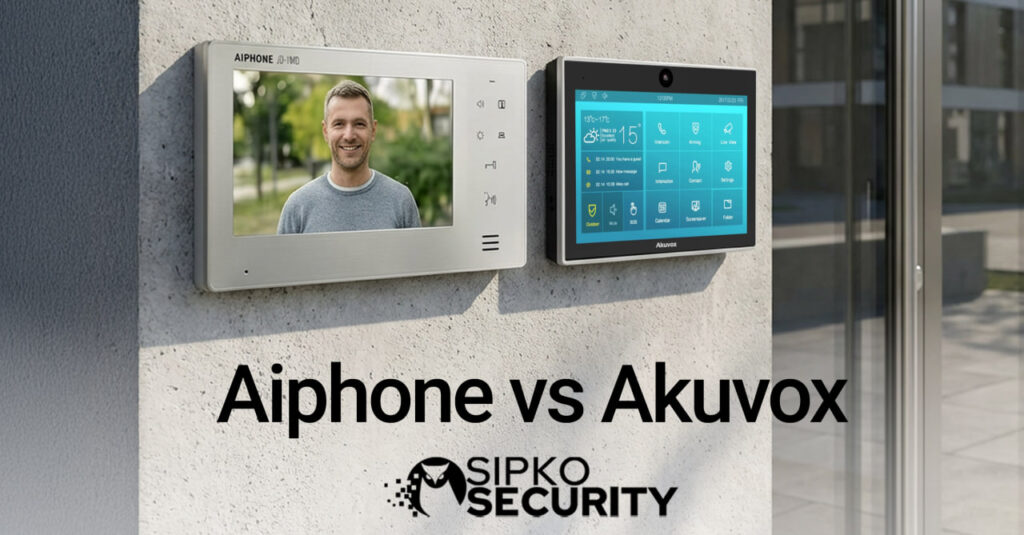
Aiphone vs Akuvox : A comprehensive analysis comparing the legacy reliability of Aiphone against the AI-driven innovation of Akuvox. We break down facial recognition accuracy, Android security vulnerabilities, retrofitting challenges for older Melbourne apartments, and the true cost of ownership over 15 years.
1. Introduction: The Clash of Eras
In the high-stakes world of building access control, the debate between Aiphone and Akuvox is more than just a brand preference—it is a clash of philosophies. It is the Analog vs Digital debate replayed for the 2020s. It is the “Toyota vs Tesla” of the intercom world.
For Melbourne Strata Managers, developers, and homeowners, this decision determines how you will interact with your property for the next 15 years. Will you choose the system that never fails but looks like it’s from 2005? Or the system that scans faces and integrates with everything, but might need a reboot every few months?
With the Australian Bureau of Statistics (ABS) reporting 217, 600 household break-insin 2023-24, your intercom is not a toy. It is the primary filter for your home’s security. This guide dissects the marketing fluff to reveal the engineering reality of both systems.
2. Design Philosophy: The Tank vs The Smartphone
Aiphone: “Kaizen” Engineering
Aiphone’s design philosophy is typically Japanese: conservative, perfectionist, and slow to change. They operate on the principle that an intercom is a safety device, not a gadget. If a feature (like a touchscreen) adds a 1% chance of failure, Aiphone will often reject it in favour of a physical button.
Their systems are “Air-Gapped” by design. They don’t want to talk to the internet unless absolutely necessary. This makes them inherently secure but “dumb” compared to modern standards. You choose Aiphone if you want to install it and forget about it for 20 years.
Akuvox: The Android Revolution
Akuvox disrupted the market by realising that an intercom is just a computer on a wall. By building their entire ecosystem on Android, they unlocked infinite features. Facial recognition, AI voice assistants, cloud management, and third-party app integration became standard overnight.
However, this comes with the “Smartphone Curse.” Like your phone, Akuvox units benefit from reboots, software updates, and strong internet connections. They are powerful, but they are complex. You choose Akuvox if you want your building to feel like it belongs in 2030.
3. Head-to-Head: The Technical Battles
Battle 1: The User Interface
Contender A: Akuvox X912 (Touchscreen)vs Contender B: Aiphone GT-DMB (Physical Buttons)
Akuvox Experience:The X912 features a stunning 4-inch touchscreen. It scrolls like an iPhone. Visitors can search by name, unit number, or even navigate a virtual directory. It looks premium and impresses potential buyers/tenants immediately.
Risk:Touchscreens in direct sunlight can sometimes suffer from glare or “ghost touches” if cheap digitizers are used (though Akuvox uses high-quality IPS panels).
Aiphone Experience:The GT system uses a simplified LCD module with physical rubber/steel keys. You type a number, you press call. It is tactile and works with gloves on, in the rain, or with wet hands.
Risk:It looks dated. Scrolling through 500 names on a 2-line LCD screen is tedious and frustrating for visitors.
Verdict: Akuvox wins on Aesthetics. Aiphone wins on Ergonomics.
Battle 2: Access Control Tech
Contender A: Akuvox (Biometrics)vs Contender B: Aiphone (NFC/Keypad)
Akuvox:This is where Akuvox shines. Their Facial Recognitionis game-changing. You walk up to the door with groceries in both hands, the camera scans you, validates your face in 0.2 seconds (even with a mask on), and unlocks the door. It also supports temporary QR codes you can SMS to a cleaner or tradesman.
Privacy Note:Faces are usually stored locally on the device, encrypted, complying with standard privacy laws, but Strata committees must manage the data.
Aiphone:Relies on “Possession Factors” —things you have. Fobs, cards, or physical keys. They support pin codes, but managing them across 100 apartments usually requires a site visit or a complex PC software connection.
Reliability:Fobs never fail. But they can be lost, copied, or forgotten.
Verdict: Akuvox wins flawlessly on convenience.
Battle 3: Video & Audio Quality
Contender A: Akuvox (2MP + WDR)vs Contender B: Aiphone (720p Analog/Digital)
Akuvox:Because they use IP (Data), bandwidth is cheap. Akuvox camerasare typically 2MP or higher with “Starlight” sensors for colour night vision. Their WDR (Wide Dynamic Range) is excellent at balancing a dark face against a bright sunny street background.
Audio:Full duplex digital. Generally clear, but can suffer from “jitter” if the network is busy.
Aiphone:They prioritise latency over resolution. The video is often lower resolution (720p equivalent) to ensure it travels instantly over old copper wires without lag.
Audio:This is Aiphone’s secret weapon. Their audio processing is hardware-based. It is loud, crisp, and has zero echo.
Verdict: Akuvox video is prettier. Aiphone audio is clearer.
4. The Wiring Reality: Physics of Copper
In Melbourne renovations, we don’t start with the intercom; we start with the cable that is already in the wall.
Aiphone: The 2-Wire Champion
Aiphone’s “GT” and “JO” series rely on a proprietary signal modulation. They send data and power down just two cores. This is magic for old buildings. We can pull out a 30-year-old buzzer, use the rotting, thin copper wire behind it, and successfully drive a modern Aiphone video system. It is incredibly “forgiving” of impedance issues, bad splices, and moisture.
Akuvox: The Network Princess
Akuvox is a native IP device. It speaks TCP/IP. It craves clean, high-speed CAT6 cabling. While they sell “2-Wire to IP Converters”(Ethernet over Coax), these add failure points. If you try to run high-bandwidth IP video over bad copper, you get artifacts, green screens, and dropped calls. If your building has CAT6, Akuvox is a dream. If it doesn’t, Akuvox is an expensive headache involving new conduits.
5. The Hacker’s Perspectives: Security Analysis
Is your intercom a backdoor into your home network?
Akuvox: Attack Surface Analysis
Because Akuvox runs Android, it technically has the same attack surface as a tablet. If connected to the public internet with open ports, it could be vulnerable. However, Akuvox locks down the OS efficiently. The main risk is Cloud Reliance. If the Akuvox cloud servers go down (or are blocked by a future government firewall), your mobile app features stop working. You are dependent on their infrastructure.
Aiphone: Security by Isolation
Aiphone systems are typically “Air Gapped.” They are a closed loop. The wire goes from the gate to the screen. It doesn’t touch your Wi-Fi router unless you buy a specific IP-module. Hacking an Aiphone requires physical access with a screwdriver. There is no remote execution vulnerability because the code is burned onto the chip, not loaded from a server.
6. Total Cost of Ownership (15 Year Model)
Why does the “Cheaper” system end up costing more?
7. Troubleshooting Guide: When It Breaks
When you call us for a service request, here is what we usually find.
Common Akuvox Issues
- “Offline” in App:This is almost always a firewall or router issue blocking the SIP ports. Rebooting the router fixes it temporarily, but a static IP configuration is the permanent fix.
- Face Rec Not Working:Direct sunlight hitting the lens blinds the IR sensors. We may need to install a sunshield or angle mount.
- Touchscreen Lag:Updates to the Android OS can sometimes slow down older hardware revisions over time.
Common Aiphone Issues
- Audio Buzz/Hum:Induction loop noise. This happens when the intercom wire runs too close to 240V power mains in the wall. Aiphone is immune to most things, but physics is physics.
- Volume Too Low:Often due to corrosion on the outdoor speaker membrane after 10+years of salt air exposure (Bayside suburbs).
8. Pre-Installation Checklist: The 4 Critical Checks
Before you sign a quote, go to your front gate and check these four critical factors. Failure to check these leads to variation costs later.
Contact SIPKO Security
Speak with a specialist about wired and wireless CCTV, Ajax alarms, and same-week installations. We respond quickly during business hours and offer after-hours call-outs for urgent security issues.
📞 0406 432 691
📍 Head Office: Brighton, Melbourne
Prefer WhatsApp? Tell us in your message — we’ll reply on your preferred channel.
Sources and References
- Australian Institute of Criminology (AIC)– Comprehensive data on residential burglary methodology and CPTED principles relative to access control.
- Australian Bureau of Statistics (ABS)– Recorded Crime – Victims, Australia, 2023–24. Specific focus on unlawful entry with intent.
- Government of Western Australia – Consumer Protection– “Smart home devices: What you need to know” – consumer guarantees and longevity expectations.
- ACT Government Community Services– Factsheets on home safety audits and recommended hardware standards for community housing.
- Office of the Australian Information Commissioner (OAIC)– “Guide to data privacy” – Specific guidelines on video surveillance and data collection for residential entities.
- Australian Competition & Consumer Commission (ACCC)– Consumer Guarantees for electronics and security hardware lifecycles.