Spider Webs on Cameras — How to Minimise IR Attraction
The silent enemy of clear night vision. Why spiders love your security cameras and how to reclaim your view.
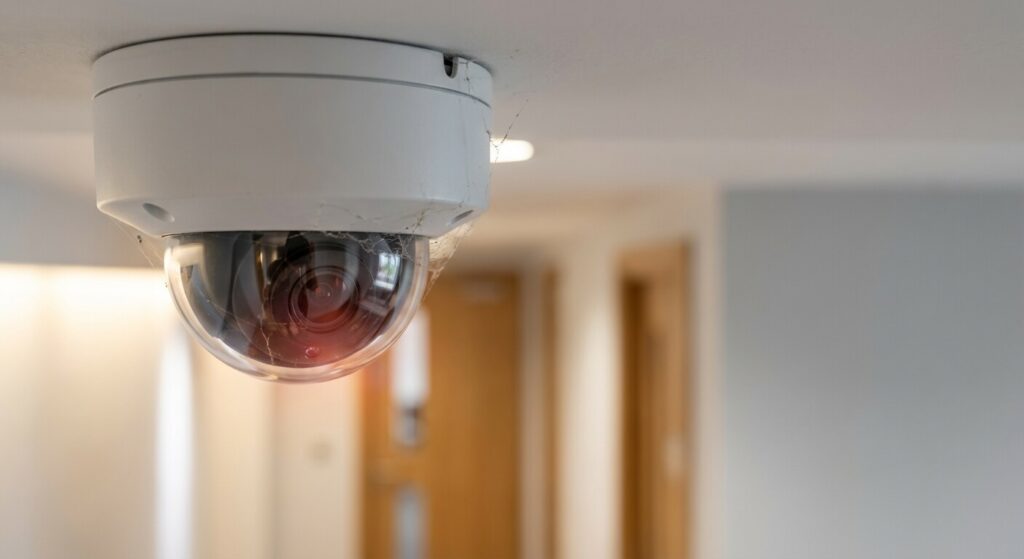
It is a frustratingly common scenario: You install a high-end security system, expecting crystal-clear footage. But when you check the recording the next morning, all you see is a bright, blurry mess. A spider has built a web directly across the lens, and the camera’s night vision has turned it into a glowing wall of white light.
This isn’t just annoying; it renders your security system useless. The web reflects the Infrared (IR) light back into the lens, blinding the camera to anything behind it.
<!-- The IR Trap -->
“Spiders aren’t trying to sabotage your security. They are just following the food chain that your camera accidentally created.”
In this guide, we explain the science behind why this happens and provide professional strategies—including the use of advanced Ajax technology—to keep your lenses clear.
Why Spiders Love Your Cameras
To solve the problem, you must understand the cause. Spiders don’t care about your camera; they care about food.
The “Bug Magnet” Effect
Most security cameras use built-in IR LEDs for night vision. While this light is invisible to humans, it acts like a beacon for moths, mosquitoes, and other flying insects. Where the bugs go, the spiders follow. Your camera is essentially a 24/7 buffet.
The Warmth Factor
Electronics generate heat. On a cold Melbourne night, a security camera is a cozy radiator. Spiders are attracted to this warmth, making the camera housing the perfect spot to build a nest.
Professional Solutions to Minimise Webs
You can’t stop nature, but you can outsmart it. Here are the most effective ways to keep your cameras spider-free.
1. External IR Illuminators
The most effective solution is to separate the light from the lens. By disabling the camera’s onboard IR and installing a separate External IR Illuminator a few meters away, you move the “bug party” away from the camera. The spiders will build their webs on the illuminator, leaving your camera lens clear.
2. The “Slippery Surface” Trick
Spiders need a rough surface to anchor their webs. Carefully applying a very thin layer of silicone spray or Teflon-based lubricant to the body of the camera (never the lens!) can make it impossible for webs to stick. Re-apply this every few months.
3. Regular Maintenance with Spider Spray
Use a long-lasting surface spray (like a barrier spray) around the mounting bracket and the wall behind the camera. Again, be extremely careful not to get any chemical on the lens itself, as it can damage the coating.
The Ajax Advantage: Low Heat Design
Ajax Systems cameras are engineered for efficiency. They run cooler than many cheaper alternatives, generating less heat to attract spiders. Furthermore, their advanced AI motion detection is smart enough to ignore the swaying of a web, reducing the number of false alarms that wake you up at 3 AM.
Prevention Methods Ranked
| Method | Effectiveness | Cost / Effort |
|---|---|---|
| External IR Illuminator | High (Best Solution) | Medium (Requires Install) |
| Regular Cleaning | Medium (Temporary) | Free (High Effort) |
| Surface Spray / Lubricant | Medium | Low |
| Ajax AI Filtering | High (Stops False Alarms) | Built-in to Ajax |
The Cycle of Attraction
The Problem
- IR Light On
- Heat Generated
- Bugs Attracted
- Spiders Arrive
The Solution
- External IR
- Cooler Camera
- Slippery Housing
- Clear View
The Verdict: Be Proactive
Don’t wait until you miss a critical incident because of a spider web. By understanding the attraction of IR light and heat, you can take simple steps to minimize the issue.
Our Recommendation
- Install Wisely: Avoid tight corners where webs are easy to build.
- Use Quality Gear: Ajax cameras run cooler and have smarter AI.
- Separate the Light: If the problem persists, move the IR source.
A clear lens means a secure home.
Tired of false alarms? Contact Sipko Security to upgrade to an Ajax system with advanced AI filtering.
Frequently Asked Questions
Will turning off IR stop the spiders?
Yes, it will significantly reduce them, but your camera won’t see in the dark unless you have external lighting (like streetlights or floodlights). This is why external IR illuminators are the best compromise.
Can I use a dryer sheet to repel spiders?
Some people claim that attaching a dryer sheet to the camera housing repels bugs due to the strong scent. While anecdotal, it is a cheap and harmless trick to try, provided it doesn’t block the lens.
Does Ajax have a “spider mode”?
Not specifically, but Ajax’s AI algorithms (LISA and SmartDetect) are trained to distinguish between the erratic movement of a web close to the lens and the movement of a person further away. This drastically reduces false alarms compared to older “pixel-change” motion detection.
Official Government Sources & References
-
CSIRO – Australian Spiders
Scientific information on spider behavior and habitats in Australia, helping to understand nesting patterns.
-
Department of Primary Industries – Pest Management
Government advice on managing pests, including spiders, around properties.
-
Health.vic – Pest Control
Guidelines for safe pest control methods in residential areas to protect health and safety.
-
AS/NZS 2201.1:2007
Australian Standards for intruder alarm systems, including maintenance requirements for detection devices.
-
NSW Police – Home Security Maintenance
Advice on maintaining security equipment to ensure it remains operational and effective.