The Best Temporary Security System for Building Sites (Portable + Wireless)
Comprehensive guide for builders showing how to protect construction sites from theft using fully wireless Ajax systems including temporary MotionCam setups, sirens, and rapid deployment sensors.
Understanding Construction Site Theft in Melbourne 2025
Construction Site Theft Statistics Melbourne
💰 Average theft loss per building site incident: $8,000 to $25,000 in tools and materials
⏰ Peak theft times: Friday nights and weekends when sites remain unattended for 60+ hours
🔧 Most stolen items: Power tools, copper piping, timber materials, site equipment, and diesel fuel
Based on Victoria Police reports and 200+ construction site security installations 2022-2025.
Construction site theft represents one of the most persistent challenges facing Melbourne builders, contractors, and project managers in 2025, with organized theft rings systematically targeting sites across metropolitan and regional areas. The transient nature of building sites creates unique security vulnerabilities compared to established businesses operating from fixed premises with permanent alarm systems and physical security infrastructure. Sites progress through multiple phases from initial site clearing through foundation work, framing, lockup, and completion, with each stage presenting different security requirements and theft exposures across project timelines spanning months or years.
Traditional security approaches prove inadequate for construction environments where power supplies remain temporary or nonexistent, building structures offer minimal physical security before lockup stage, and sites require protection relocating between projects every few months. Hiring security guards costs 300 to 500 dollars per night creating unsustainable expenses for typical residential or small commercial projects, while basic alarm systems designed for completed buildings fail when deployed in exposed construction environments lacking reliable power, internet connectivity, or weatherproof enclosures for electronic equipment.
Ajax Systems revolutionized construction site security through wireless technology specifically engineered for temporary deployment scenarios requiring rapid installation, operation without permanent power or internet connections, and weather-resistant equipment surviving harsh construction environments. This comprehensive guide examines specific theft vulnerabilities across construction phases, explains Ajax wireless technology enabling portable security deployment, provides installation procedures for rapid site protection, and delivers practical recommendations ensuring effective theft deterrence throughout project lifecycles.
Critical Understanding for Construction Site Security
Construction theft differs fundamentally from residential or commercial burglary. Thieves targeting building sites arrive with vehicles and equipment to remove bulk materials, tools, and copper piping in quantities impossible for typical burglars. The organized nature requires security responses beyond simple alarm notification, including visual verification and rapid police response coordinating with monitored alarm signals.
Temporary security must operate independently of permanent site infrastructure. Systems relying on mains power or fixed internet connections fail when sites lack electrical commissioning or telecommunications installation. Ajax cellular and battery operation enables genuine site independence operating weeks between servicing regardless of construction progress stage.
Visual verification proves essential for police response to construction sites. Police increasingly deprioritize alarm-only signals from building sites due to high false alarm rates from construction activity, weather, and animals. Ajax MotionCam photo verification dramatically improves response priority by providing officers visual confirmation of genuine intrusion before dispatch.
Construction Site Theft Vulnerabilities by Project Phase
Site establishment and early earthworks phases present maximum exposure, with completely open sites lacking any physical security barriers beyond temporary fencing easily breached or climbed. Expensive earthmoving equipment including excavators, bobcats, skid steers, and compaction machinery sits exposed overnight and across weekends with minimal protection beyond ignition key removal. Thieves equipped with trailers and equipment knowledge systematically target this machinery, with diesel-powered equipment particularly vulnerable through fuel theft even when machinery itself remains too large or conspicuous to steal.
Foundation and slab construction phases introduce valuable materials including reinforcing steel, structural timber, and concrete formwork sitting exposed on site. Copper and aluminum materials used in plumbing rough-ins provide high-value targets for scrap metal theft, with single-night thefts sometimes removing thousands of dollars worth of installed piping requiring complete reinstallation. Power tools and site equipment used during this phase accumulate on site as trades establish work areas, creating concentrated theft targets when tools remain unsecured overnight in site sheds or containers.
Framing and pre-lockup stages see peak tool theft as carpenters, electricians, plumbers, and other trades simultaneously work on sites with extensive power tools, specialized equipment, and materials. Builders report this phase generates highest theft losses, with organized thieves monitoring site progress and striking when maximum tool inventory accumulates before lockup secures the building envelope. Timber framing materials, particularly structural LVL beams and premium hardwood elements, disappear overnight despite bulk and weight requiring vehicles for removal.
Post-lockup through completion phases reduce some vulnerabilities through enclosed building envelope, though break-ins targeting installed fixtures, appliances, and finishing materials remain common. Thieves remove kitchen appliances, bathroom fixtures, tapware, light fittings, and flooring materials from nearly completed homes, sometimes causing tens of thousands of dollars damage during removal. The reduced site activity as completion approaches creates windows where thieves operate without detection risk from workers or trades present throughout earlier construction phases.
Weekends and extended holiday periods amplify theft risk across all project phases, with sites remaining completely unattended Friday evenings through Monday mornings providing 60-hour theft windows. Christmas and Easter shutdowns extending one to two weeks create particular vulnerability, with organized theft operations systematically hitting multiple sites during periods knowing detection and response becomes unlikely. These extended unattended periods generate disproportionate theft losses compared to weeknight exposure, making security protection during weekends and holidays absolutely critical.
“Theft cost my building company 45,000 dollars across three projects before implementing Ajax site security. Thieves hit Friday night taking every power tool, copper piping, and diesel fuel leaving us unable to work Monday morning while sourcing replacement equipment. The project delays cost more than stolen materials themselves. Ajax wireless systems now deploy on every site from day one, eliminating theft losses completely across our operations since 2023.”
— Melbourne Building Company Director, 2025
Ajax Wireless Technology for Construction Applications
Ajax Hub with cellular connectivity represents the foundation enabling construction site security operation without permanent internet connections or telecommunications infrastructure. The Hub connects to monitoring stations and delivers alarm notifications via 2G, 3G, or 4G cellular networks using standard SIM cards, eliminating dependency on NBN, cable, or ADSL internet services unavailable during construction. The Hub operates continuously on internal backup battery lasting 15 hours during power failures, while external battery solutions extend runtime to weeks or months between charging for sites lacking any electrical supply.
The Jeweller wireless protocol communicates between Hub and security devices across distances up to 2000 meters in clear line of sight, covering typical construction sites completely from single Hub installation without requiring cable routing between detection points. The 868 MHz radio frequency provides excellent propagation through construction environments including partial structures, building materials, and site obstacles while avoiding interference from 2.4 GHz WiFi and Bluetooth devices proliferating across modern construction sites with digital tools and equipment.
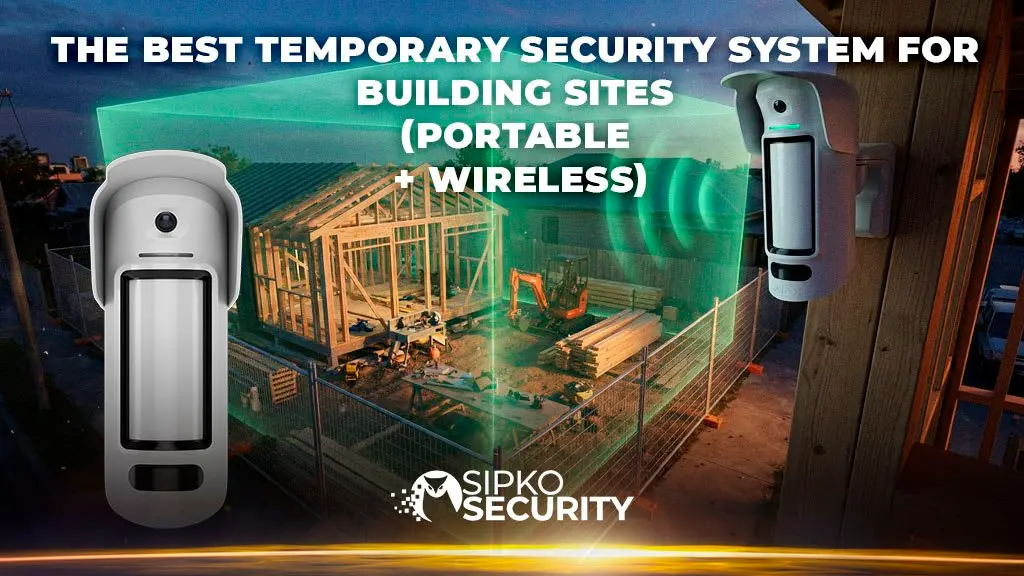
Ajax MotionCam Outdoor represents revolutionary construction site security device, combining passive infrared motion detection with integrated camera capturing visual verification photos when intrusion detection triggers. The device photographs intruders within 0.3 seconds of movement detection, transmitting images immediately to monitoring station and property owner smartphones. This visual verification enables police to prioritize response by confirming genuine intrusions versus false alarms from animals, weather, or construction debris movement, dramatically improving police attendance rates for construction site alarms.
The MotionCam operates completely wireless using four CR123A batteries providing 4 to 5 years operation under typical detection frequency, though construction sites with high daytime activity may reduce battery life to 1 to 2 years. The outdoor-rated weatherproof housing withstands rain, dust, and temperature extremes common in exposed construction environments, mounting via supplied bracket to temporary posts, fencing, or partial building structures wherever optimal detection coverage positions require. Detection range reaches 15 meters with 90-degree viewing angle, covering typical site entry points, equipment storage areas, and material stockpiles from strategic mounting positions.
Ajax StreetSiren provides powerful outdoor alarm notification combining 113-decibel siren with bright LED strobe creating visible and audible deterrent when intrusion detection triggers. The wireless siren mounts anywhere throughout site perimeter or near valuable equipment, operating on internal battery lasting 5 years with typical alarm frequency. Multiple sirens throughout larger sites ensure alarm notification reaches distant site areas and alerts neighboring properties increasing detection probability. The weatherproof design survives construction site exposure including rain, dust, and extreme temperatures without requiring protective enclosures or maintenance.
Door and window contacts protect site sheds, storage containers, and partially completed structures against unauthorized entry, detecting opening attempts within milliseconds and triggering alarm responses immediately. The wireless contacts operate 5 to 7 years on single CR123A battery, mounting via adhesive or screws to any surface including temporary structures, shipping containers, and site offices. Glass break detectors protect site office windows and early-stage building glazing from break-in attempts, detecting characteristic acoustic signatures of breaking glass within 8-meter radius.
Remote controls and key fobs enable site managers, contractors, and authorized personnel to arm and disarm systems without smartphone requirements, particularly valuable for sites employing workers or subcontractors without smartphone access or technical sophistication for app operation. The remote controls operate up to 1000 meters from Hub enabling system control from parking areas or site perimeters before entering protected zones. Tags provide contactless arming and disarming via proximity to Hub reader, offering simple operation requiring minimal user training suitable for rotating workforce common on construction sites.
Rapid Deployment Installation Procedures
Initial site assessment identifies optimal Hub placement providing adequate cellular signal strength for monitoring connection while maintaining central position enabling wireless device coverage throughout site perimeter and protected areas. The Hub requires only power connection from portable generator, site electrical temporary supply, or external battery system depending on available infrastructure. Cellular signal strength verification using smartphone apps or signal meters ensures adequate coverage for reliable monitoring connection, with external antennas available for sites in marginal coverage areas or locations with poor cellular reception.
MotionCam positioning strategy focuses on entry points, equipment staging areas, material stockpiles, and high-value storage locations where theft typically occurs. Devices mount 2 to 3 meters height on temporary posts, fencing supports, or partial building structures providing unobstructed detection coverage across protected zones. Multiple MotionCam devices create overlapping coverage eliminating blind spots and ensuring visual verification capability throughout site regardless of intrusion location. The wireless range enables flexible positioning optimizing detection coverage rather than constraining placement to cable-accessible locations limiting traditional wired systems.
Siren placement creates maximum psychological deterrent while ensuring alarm notification reaches site surroundings alerting neighbors and increasing detection risk for thieves. Perimeter positions near street frontage or neighbor boundaries maximize notification range, while sirens near valuable equipment provide targeted protection for highest-value assets. Sites requiring covert initial detection may position sirens away from entry points allowing thieves to enter before triggering alarm, increasing apprehension probability by catching intruders deeper within site where escape proves more difficult.
Door contacts and glass break sensors protect site sheds, storage containers, and temporary site offices where tools and equipment secure overnight. The wireless devices install in minutes without cable routing, enabling comprehensive building protection across all access points. Sites without permanent structures during early phases may defer these devices until site sheds or containers arrive, then rapidly deploy protection matching evolving site security requirements throughout construction progress.
System commissioning includes cellular connection verification ensuring reliable monitoring station communication, motion detection testing confirming adequate coverage, photo verification functionality testing, and user training for contractors and site managers operating system daily. The complete installation from initial assessment through operational system typically completes in 2 to 4 hours for typical construction site, enabling rapid security deployment when projects commence or theft concerns escalate.
“Ajax wireless transformed construction security from expensive impossible problem into straightforward solved issue. Systems deploy Monday morning in 2 hours without any site infrastructure requirements, provide reliable protection throughout project lifecycle, then relocate to next site in 1 hour with zero equipment losses. The portability and cellular operation eliminated every traditional barrier preventing effective construction site security.”
— Construction Security Specialist, Melbourne 2025
Power Solutions for Sites Without Electrical Supply
External battery systems enable Ajax Hub operation for weeks between charging on sites lacking any electrical supply during early construction phases. Deep cycle 12-volt batteries with capacity 50 to 100 amp-hours provide 7 to 21 days continuous operation depending on cellular communication frequency and quantity of connected devices. The battery connects to Hub via supplied power adapter, positioning anywhere providing weather protection using waterproof enclosures or existing site structures. Solar panel systems extend operation indefinitely in suitable locations, combining solar panels 50 to 100 watts with charge controllers and batteries creating self-sustaining power solutions eliminating any charging requirements throughout project duration.
Portable generator connections provide Hub power on sites operating generators for tools and equipment, though careful power conditioning prevents generator voltage fluctuations damaging Hub electronics. Uninterruptible power supplies positioned between generator and Hub filter voltage irregularities while providing battery backup during generator shutdown periods. Sites operating generators during work hours but shutting down overnight benefit from combining generator charging with battery backup ensuring continuous operation through unattended periods when security proves most critical.
Site electrical temporary supplies appearing during early construction phases provide convenient Hub power once electricians establish distribution boards and temporary site lighting circuits. The Hub requires only standard 240-volt power outlet connection drawing minimal current comparable to phone charger, creating negligible load on temporary site electrical capacity. Positioning Hub within site offices or temporary structures with electrical supply simplifies power connection while providing weather protection and physical security for security equipment.
Battery-powered MotionCam and sensor devices operate independently of Hub power considerations, with years-long battery life eliminating any charging or power supply requirements. This complete device independence from external power represents critical advantage for construction sites, enabling comprehensive detection coverage throughout sites regardless of electrical infrastructure availability. The battery-powered operation continues reliably through power failures, generator shutdowns, or electrical system interruptions that would disable traditional wired security equipment.
Professional Monitoring vs Self-Monitoring Options
Professional monitoring connections provide 24-hour alarm response from Australian monitoring stations staffing operators continuously ready to respond when intrusion detection triggers. The monitoring stations receive alarm signals including MotionCam photo verification, assess genuine intrusion versus false alarm, contact designated site managers or contractors, and dispatch police when visual verification confirms unauthorized site access. Monthly monitoring fees typically range 40 to 80 dollars for construction site applications, modest expense compared to theft loss potential and security guard alternatives costing hundreds of dollars per night.
The photo verification capability dramatically improves police response priority, with officers able to review intruder images before dispatch confirming genuine security incidents versus false alarms. Victoria Police increasingly deprioritize construction site alarms lacking verification due to high false alarm rates, but respond promptly when monitoring stations provide visual confirmation of intruders on site. This improved response probability represents critical value justifying professional monitoring investment even for budget-conscious projects.
Self-monitoring through Ajax smartphone app provides alternative for smaller projects unable to justify professional monitoring expenses, though sacrificing 24-hour operator availability and potential police response delays. The app delivers instant push notifications when alarm triggers, transmits MotionCam verification photos to smartphones within seconds, and enables remote viewing of live alarm status from anywhere with cellular coverage. Site managers receive notifications immediately enabling direct police contact or personal site response depending on circumstances and intruder threat assessment.
Combined approaches utilizing professional monitoring during highest-risk periods including weekends and extended holiday shutdowns while self-monitoring weeknights balance cost against protection needs. Some builders activate professional monitoring only during vulnerable project phases like framing through pre-lockup when maximum tool inventory accumulates on site, reverting to self-monitoring during lower-risk phases minimizing ongoing monitoring expenses while maintaining core security capability.
Theft Deterrence vs Evidence Collection Strategies
Cost-Benefit Analysis: Security Investment vs Theft Loss
Initial Ajax system investment for typical construction site including Hub with cellular connectivity, three to six MotionCam Outdoor devices, two wireless sirens, door contacts for site containers, and professional installation ranges from 2,500 to 4,500 dollars. This equipment investment provides reusable portable system relocating between multiple projects throughout years-long service life, amortizing costs across dozens of sites rather than single-project expenses. Builders operating continuous project pipelines achieve equipment payback within 3 to 6 months through prevented theft losses that previously averaged thousands of dollars per project.
Professional monitoring adds 40 to 80 dollars monthly recurring cost, typical site protection throughout 6 to 12-month residential construction timeline totaling 240 to 960 dollars monitoring fees. This modest expense compares favorably against single theft incident typically costing 8,000 to 25,000 dollars in direct losses plus additional expenses from project delays, equipment replacement lead times, and insurance deductibles or premium increases following claims. The monitoring investment represents insurance premium with certain benefits through alarm response versus uncertain insurance coverage with deductibles and claim consequences.
Security guard hiring costs 300 to 500 dollars per night, weekend protection alone totaling 600 to 1,000 dollars weekly creating monthly expenses 2,400 to 4,000 dollars for continuous coverage. These unsustainable costs exceed Ajax monitoring fees by factors of 30 to 50 times while providing less comprehensive coverage limited to guard patrol visibility versus electronic detection throughout entire site perimeter. Guards additionally introduce liability concerns from contractor workplace safety requirements and questions about guard reliability during overnight hours without supervision.
Insurance deductibles for construction site theft typically range 2,500 to 10,000 dollars depending on policy terms, with many builders avoiding claims due to premium increase consequences affecting multi-year insurance costs. The security system investment often falls below typical insurance deductibles, meaning prevented theft saves deductible expenses while avoiding premium increases from claim history. Insurance providers increasingly offer premium discounts for sites with professionally monitored Ajax systems, partially offsetting security costs through reduced insurance expenses across entire business operations.
Project delay costs from theft-related downtime frequently exceed direct theft losses, with sites losing entire workdays or weeks while sourcing replacement tools and materials. Trade contractors unable to work without stolen equipment still charge for scheduled time, while project timeline extensions create cascading impacts on subsequent trades, building permit timeframes, and settlement obligations to purchasers. A single major theft incident can cost 20,000 to 50,000 dollars when accounting for both direct losses and delay-related expenses, vastly exceeding security system investment providing prevention.
System Portability and Multi-Site Deployment
Ajax wireless architecture enables rapid system relocation between projects as construction completes and new sites commence. Complete system removal requires 30 to 60 minutes dismounting devices, Hub, and sirens, with reinstallation at new site completing in 2 to 4 hours including new site assessment and device positioning optimization. This portability transforms security economics from disposable per-project expense into durable business asset providing protection across continuous project pipeline throughout years-long equipment service life.
Device configuration transfers between sites through Ajax cloud platform, eliminating reprogramming requirements when relocating equipment. Zone names, user access permissions, and monitoring station connections remain configured requiring only device position adjustments matching new site layout. This configuration portability accelerates deployment enabling new site protection establishing within hours of equipment arrival versus days of installation and commissioning required for traditional systems programmed specifically for individual locations.
Fleet management for construction companies operating multiple simultaneous sites benefits from standardized Ajax equipment deployed across entire project portfolio. Bulk equipment purchases achieve volume discounting while enabling equipment sharing between sites based on current security requirements and theft risk assessments. Sites entering highest-risk phases receive additional MotionCam coverage temporarily borrowed from sites in lower-risk completion stages, optimizing equipment utilization across fluctuating business activity.
Rental arrangements with security providers offer alternative to equipment purchase for builders operating occasional projects without continuous site pipeline justifying ownership investment. Monthly rental fees typically range 200 to 400 dollars including equipment provision, professional installation, monitoring connection, and system removal upon project completion. This rental model suits renovation contractors, owner-builders, and small operators without capital for equipment purchase or logistics for equipment management between projects.
Protect Your Construction Site with Ajax Wireless Security
Serhii from Sipko Security specializes in temporary wireless security for Melbourne construction sites, providing rapid-deployment Ajax systems protecting projects from theft throughout construction lifecycles. I understand unique builder requirements including portability, cellular operation, battery power capability, and MotionCam photo verification essential for construction applications.
Every installation includes site assessment identifying optimal coverage strategies, professional equipment installation ensuring reliable operation, cellular connection verification and monitoring setup, and user training for contractors operating systems daily. I offer both equipment purchase for builders operating continuous project pipelines and rental arrangements for occasional projects requiring temporary protection.
Contact me today for construction site security consultation, complete with detailed quote comparing purchase versus rental options, site coverage assessment, and honest guidance on security strategies delivering maximum theft deterrence for your specific project requirements and budget realities.
Primary Sources
Victoria Police https://www.police.vic.gov.au Construction site theft prevention guidance including crime statistics for building site burglary across Victoria, recommendations for effective site security measures, advice on high-value asset protection, and best practices for theft reporting enabling police investigation and recovery operations. Police data shows construction theft concentrated in growth corridor suburbs and inner-city development areas with organized theft operations targeting multiple sites.
WorkSafe Victoria https://www.worksafe.vic.gov.au Workplace safety regulations affecting construction site security including requirements for secure tool and equipment storage protecting worker property, obligations for site access control preventing unauthorized entry creating safety hazards, and standards for temporary fencing and site security barriers ensuring construction site perimeter protection under Victorian occupational health and safety legislation.
Victorian Building Authority https://www.vba.vic.gov.au Building regulations affecting temporary security installations on construction sites including electrical safety requirements for security equipment power connections, compliance obligations for security system installations not requiring building permits, and standards for temporary structures including site offices and storage containers where security equipment typically installs protecting tools and materials throughout construction phases.
Australian Communications and Media Authority https://www.acma.gov.au Regulatory framework for cellular-connected security systems including technical standards for security equipment utilizing 2G, 3G, and 4G mobile networks, electromagnetic compatibility requirements ensuring security devices operate without interference, and spectrum licensing regulations governing commercial security monitoring services utilizing cellular communications for alarm signal transmission across Australian construction sites.
Standards Australia https://www.standards.org.au Technical standards for security alarm systems in temporary applications including AS 2201 intruder alarm standards covering detection device performance specifications, alarm signaling requirements, power supply standards for battery-operated security equipment, and installation guidelines ensuring proper system deployment in temporary construction environments without permanent electrical or telecommunications infrastructure across Australian building sites.